
Saodat Ismailova: Melted into the Sun, movie still. Courtesy of the artist and Batalha Centro de Cinema.
Interview — by Sara Castelo Branco
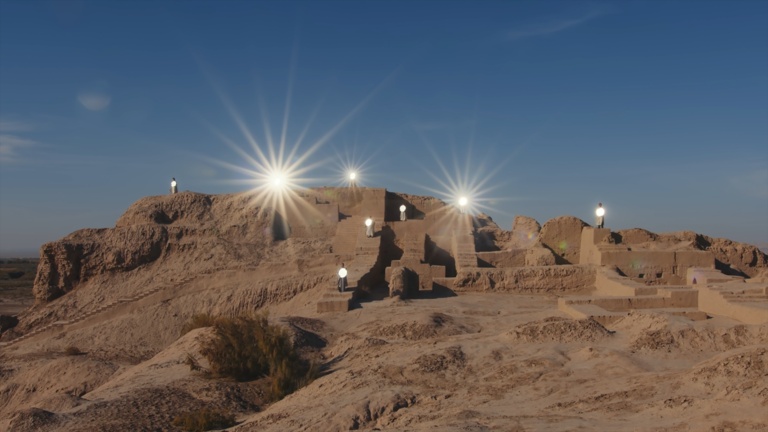
To briefly contextualize the Melted into the Sun project, this exhibition takes its title from the most recent work by Saodat Ismailova, who we consider to be one of the most interesting artists working in contemporary art today, and who works primarily, though not exclusively, with moving images. Batalha Centro de Cinema joined the co-production of this film following an invitation from Fondazione In Between Art Film. The work was part of an exhibition titled Nebula, composed entirely of works in film and moving image, and presented by the Fondazione In Between Art Film on the occasion of the 2024 Venice Biennale, although not as part of the official program. This film was one of several works featured in the exhibition, which is widely regarded in the contemporary art world as one of the most interesting biannual projects. The work of the foundation is extraordinary and has given rise to very important works of art cinema, including by authors such as Jonathas de Andrade or Ana Vaz, with whom we have already worked or engaged in dialog here at Batalha. So there has been significant investment and a very important contribution to the development of these artists’ practices. And this work emerges within that context.
Review — by Valerie Rath
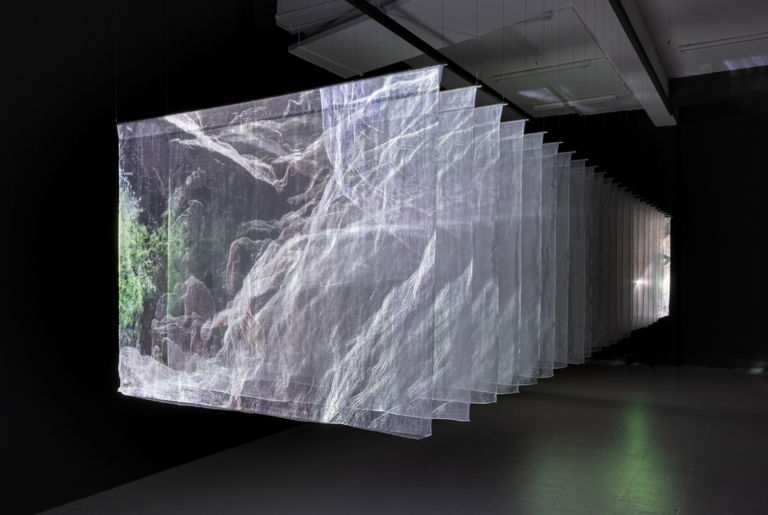
The exhibition space at Kunsthalle Lissabon is dark, with the walls and ceiling painted black, but the feeling of the room is not a gloomy one, because in the middle of the room is an installation by Saodat Ismailova, illuminating the dark space with its shimmer. The light source consists of two projectors located at opposite ends of the room, facing each other. However, the projections do not meet, but instead hit the respective ends of a series of silk pieces hanging evenly, one after another, in a linear formation in the center of the room. There are 24 pieces, as I later read in the exhibition text, for 24 frames per second of film, a direct reference to the material rhythm of cinema itself, and to the pulse that sets still images in motion. The projection of these images onto the silk creates a glimmering effect in the room and bathes it in a soft atmosphere.
Review — by Sara De Chiara
In this opening passage of Portrait of the Artist as a Young Man (1916), James Joyce introduces the reader to the world of his protagonist as a child—through a nursery rhyme and onomatopoeia, the famous “moocow”—, immersing them directly in his muffled childhood consciousness. This is not a simple artifice, but a precise formal choice: the novel does not begin by narrating, but rather by recording sounds, just as the mind of little Stephen Dedalus perceives them. Language, for the child and in the novel, is not yet a logical and articulated system, but rather sensory matter, rhythm, timbre. Language will develop in the book in tandem with the psychological development of the narrator. Onomatopoeia is one of the first tools for appropriating the world; the child imitates and repeats, establishing a link between a sound and an object, between perception and symbol. It is a fundamental threshold: through vocal play and the imitation of noises, the child experiences the possibility of language as representation. Joyce echoes this original moment in his writing: moocow is not only the acoustic memory of childhood, but the very image of the birth of language.
Interview — by Marta Espiridião
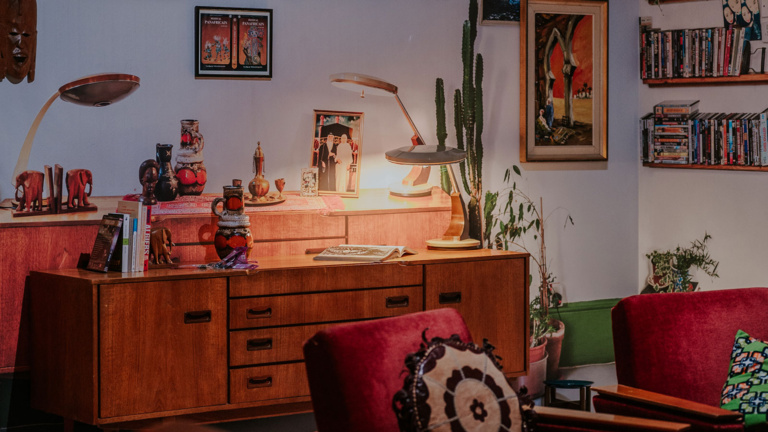
This interview took place in the context of the exhibition Standing Here Wondering Which Way To Go, on view at Gulbenkian’s CAM until 19 January 2026. As I returned to Lisbon on the same day Zineb Sedira returned to Algiers, this interview took place on Zoom, rather than on the comfortable couches from the artist’s living room, replicated as an installation in the exhibition.
Review — by Mattia Tosti
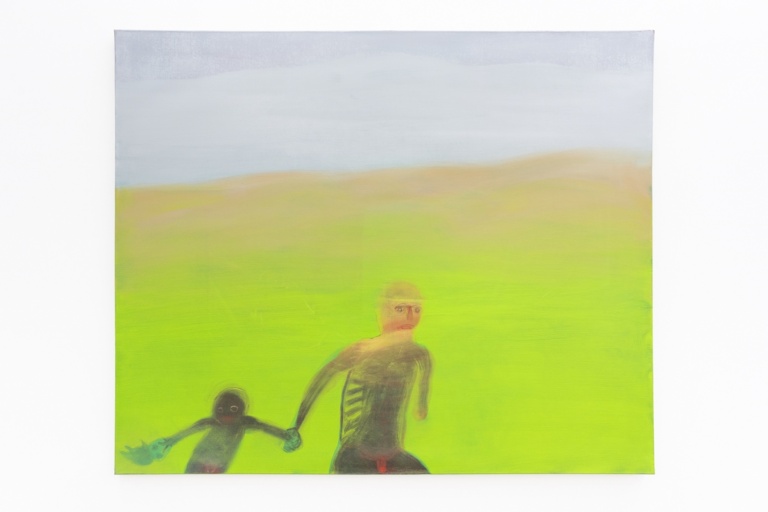
After entering the museum, I am met by a row of paintings lining the long corridor wall that leads to the exhibition space. Emerging from the vivid pastel background of each of these canvases stands an elderly woman, depicted frontally, naked and with her gaze fixed ahead. To enter the show, one must face these figures, whose eyes seem to scrutinize the viewer at the very threshold. Their bodies bear different traces of the passage of time inscribed on the nude flesh. Yet the fragility suggested by their aged, unclothed forms is countered by fierce stances and unwavering looks—quiet, insistent, almost inescapable. In their eyes seems to rest a blend of defiance and the burden of having witnessed and endured so much. Confronting these nearly life-sized figures and their insistent glances — which I later learned were self-portraits— I was immediately struck by their unconventional arrangement. The works are not aligned in any conventional way: not at the top, nor the bottom, nor even at the standard 150–155 cm line. At first, I read this simply as a bold statement against the rigid dogmas of the sacred trinity of hanging, but as I looked again at the figures, it became clear that they followed a different principle: the works are aligned by the figures’ eyes to coincide with the viewer’s, turning the act of looking into the very structure of the display.
Review — by Maria Kruglyak
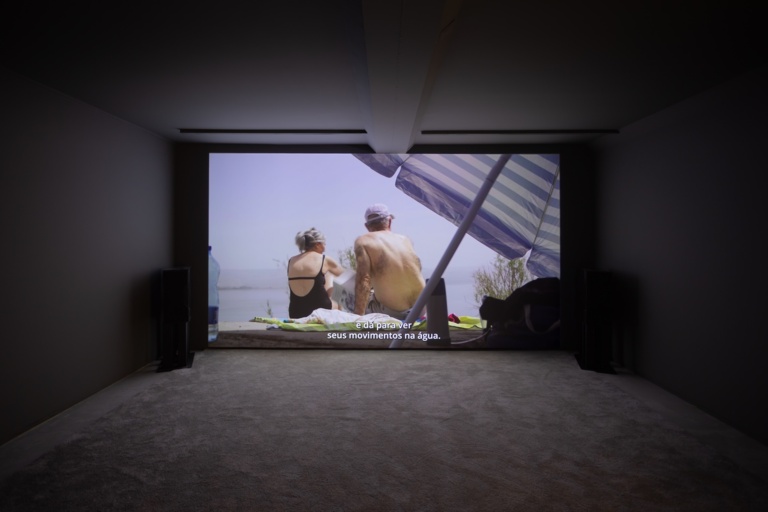
Jumana Manna’s solo exhibition "Broken, Taken, Erased, Tallied" at Rialto6 sheds light on alternative narratives of Palestinian daily resistance to the homogenous oppression and colonial extractivism of the Zionist project. Unpacking the pervasive genocidal destruction not just of the Palestinian people but of ecology, plants, the land itself, and its peoples’ ways of life, knowledge systems, and cultural diversity, the show features three installations, namely Cache (2019), Old Bread International II (2023) and Water Arm I and II (2018); the two images of The Cleaning Collages (2018 and 2023); and three bi-weekly interchanging films, specifically Foragers (2022), A Magical Substance Flows Into Me (2016) and Wild Relatives (2019). As a whole, it rejects the framing of a bilateral Israeli-Palestinian conflict for a deeper understanding of how our global social order causes deep destruction of sustainable ways of life, which is particularly clear in the Zionist Western-colonial capitalist genocidal project of Palestinian occupation.
Essay — by Eduarda Neves
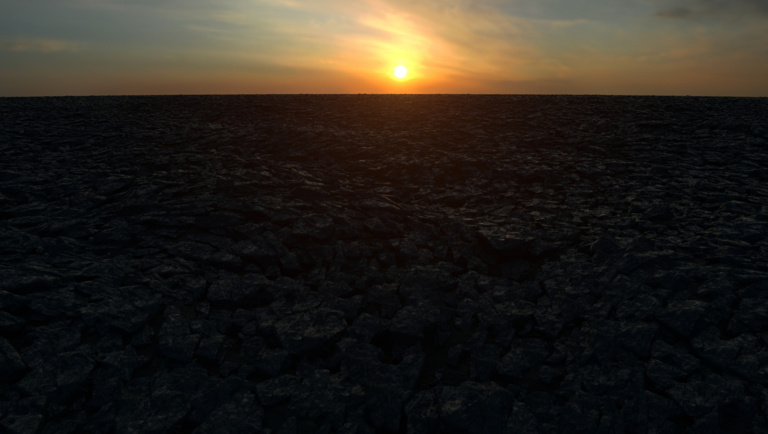
I haven’t written to you, dear friend, for almost a year. Everywhere it seems that nothing works. Inequalities are increasing, neoliberal capitalism swallows democratic modes of government and protest movements never last long. We will continue not to understand age-old problems like war, exploitation, fascism, violence and other forms of barbarism. This year I was in Paris twice. I saw some exhibitions, which I’ll tell you about. Right now, and above all, I have the image invading my memory of a homeless person removing and eating bark from the trunk of an oak tree, on one of the long Parisian avenues. This could have occurred anywhere in the world. This must be globalization. Our ontological failures are also global as we’re ncreasingly certain that we’re accomplishing nothing but failure.
Review — by Maria Kruglyak
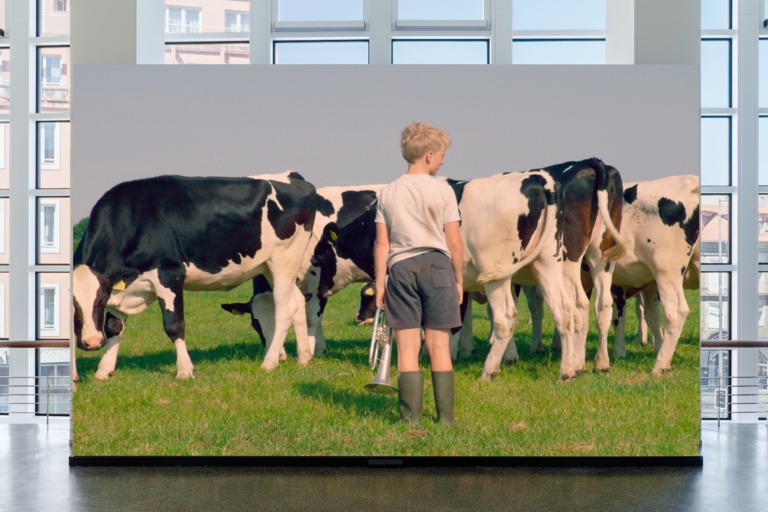
Priscila Fernandes’ Fanfare 2025 is absurd, comedic, loud and bursting with contradictions. On view at Batalha Centro de Cinema in Porto,[1] the solo exhibition resists clear interpretations. Instead, it leaves me with disjuncted words and feelings that get lost in my attempts to grasp what hides behind the loud emotions of real and imagined community fanfares in the two works on display: There Are No Radical Futures (59’, 2025) and Fanfare 2025 (22’, 2025). Typically concerned with individual and collective freedom, Fernandes delves here into music as political resistance in the European context, one where division and oppression seem to be getting the best of us. Both the fiction in Fanfare 2025 and the documentary work in There Are No Radical Futures leave us to grapple with the increasingly doomed relationships of power and resistance, success and failure, unity and division.
Review — by Sara Castelo Branco
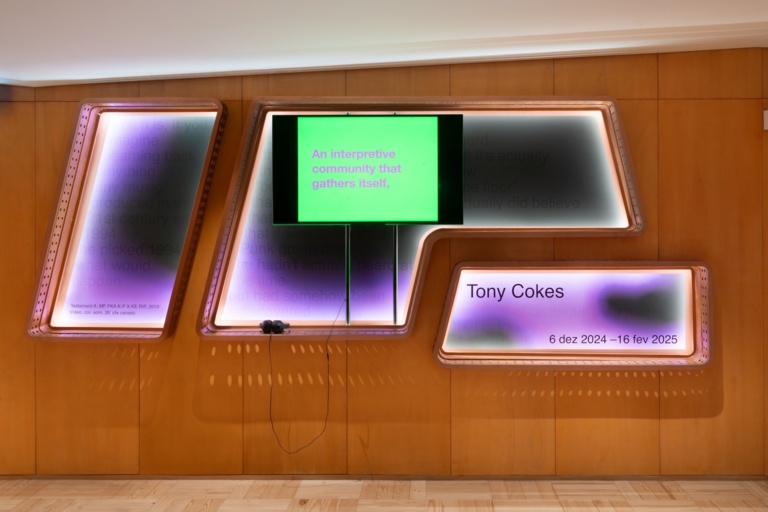
The video essays of American artist Tony Cokes (1956, Richmond, Virginia) frequently unfold through a self-reflexive movement, stripping film down to its essential components—text, sound, and image—to subvert cinematic codes and interrogate the political and ideological complexities disseminated by contemporary media. This process of reduction, rather than merely subtracting, engages in an act of regrouping or redoing—that is, reassembling disjunctive elements into a new critical order of repositioning through fragmentation. It is within this self-referential tension that Testament E: MF.slow.cancel.2014, Cokes’s first solo exhibition in Portugal, curated by Guilherme Blanc at Batalha Centro de Cinema (Porto), takes shape, featuring a new commissioned work alongside other key videos from the artist’s oeuvre.
Review — by Gabriela Vaz-Pinheiro
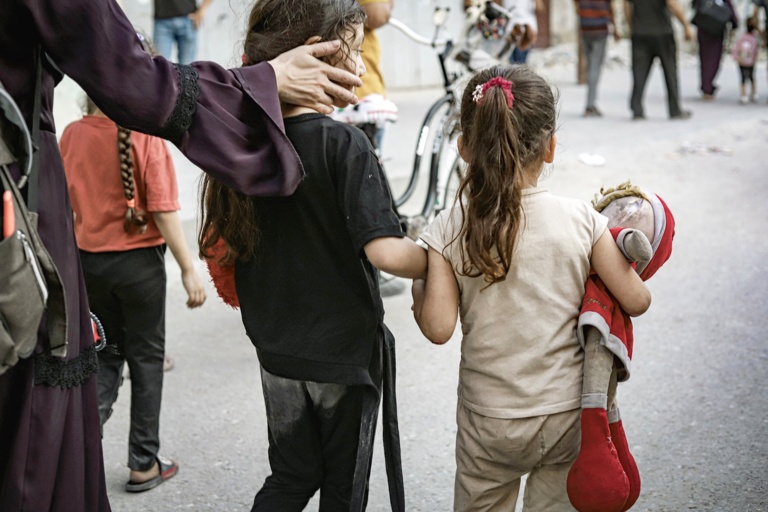
As I was asked to write about this exhibition I found myself torn between having no words to start the text and at the same time feeling certain that silence is not a place to be, because, as I read from John Berger's accounts, there is a silence that is "worse than bullets"[2]. And so, how does one talk about an exhibition that resonates suffering and war and death? How to speak of images when the reality they portrait is unspeakable? My own sense of justice and belief in equity and the protection of cultures and of human life, was what made me proceed, albeit aware of my privileged position as a European. I struggled to find the words to encompass the harshness of a people, and more poignantly the sudden killing of Fatma Hassona one of the artists in the exhibition, just after the opening. What this means is that my ways of looking at the images could not be framed by most of what I have learned about ways of looking at images, even if my learning is aimed at unmounting the still-established traditions of the Western gaze.
Review — by Mattia Tosti
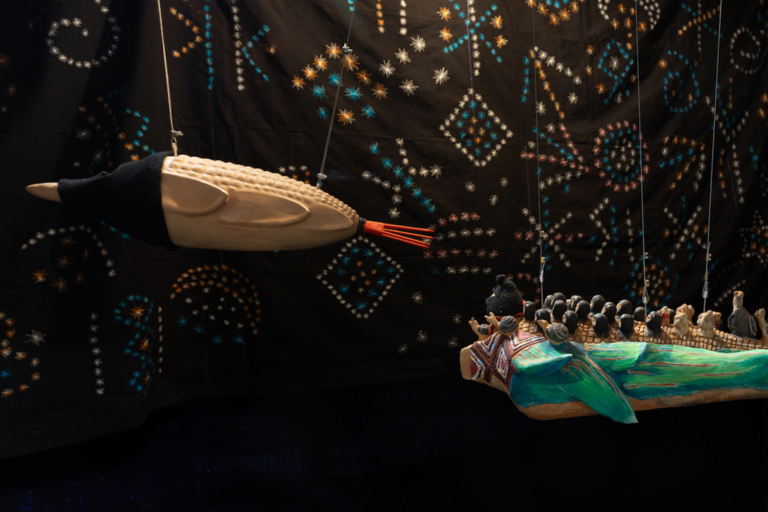
On January 1st, 1994, the Ejército Zapatista de Liberación Nacional (EZLN), an armed group of mostly Indigenous rebels seized several towns in southern Mexico. The following day, the local newspaper La Jornada ran the headline “Sublevación en Chiapas”, marking the beginning of the Zapatista uprising. More than three decades later, the Zapatistas continue to govern a network of autonomous territories across a vast region of Chiapas, Mexico’s poorest state and home to its largest Indigenous population. As a revolutionary movement, the Zapatistas firmly defy easy ideological categorizations, including alignments with traditional leftist vanguards. What can be said with a certain degree of certainty to define their political project is their firm anti-capitalist stance and political practice grounded in Indigenous cosmologies, communal traditions and a long history of resistance to colonialism.
Review — by Sara De Chiara
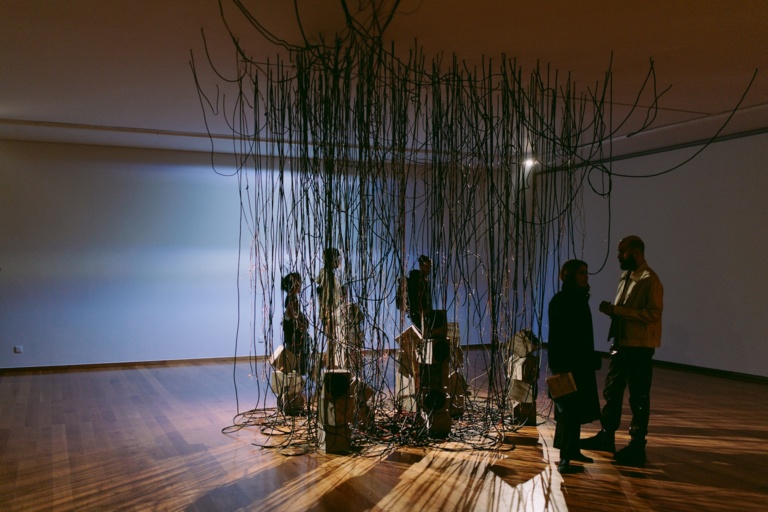
When stepping into Electric Jungle Fever, the exhibition conceived by Vivian Caccuri for the first floor of the Galeria Municipal do Porto, viewers enter a space in semi-darkness, charged with tension. They are forewarned by the exhibition’s curator, Bernardo José de Souza, who, in the introductory text, defines the artist’s intervention as an atmosphere rather than a simple installation. The sensation is one of immersion, advancing through the space into an “other” atmosphere—a dense and enveloping environment pervaded by a buzzing sound, at once familiar and alienating, which transitions from being almost inaudible to bombastic. One is undecided whether to attribute this noise to the buzzing of mosquitoes or the hum of electric cables, suggested by their tangled presence recurring in several works in the exhibition. These elements embody this contemporary “selva”—the electrified jungle evoked in the exhibition’s title—where technology and nature, as well as human and wild environments, seem contiguous, if not intertwined.
Review — by Mattia Tosti
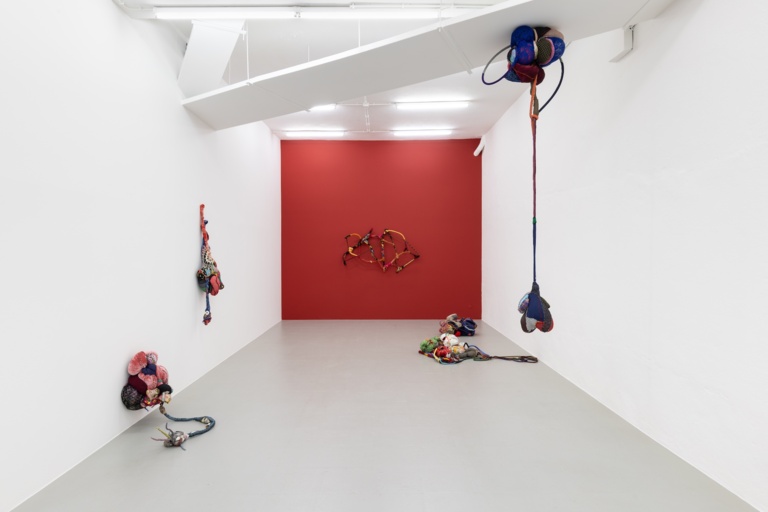
Just a few days before the opening of Sonia Gomes’ show at Kunsthalle Lissabon, I attended a talk with her and other guests at CAM Gulbenkian. During the event, they screened an excerpt from Um Filme Para Sonia Gomes by Pedro Marques and Fernanda Brenner. As in many documentary portraits, this one also complements the protagonists’ first person reflections with testimonies from collaborators and close acquaintances. I’ve always felt some form of discomfort with this format. Rather than revealing unexpected facets of an artist’s way of being, thinking, and making, it often feels like a kind of awkward contest— one where speakers seem pressured to condense the complexity of a person and their practice into the smartest, funniest, or strangest anecdote, all within a tight thirty seconds frame. Yet, among these compressed contributions, one voice struck me for its humility, precision and poetry.
Essay — by Pedro Barateiro
On 25 July 2016, during the Democratic National Convention in preparation for the US elections the following year, First Lady Michelle Obama gave an emotional speech in support of a presidential candidate. Speaking of her personal experience, she said: “I wake up every morning in a house built by slaves.” The first lady's speeches were carefully written by Sarah Hurwitz, a Harvard-educated lawyer who was also Barack Obama's speechwriter. In 2017, another president would take office to change the way politics is done across the Western world from the White House.
Review — by Valerie Rath
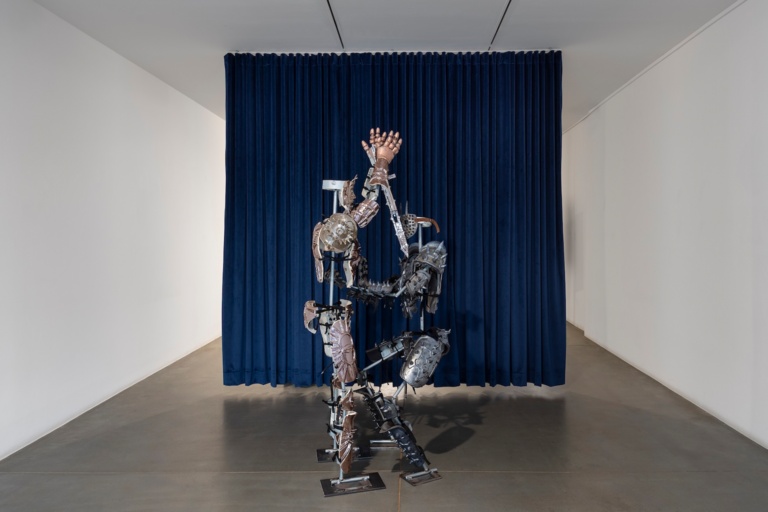
Lately, I've been thinking a lot about the purpose of mythology—about how we can transfer this narrative tool into a contemporary world, or whether there still is a modern mythology, and in what form and for whom it remains relevant. During my brief research, I quickly came across the world of video games. Although I have never really been part of the gaming world myself, it might be the medium best equipped to create a sphere that can evoke our reality but transcend it in a multitude of imaginings—a sphere that creates a mutual space in which the individual can participate to build a communal experience. Moreover, it is a world of repetitions, a world whose endings are not finite, in which one can die a thousand deaths because there is always tomorrow, and tomorrow, and tomorrow.