
Sonia Gomes: Torcer, amarrar e pender
Just a few days before the opening of Sonia Gomes’ show at Kunsthalle Lissabon, I attended a talk with her and other guests at CAM Gulbenkian. During the event, they screened an excerpt from Um Filme Para Sonia Gomes by Pedro Marques and Fernanda Brenner. As in many documentary portraits, this one also complements the protagonists’ first person reflections with testimonies from collaborators and close acquaintances. I’ve always felt some form of discomfort with this format. Rather than revealing unexpected facets of an artist’s way of being, thinking, and making, it often feels like a kind of awkward contest— one where speakers seem pressured to condense the complexity of a person and their practice into the smartest, funniest, or strangest anecdote, all within a tight thirty seconds frame. Yet, among these compressed contributions, one voice struck me for its humility, precision and poetry. It was that of Paulo Nazareth, a fellow Brazilian artist whose sensibility shares deep affinities with Sonia Gomes. I can’t remember his exact words, but he spoke about this idea of pensar com as mãos (thinking with the hands). I walked out of the talk with this thought going around my head, struck not only by the fact that it is a meaningful entry point for engaging with Sonia Gomes’s work and her latest exhibition, but also with the sense that I had encountered this notion before.
Last year, I had interviewed Paulo Nazareth for a book that will be published soon. After the talk at Gulbenkian, I went back to that interview — something I rarely do — and found out that he had spoken with me about the same idea. Reflecting on his mother, one of his earliest and most enduring artistic influences, he said that her most important lesson was to learn “to think with the hands”. Though she lacked formal training in weaving, she taught herself by watching, exploring and doing. He told me: “People think we only think with our heads, but we think with the whole body, my mum encouraged me to think with the body, to think with the hands, to manipulate”.
Again, I appreciated his choice of words: Manipulate comes from the Latin word manus (hand). Originally, it described the act of handling of materials with precision and care, then it appeared later in alchemical texts to refer to the combination of substances to transform matter. Only centuries later the term acquired the psychological connotation of subtle or strategic influence over other’s thoughts. Tracing the semantic evolution of the term, from the manual domain to the mind, reveals something closer to what Paulo Nazareth and his mother meant —a form of embodied intelligence, where hands are not just a tool, but a site of thought, creation, intuition and transformation. In the words of Jean-Luc Godard: “Some think while others act—but the true human condition is to think with the hands.”[1] Sonia Gomes’ life and practice seems to reflect this very condition with a rare honesty.
She was born in a small town in Minas Gerais which was once known for being a textile hub in the region. After losing both parents at a young age, Gomes was raised by her paternal aunts. Yet, according to the artist during these early years, the most formative figure was her grandmother, Avó Petrina. It was from her that she inherited, among other things, the vital notion of thinking with the hands, as she also didn’t learn to sew through formal instruction, but through careful, intuitive observation. “She didn’t teach me, I observed”[2], Gomes recalled in a memory that closely resembled Paulo Nazareth’s earlier account of matrilineal and embodied learning.
Gomes then transferred this tactile knowledge into dressing — an early, instinctive and bodily form of self-expression that she pushed further. She started crafting her own unique style by altering her clothes, stitching and tearing their fabrics, and creating extravagant handbags and accessories, in gestures that blended teenage rebellion with an urgent drive to create. In a recent interview, she remarked, “I try to modify everything I see—I don’t like things as they come, pre-established. I always want to change them”[3]. This resistance to the predetermined remains central to her practice, and not much has changed in her attitude since her early years.
Her defiant spirit remains intact, and though her work is open ended and not overtly political, its very existence seems to carry a spirit of resistance. Through her work, she challenges not only the porous and illusionary divide between art and craft—as she noted at the talk at Gulbenkian, the word “craft” has often served to marginalize Black forms of expression—but also the hierarchies that have long relegated textiles as a “feminine” and “minor” art. Indeed, her practice has been associated with what Julia Bryan-Wilson terms “textile politics,”[4] a concept that frames textiles as a disruptive force that unsettles distinctions between amateur art and craft, throwing those very categories into crisis.
Her fascination and ease with textiles persists, as nowadays she still uses the same materials she first handled as a child—fabric, thread, found objects— that she gathers mostly from donations. These garments —which the artist stitches together into abstract sculptures or wraps around old furniture or tree roots—come from people of varied lives and backgrounds, each carrying traces of past memories. Some were worn in celebrations, others in the quiet rhythm of everyday life; many arrive faded, yellowed, torn, or set aside because the personalities who they represented or bodies who wore them have since disappeared, leaving only the fabric behind to remember their existence. Overall, from the vibrant, handmade accessories of her youth, to the sculptural pieces now shown in major institutions around the world, Gomes’s textile art remains rooted in the body, in listening to what materials want to become, and in a quiet and persistent refusal to conform.
Before attending the talk at Gulbenkian, I have to admit that my understanding of her practice was limited—I knew about her process and the collective dimension of her work, but I was not so much aware of the general context of her life and work. Then, since the talk offered almost no clues or spoilers about the exhibition itself, I chose not to do any more research before attending to the opening, hoping to preserve a more unmediated and perhaps instinctive encounter with her work. This isn’t something I often do, but given that her sculptures operate within the realm of abstraction, I felt that, in this case, this restraint exercise could hopefully result in a meaningful and perhaps even rewarding experience.
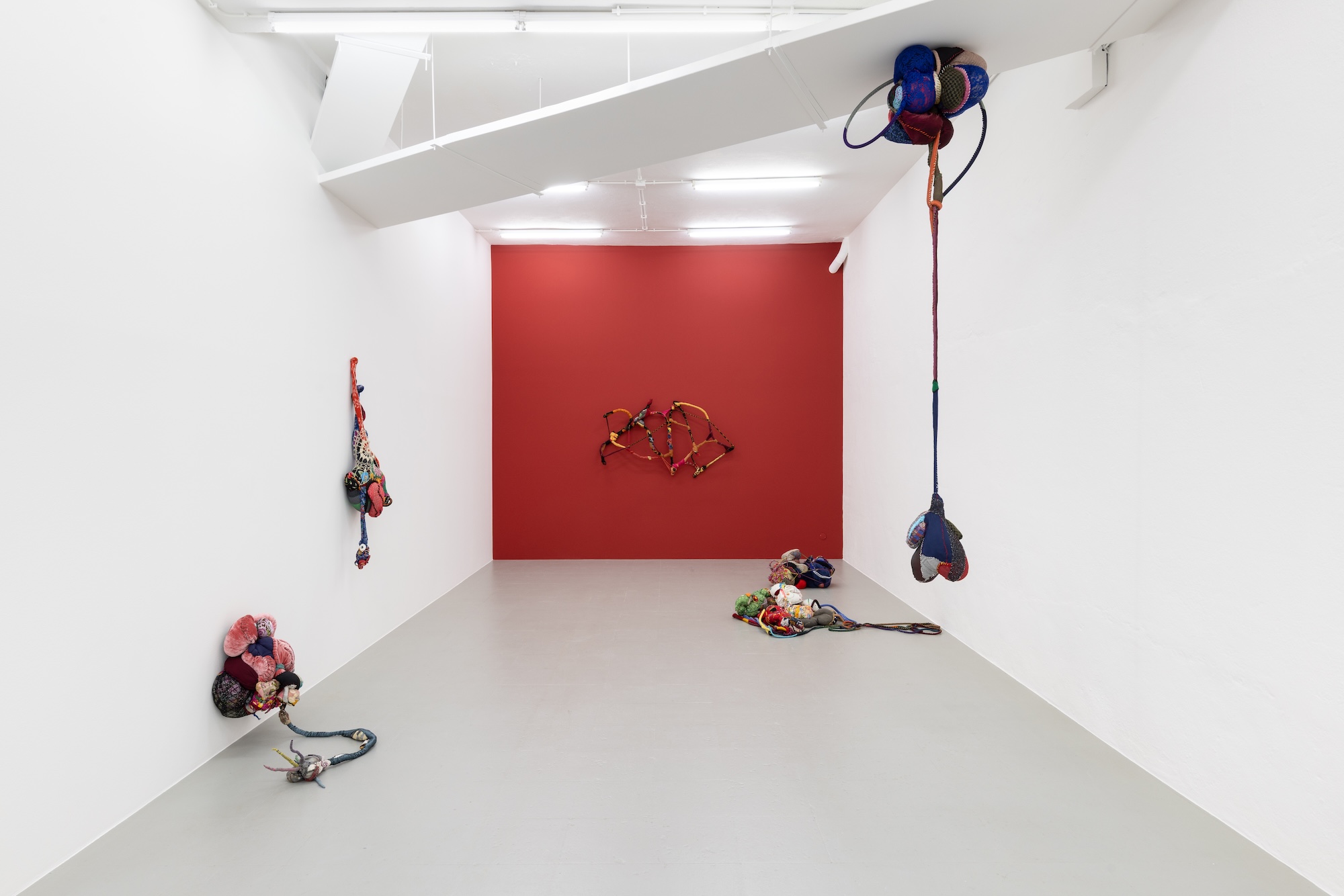
The exhibition immediately struck me for its careful and well-balanced installation. The works extended beyond the basement, unfolding through the entire space: one greeted visitors right at the entrance, followed by others positioned along the stairway, guiding visitors into the floor below. Downstairs, the show proposed an inventive yet harmonious spatial composition. Almost all the sculptures were arranged in different and unexpected places — not for the sake of novelty, but in ways that accentuated their shapes, proportions and postures. Each one seemed to inhabit its position with an almost organic ease. Unlike many shows in this venue, which tend to radically transform the space in order to assert the exhibition as a medium in itself, this one seemed to embrace, respond or even emerge from the existing architecture. Overall, the disposition of the show felt like a perfect spatial translation of Sonia Gomes’s aversion to the predetermined and the obvious.
As I began to look more closely at the works, a second impression took shape: one that I can describe as a sense of familiarity towards what I was seeing. This feeling was not just provoked by the everyday materials used in the sculptures, but mostly by their forms. The majority of them seemed to evoke something bodily, as if they were organs, not human nor animal, but of beings that could not name [1] yet. One piece on the floor resembled an amniotic sac, filled with countless buttons nestled within. Some seemed to grow from the walls, others lay stranded on the floor, as if lifeless, while others hung from the ceiling with a tension reminiscent of muscle fibers or ligaments. They felt visceral, fluid, fleshy, almost gory.
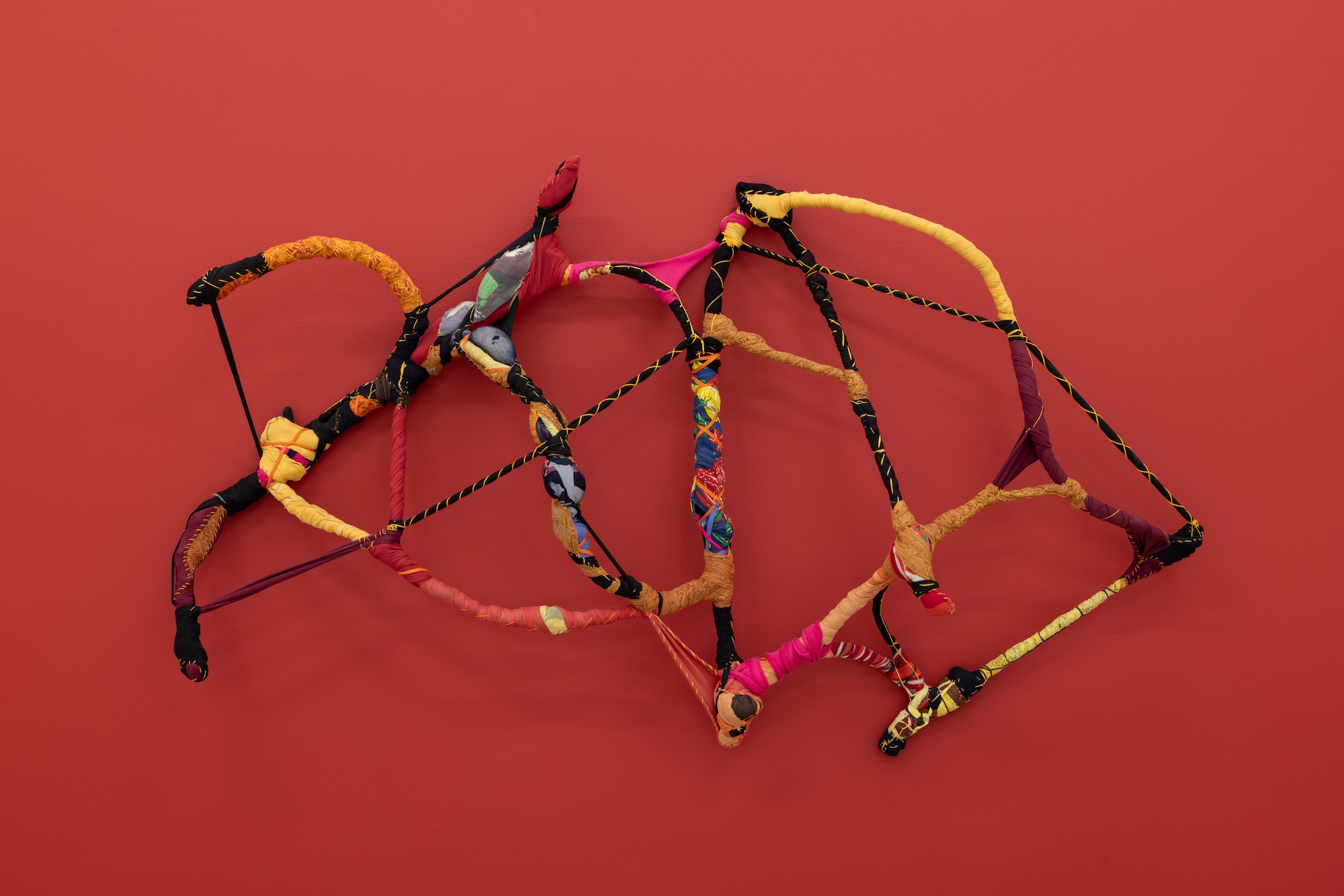
One sculpture in particular crystallized this association : Torção ( série Torção) (2004). Installed on a blood-red wall, it featured a horizontal configuration of connected loops and twists, wrapped in textile fragments. From afar, the shape of the work seemed to recall that of a DNA double-helix. As I got closer to the work and looked at the variety of fabrics stitched together, with its different shapes, textures and colours, the similarity felt more vivid. These scraps of textile began to feel like something similar to the proteins or nucleotides that in a DNA chain carry the different traits of a being. It seemed as if every piece of cloth, charged with its own memory, when united by the thread of the artist came together to form something new: a collective body, with a lineage made of different colours, shapes and stories.
The days following the inauguration, when I finally allowed myself to read extensively about her creative universe, I came across a statement from Sonia Gomes that stayed with me. She recalled that, as a child, she had access to a library that didn’t contain any art books but only volumes on science and biology. She became fascinated by anatomical drawings, such as tissues, cartilages and other components of the body; images that she still considers as lasting references in her work[5]. Reading this, I felt pleased, as going to the show without much prior preparation somehow renewed my faith in intuition. But that feeling didn’t last long, as a question took its place : if these sculptures are organs, then whose body might they be part of? I didn’t arrive right away at an answer. But as I though about her work, her life, and her way of speaking about both, I began to wonder, tentatively, if maybe these are not organs of a body of a single person, but of something entirely different. Maybe they hint at something more open-ended, more porous, more collective. Perhaps, they resonate to a Body without Organs.
The Body without Organs is a concept of Deleuze and Guattari that challenges the notion of the body as an apparatus governed by fixed parts, functions, and hierarchies[6]. It’s use can extend beyond the corporeal to systems and spaces where informations, sensations, and connections flow without being restricted by traditional vertical structures. This notion in a way brings us back to the starting point of my text: thinking with the hands. Like the Body without Organs, Paulo Nazareth’s idea resists hierarchy and centralization, proposing a way of knowing in which thought is distributed across the entire body, not solely in the head. Gomes’s organic sculptures, with their wounded, fragmented, and bodiless appearance, also pulse with the same horizontal and intuitive ethos. In their way of being fluid and experiential, they refuse to obey the modernist order of the senses, as they subtly defy pre-established ideas and hierarchies embedded in the body, between bodies, but also in the fabric of contemporary art system. Her materials of choice, which are commonly dismissed or devalued, are turned into the foundational components of a visual language that is intuitive, embodied, and insurgent.
In one of the first interviews I saw with Sonia Gomes, she said: "I think I work with poetry; my work always relates to poetry. But it’s not a literary kind of poetics, it's a visual, material one.".”[7]At the time, I didn’t fully grasp what she meant. Now, having come to know her work more, I think I understood what she meant.
There is an ancient and enduring analogy between the acts of weaving and writing, between textiles and texts —both are rooted in the Latin texere (to weave). Just as threads are joined together to form fabric, words and ideas are woven into meaning. Roland Barthes articulated this association when he described a text as a “tissue”, a complex web of intertextual connections with no individual author. In his view, a text is shaped by a multitude of voices, histories, and influences —it is not governed by a single entity, as a body without organs. With this in mind, now I see her works as visual poems made not of verses, but of textures, tensions, lines, stitches, folds that compose forms that are felt before they are understood. Created from donated clothes, they are not fixed objects but ongoing negotiations between memory and matter, absence and presence, personal memories and collective history. What emerges is a kind of textile poetic, open-ended, bodily and resilient where cloth and their stories are stitched together not to preserve a singular meaning, but to remain in motion, always guided by the hands and the intelligence they hold within them.
Mattia Tosti (Rome, 1993) is an Italian-Brazilian curator and writer. His work focuses on research-based and site-responsive exhibitions, often embracing interdisciplinary collaborations and hybrid formats. His professional background includes experiences in museums, such as MAC São Paulo and MAAT Lisbon and in contemporary art galleries, notably serving as director of Monitor Lisbon (2020-2025). As an independent curator, he conceived exhibitions for institutional, commercial, and non-conventional spaces. With Orsola Vannocci Bonsi he started Órbitas, a series of shows held at Cosmos CAC. As part of Da Luz Collective, he curated the video art section of the Italian Cinema Festival in Lisbon for three editions (2022,2023, 2025). His writing has appeared in academic publications by Routledge and De Gruyter, and in internacional magazines.
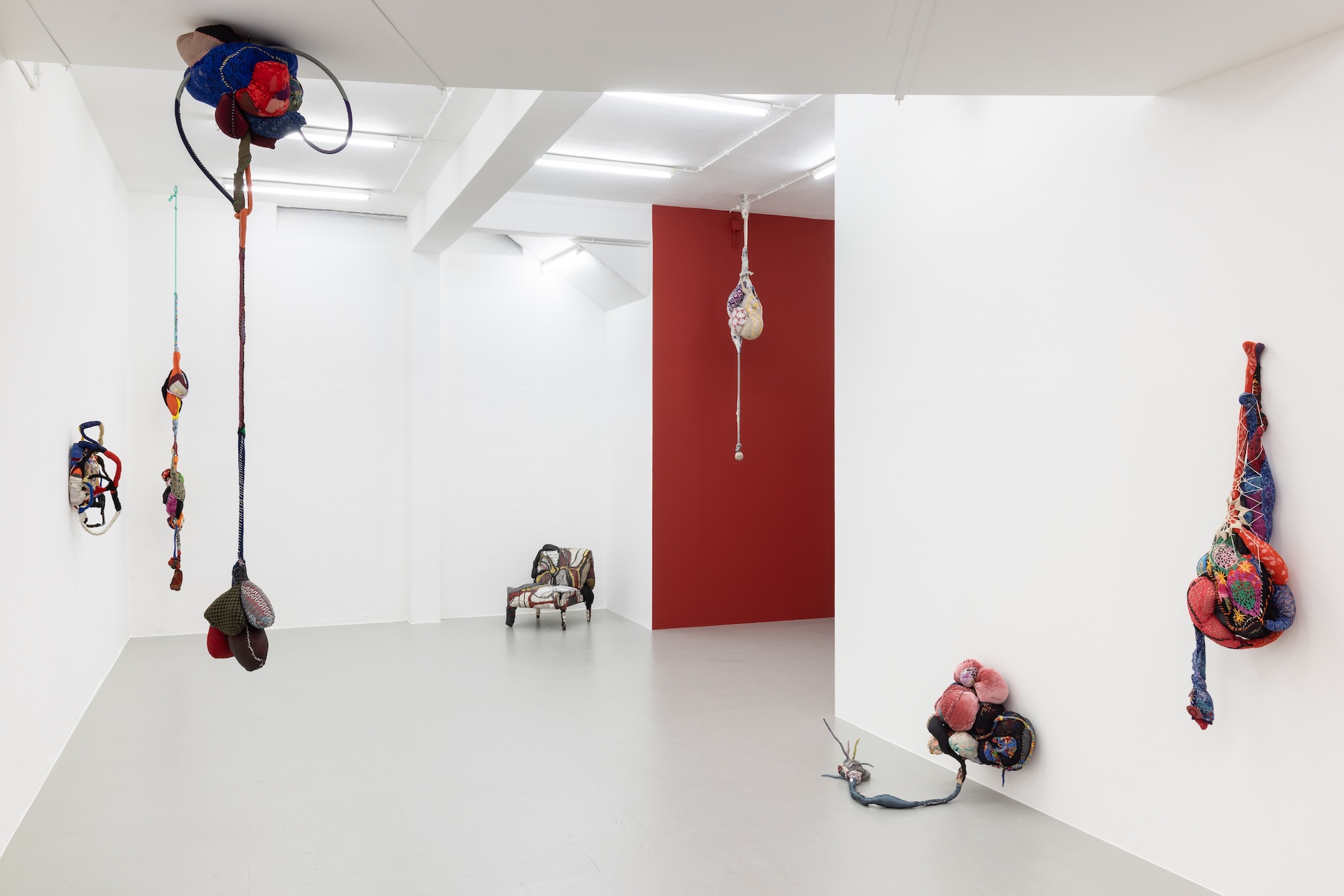
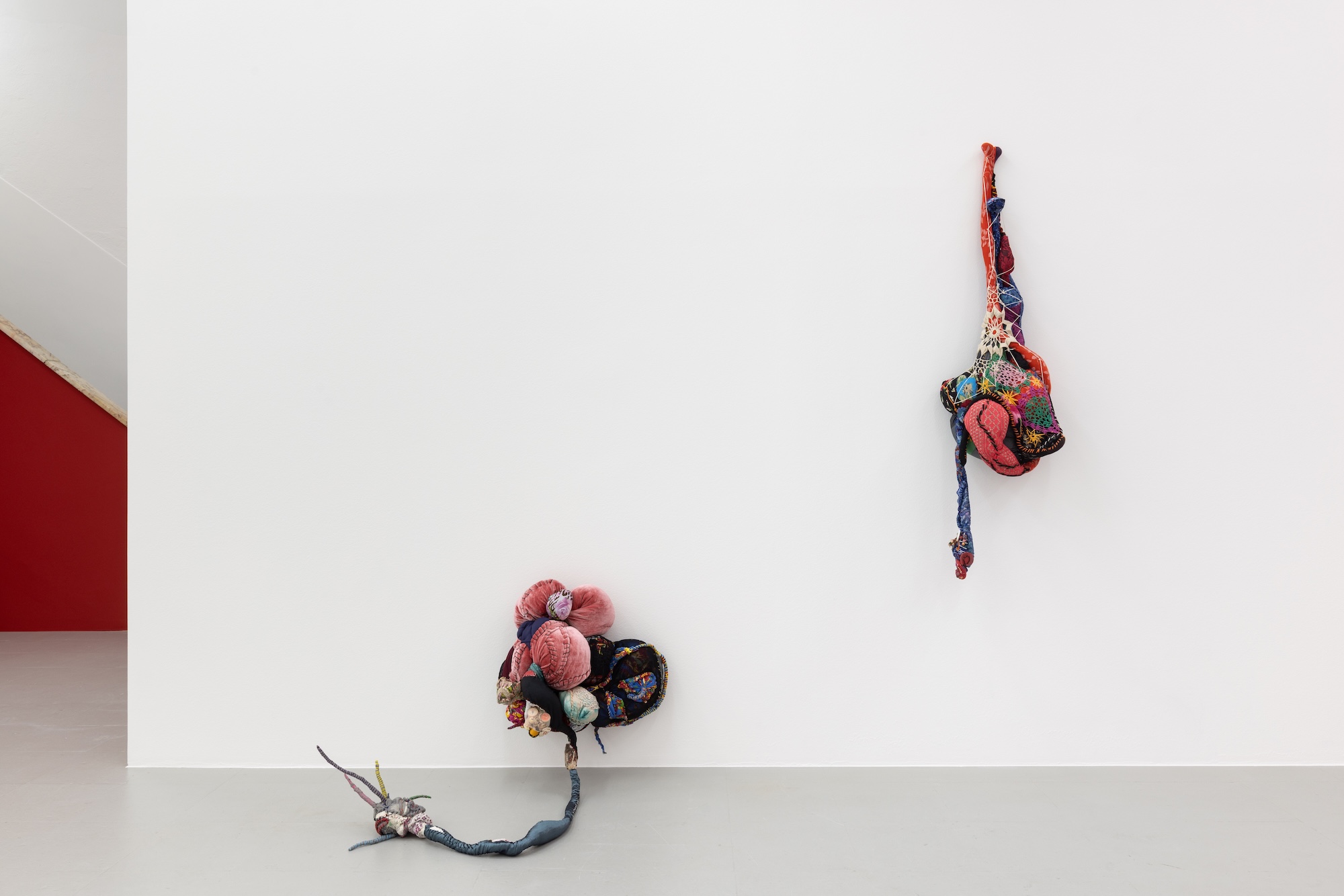
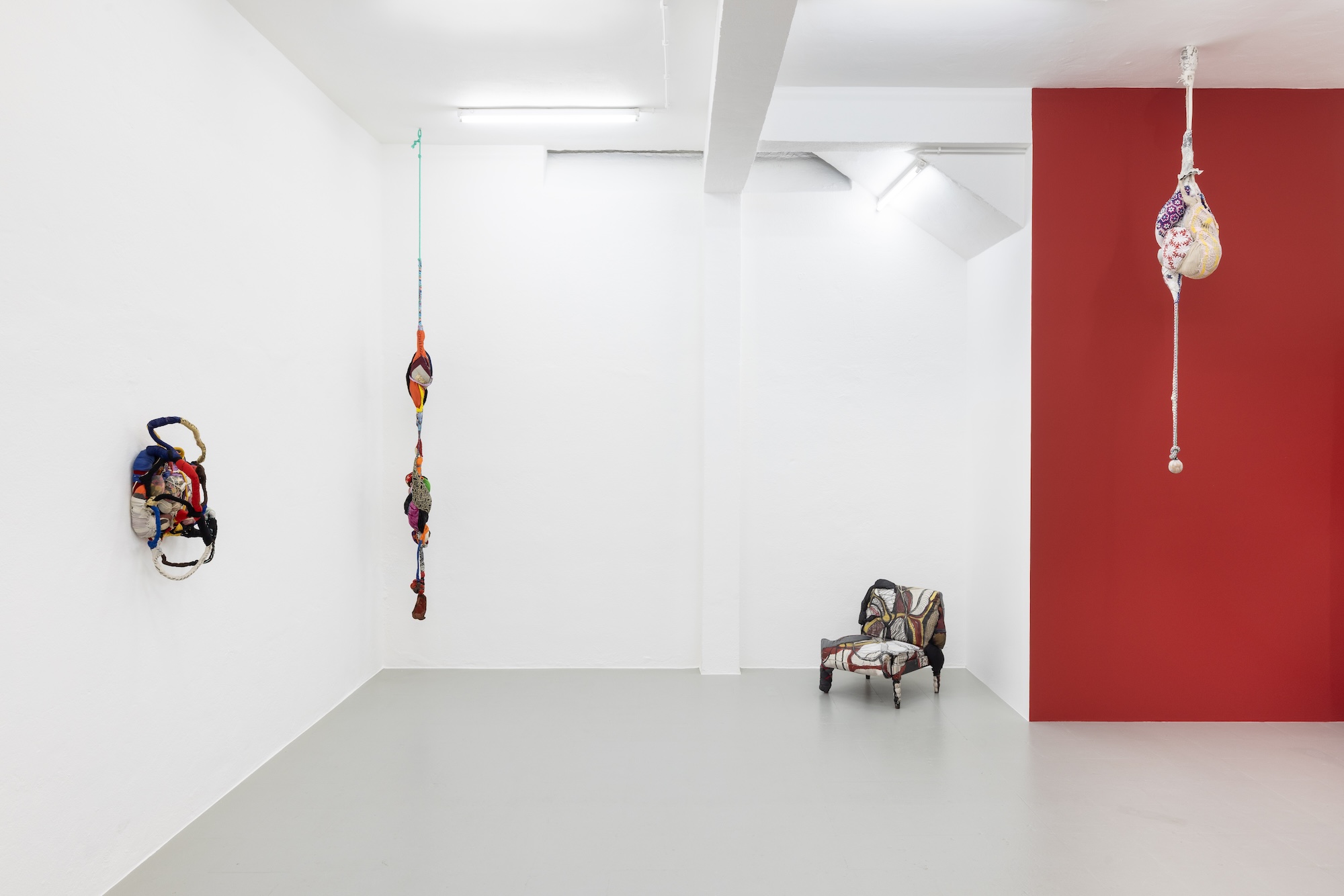
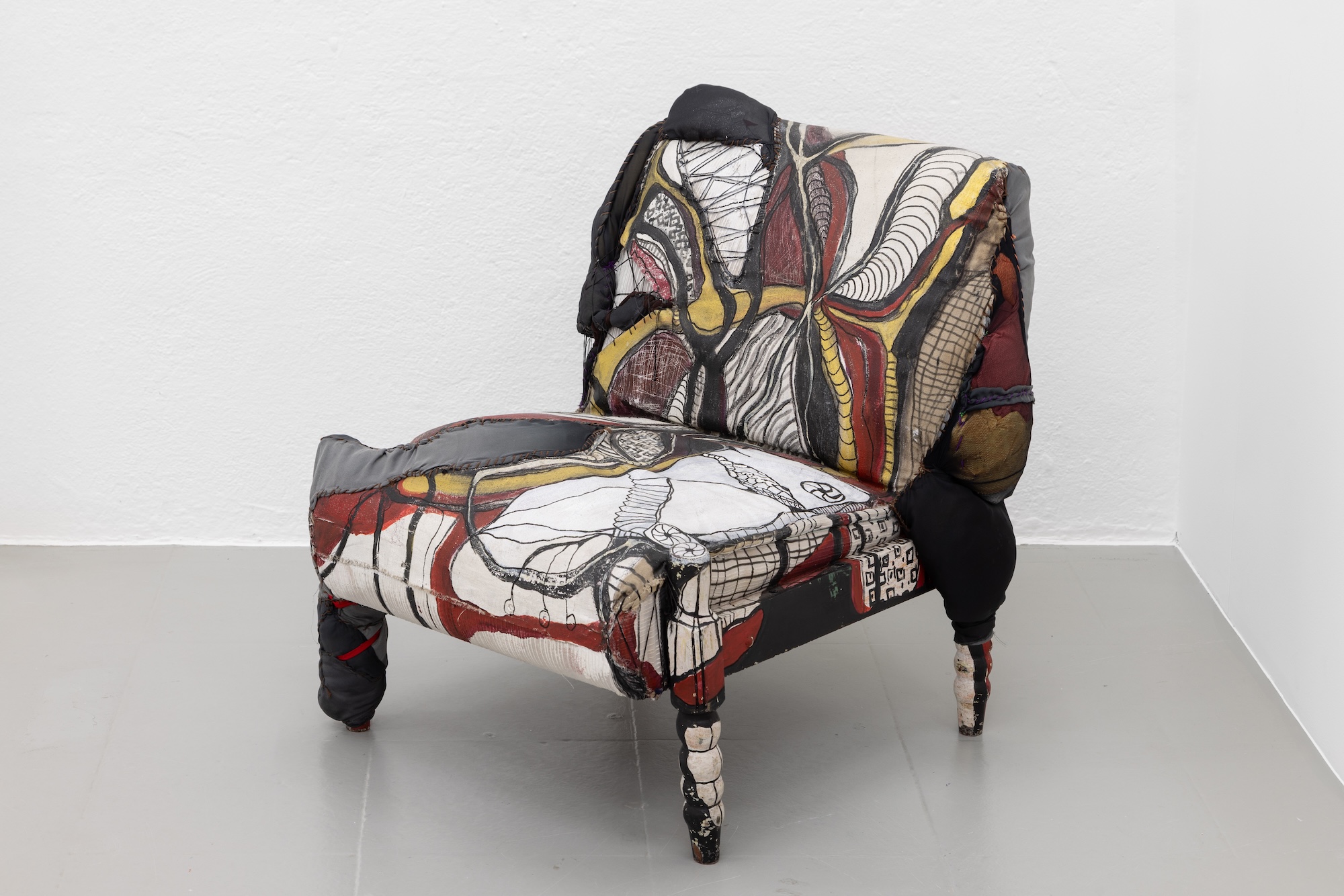
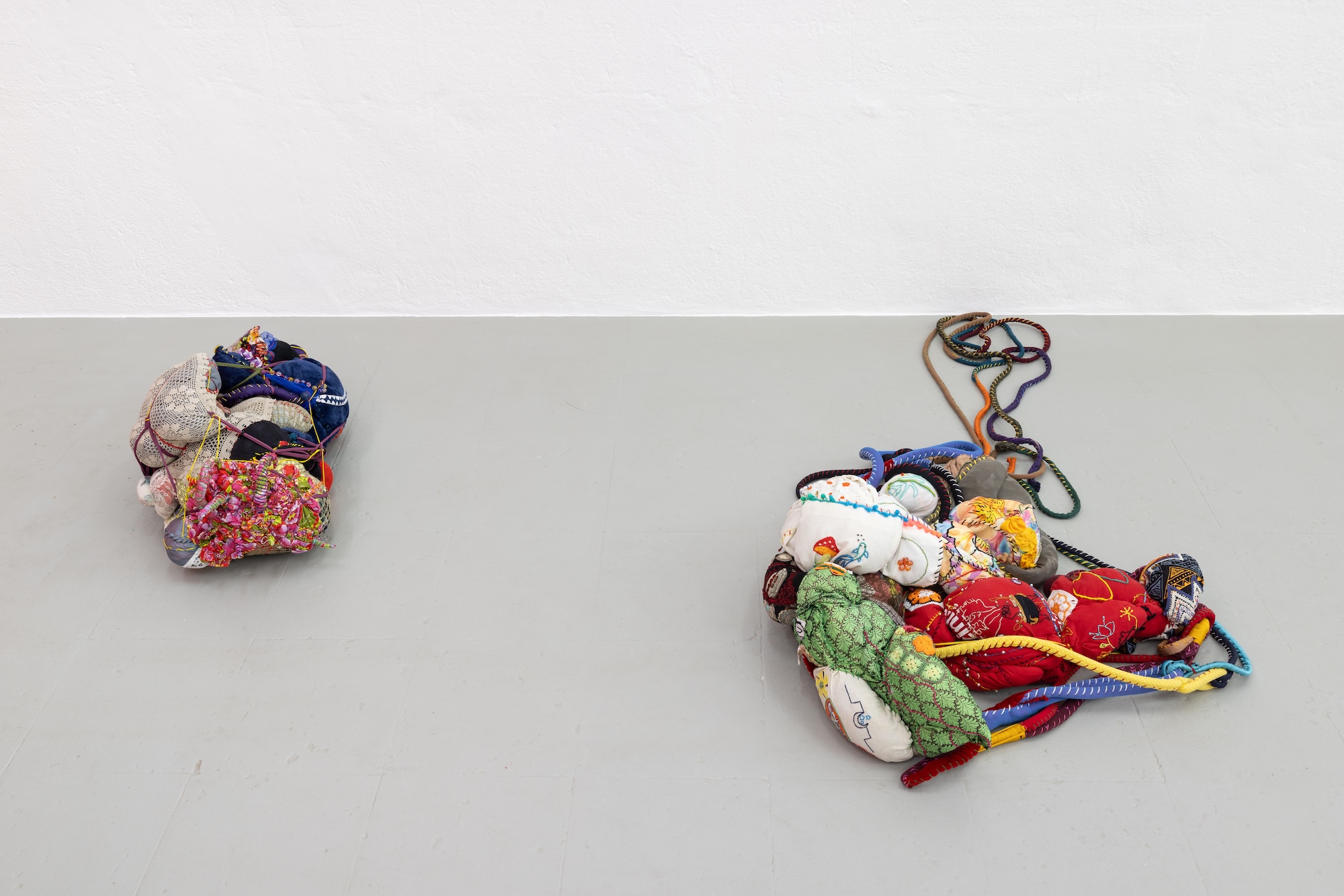
Sonia Gomes: Torcer, amarrar e pender. Exhibition views at Kunsthalle Lissabon, 2025. Photos: © Bruno Lopes. Courtesy of the artist and Kunsthalle Lissabon.
Notes:
[1] Jean Luc Godard, "Histoire(s) du Cinéma" (1988-1998)
[2] Cecilia Faliardo-Hill “The limit of the Invisible : The Black, Feminine”, MASP-MAC Rio (2018)
[3] “Sonia Gomes” Uploaded by Sesc TV, 28th of December
2022, 0’:45”-0’:58”, https://www.youtube.com/watch?v=CTOEra2Cbho
[4] Julia Bryan-Wilson, Fray: Art and Textile Politics, University of Chicago Press, 2017.
[5] Cecilia Faliardo-Hill “The limit of the Invisible : The Black, Feminine”, MASP-MAC Rio (2018)
[6] Gilles Deleuze and Félix Guattari, “Anti Oedipus: Capitalism and Schizophrenia", Penguin Classics, 2009
[7] “Inspira.Mov Brasil com Sonia Gomes - 3a. Temporada” Uploaded by Inspira.mov, 24th of September 2022, 1’:28”-1’:55”, https://www.youtube.com/watch?v=7BT2LZuSwCs