
Programa Espacial Autónomo InterGaláctico
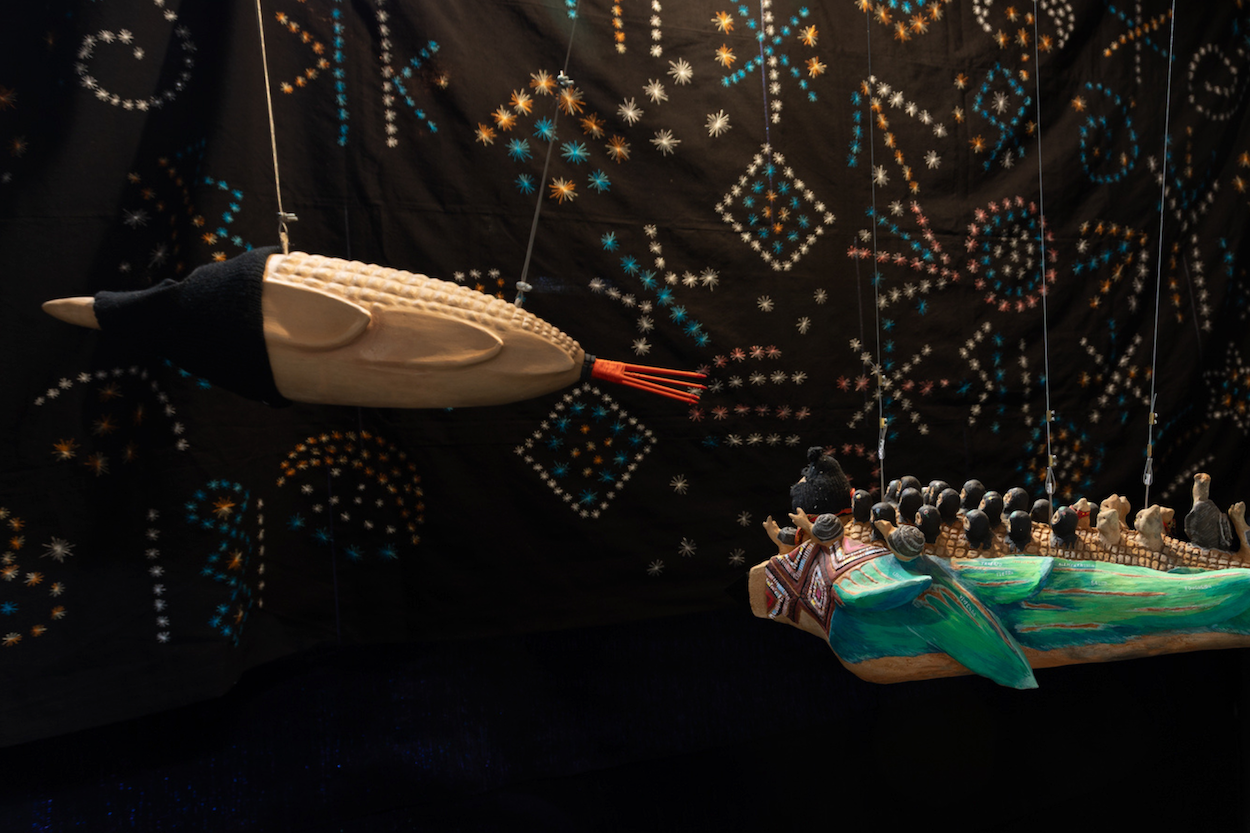
Towards Infinity and Beyond: The Earthly and Cosmic Landscapes of the Zapatistas in Collaboration with Rigo 23
On January 1st, 1994, the Ejército Zapatista de Liberación Nacional (EZLN), an armed group of mostly Indigenous rebels seized several towns in southern Mexico. The following day, the local newspaper La Jornada ran the headline “Sublevación en Chiapas”, marking the beginning of the Zapatista uprising. More than three decades later, the Zapatistas continue to govern a network of autonomous territories across a vast region of Chiapas, Mexico’s poorest state and home to its largest Indigenous population. As a revolutionary movement, the Zapatistas firmly defy easy ideological categorizations, including alignments with traditional leftist vanguards. What can be said with a certain degree of certainty to define their political project is their firm anti-capitalist stance and political practice grounded in Indigenous cosmologies, communal traditions and a long history of resistance to colonialism. While their ideological orientation is intentionally open-ended, their approach to governance is very clear: a form of direct democracy that seeks to dismantle vertical power structures in favour of horizontal ones. This vision is perhaps best expressed by their principle “Mandar obedeciendo” (Lead by obeying), which reimagines leadership as subordinate to the will of the community. What was initially described in the local news as simply an “uprising” was, in reality, the start of a unique example of Indigenous self-determination and radical political reimagining whose autonomy and legacy persist to this day.
In Programa Espacial Autónomo Intergaláctico, currently on view at ZDB 8 Marvila, Portuguese artist Rigo 23 (Madeira, 1966) presents the outcome of a long-term collaboration with weavers, painters and carpenters from the Zapatista community. Over nearly three years and nine visits to Chiapas, they have developed a collective installation that resists logics of individual authorship, opening a space for sharing the singular aesthetics, cosmologies and poetics of the Zapatista universe. The premise of the show is simple: drawing on the group’s annual encuentros intergalácticos—political meetings symbolizing their borderless vision of the world—Rigo 23 asked them how they’d travel to an actual meeting beyond the Milky Way and what they’d bring. The result is a vibrant, playful, yet richly layered exhibition that reimagines space travel through the Zapatistas’ collective imagination.
Rigo 23 has always been interested in intercultural dialogue, driven by concerns with politics, ethics and justice — themes he addresses primarily through socially committed and collaborative projects. In a phone interview with him following my visit to the exhibition, he described himself as a “landscape artist” of lived experiences, depicting terrains shaped by people’s hopes, aspirations and struggles. After gaining recognition for creating conceptual street murals that made use of the typography of traffic signs, his practice soon expanded to engage directly with the realities of dissident figures—rebels, political prisoners, Indigenous communities and artists who challenged the myth of the “American Dream” and exposed its systemic injustices. Initially, his approach resembled that of the Chicano muralists—who depicted community leaders, activists and workers in order to honor their contributions, reclaim public space and raise awareness of their battles. However, over time his work has gradually moved away from traditional representational strategies as well as from the notion of individual authorship. Rather than using different media to depict others, he chose to leverage his privilege as a white, European and well-known artist to create a platform for others’ stories and artworks. This radical gesture of artistic and political solidarity has paradoxically become a defining trait of his practice, with his recent “human landscapes” now offering unmediated glimpses into the struggles, and aspirations of the people and communities he admires.
The Zapatista movement is undoubtedly one of them, and the exhibition Programa Espacial Autónomo Intergaláctico at ZDB 8 Marvila is the latest project where Rigo 23 employed this collaborative approach. Upon entering the show, visitors are greeted by a banner painted on the wall with the phrase: Esta usted en territorio zapatista en rebeldia. Aqui manda el pueblo y el gobierno obedece (“You are in Zapatista rebel territory. Here the people give the orders and the government obeys”), a declaration that signals the symbolic extension of their extraterritorial zone into the exhibition space. The show then unfolds as an immersive installation recreating corridors, rooms, and checkpoints where colorful paintings, embroideries, murals, videos and sculptural pieces present various perspectives on Zapatista culture and cosmology.
There is a recurring iconography that runs throughout the works: mostly masked humans, corn cobs, and land snails. The mask, used during the insurrection to protect members from state retaliation, has now evolved into a symbol of the group’s collective identity. Corn, a traditional food and sacred crop, has fed Indigenous communities for thousands of years. The snail instead represents the Zapatistas’ patient, grounded approach to rebellion. Several pieces feature slogans in Spanish that feature apparent grammatical errors that, in this context, should be read not as mistakes but as acts of resistance and reappropriation of a language that was imposed on them centuries ago. Other works celebrate key moments in the movement’s history—such as the banning of GMO crops in Mexico—or express solidarity with other struggles as, for example, the Palestinian one. These connections reflect the Zapatistas’ belief that oppressed peoples, though geographically distant, share struggles that are close. The show finally culminates in a large-scale sculpture of a corn cob–shaped spaceship, which is a three-dimensional rendition of one of the paintings by one of the community’s artists that served as a guiding vision for the project. This work is a striking reappropriation of the space imaginary—which nowadays seems to be completely dominated by the masculinist fantasies of conquest and expansion of a few billionaires—by a community at the margins of capital.
It is worth noting that all the pieces in the show are deliberately presented without individual signatures, emphasizing the focus on the group’s shared identity. This choice aligns closely with Brian Eno’s concept of “scenius,” a term he coined to describe the collective intelligence and creativity of a community, in contrast to the idea of “genius,” intended as the work of an isolated figure. As Eno explains, while art history always attributes great ideas to individuals, they often emerge from richly entangled cultural scenes and networks of shared knowledge[1]. The deep respect and care with which Rigo 23 has engaged with the scenius of the Zapatista community throughout the entire project is undoubtedly one of the show's main strengths.
As said, the collaborating artists were granted carte blanche regarding all aesthetic decisions, and the entire process of evaluating and approving the exhibition also unfolded according to their own political and bureaucratic frameworks. To formally initiate it, Rigo had to present the proposal to a Junta de Buen Gobierno (Good Government Council), adhering to the community’s collective decision-making process and its notoriously long pace. As he was advised early on: “Ármate de tu más tenaz paciencia y va a sembrar tus semillas” (“Arm yourself with your most tenacious patience and go plant your seeds”). This spirit of patience, respect and reciprocity seems to have shaped the entire process of the show.
However, as I stepped out of the exhibition space, leaving the universe of the Zapatistas, I was confronted with a massive banner advertising luxury apartments priced at nearly a million euros right across the street. It was impossible not to feel the dissonance: an Indigenous guerrilla movement shown in a rapidly gentrifying neighborhood labelled as a new creative and tech hub. When I asked Rigo 23 about this issue on the phone, he acknowledged the contradiction but explained that, contrary to some leftist movements that strive for purity, the Zapatistas one embraces incongruence, adding that it is precisely within these contested spaces that resilient stories must be told.
I left the show thinking about the presence of these two distant and conflicting worlds within that area. However, the pleasure of having encountered this tiny fraction of the resilient and visionary world of the Zapatistas soon cast a shadow on this tension, leaving me with a faint but unexpected hopeful feeling —one I couldn’t immediately place. I found an explanation during my conversation with Rigo 23, when I asked him about the origins of this project. His response was surprising: he traced its beginning to when he was just eight years old and witnessed the Carnation Revolution. For him, the possibility of sudden and radical change in the social order had been part of his understanding of the world since a young age. After hearing these words, I understood why I had left the show feeling somehow uplifted. In my case, as someone born in the 1990s, the possibility of change has simply never felt present. In the world in which I grew up, the collective political imagination seemed to be under siege by what Mark Fisher called “capitalist realism”—the idea that it is easier to imagine the end of the world than the end of capitalism. Seeing this exhibition somehow challenged that gloomy “no alternative” mindset that I was raised with. Witnessing the results of its shared process also stirred something, as it made me think that the true force of collaborative practices lies not so much in bringing people together, but in awakening the possibilities of their shared strength and boundless imagination —whether creative or political. This collective approach, together with the unique history of the Zapatista movement, seems to remind that even in dark times, or under imperfect conditions, sparks of resistance continue to flicker. In this sense, the exhibition Programa Espacial Autónomo Intergaláctico serves as a testament that alternatives not only exist, but have always existed. Even if systematically deprived of the space to unfold and the air to breathe, they have nonetheless been there, dreaming of a better world—or, as the Zapatistas would say, of a world that contains many worlds.
Mattia Tosti (Rome, 1993) is an Italian-Brazilian curator and writer. His work focuses on research-based and site-responsive exhibitions, often embracing interdisciplinary collaborations and hybrid formats. His professional background includes experiences in museums, such as MAC São Paulo and MAAT Lisbon and in contemporary art galleries, notably serving as director of Monitor Lisbon (2020-2025). As an independent curator, he conceived exhibitions for institutional, commercial, and non-conventional spaces. With Orsola Vannocci Bonsi he started Órbitas, a series of shows held at Cosmos CAC. As part of Da Luz Collective, he curated the video art section of the Italian Cinema Festival in Lisbon for three editions (2022,2023, 2025). His writing has appeared in academic publications by Routledge and De Gruyter, and in internacional magazines.
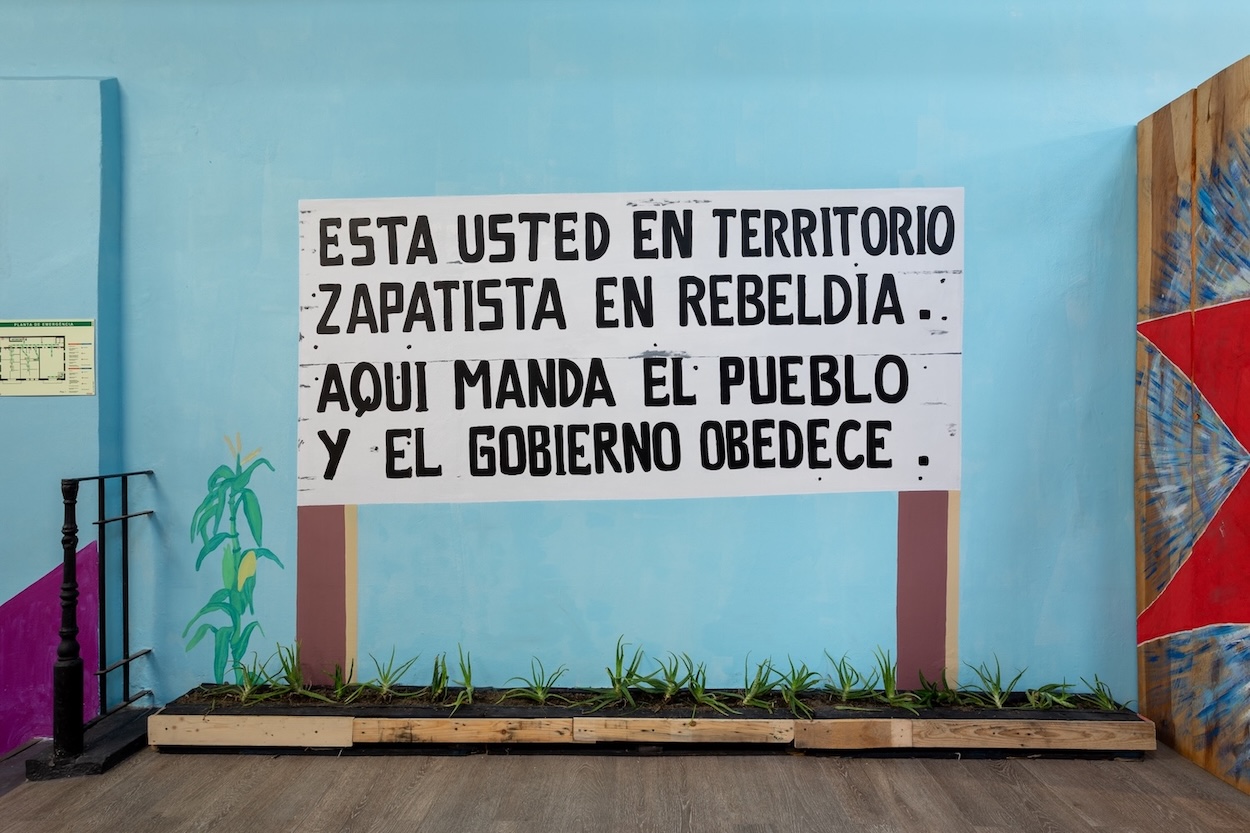
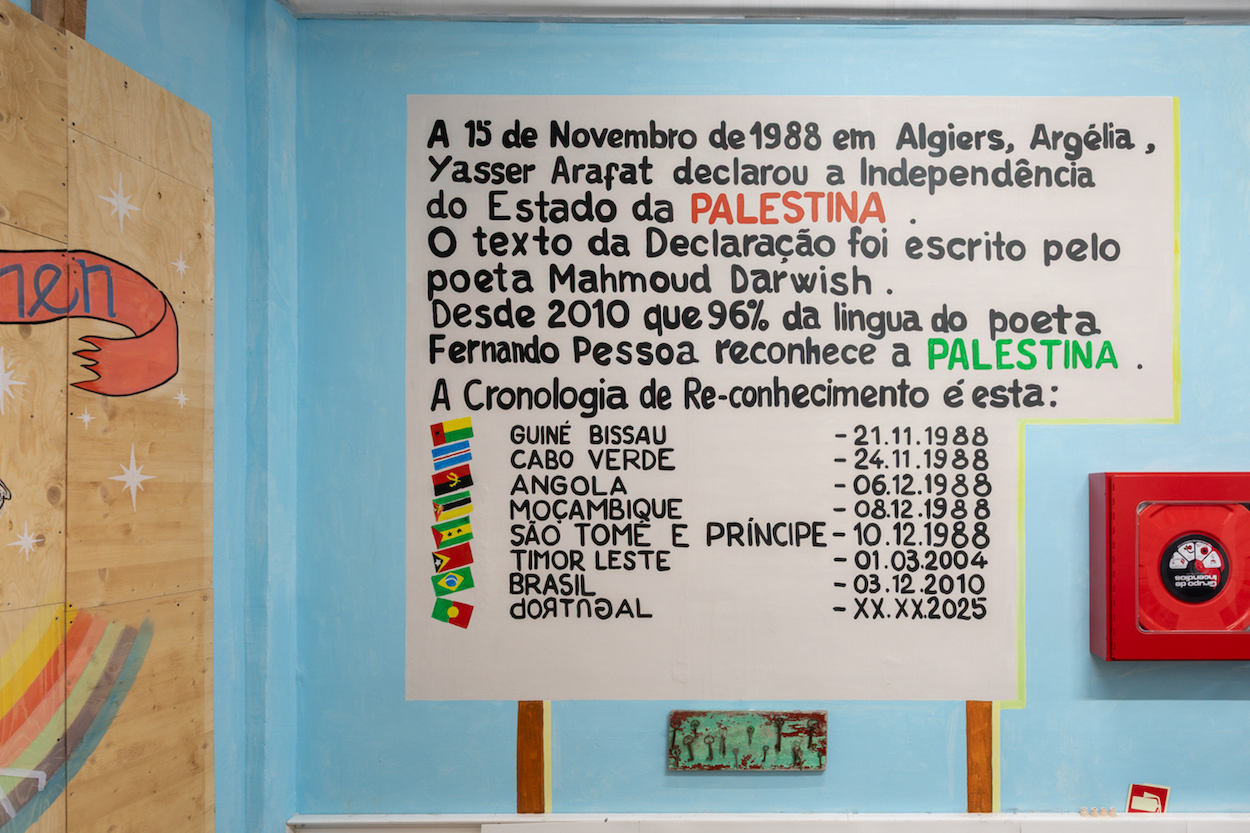
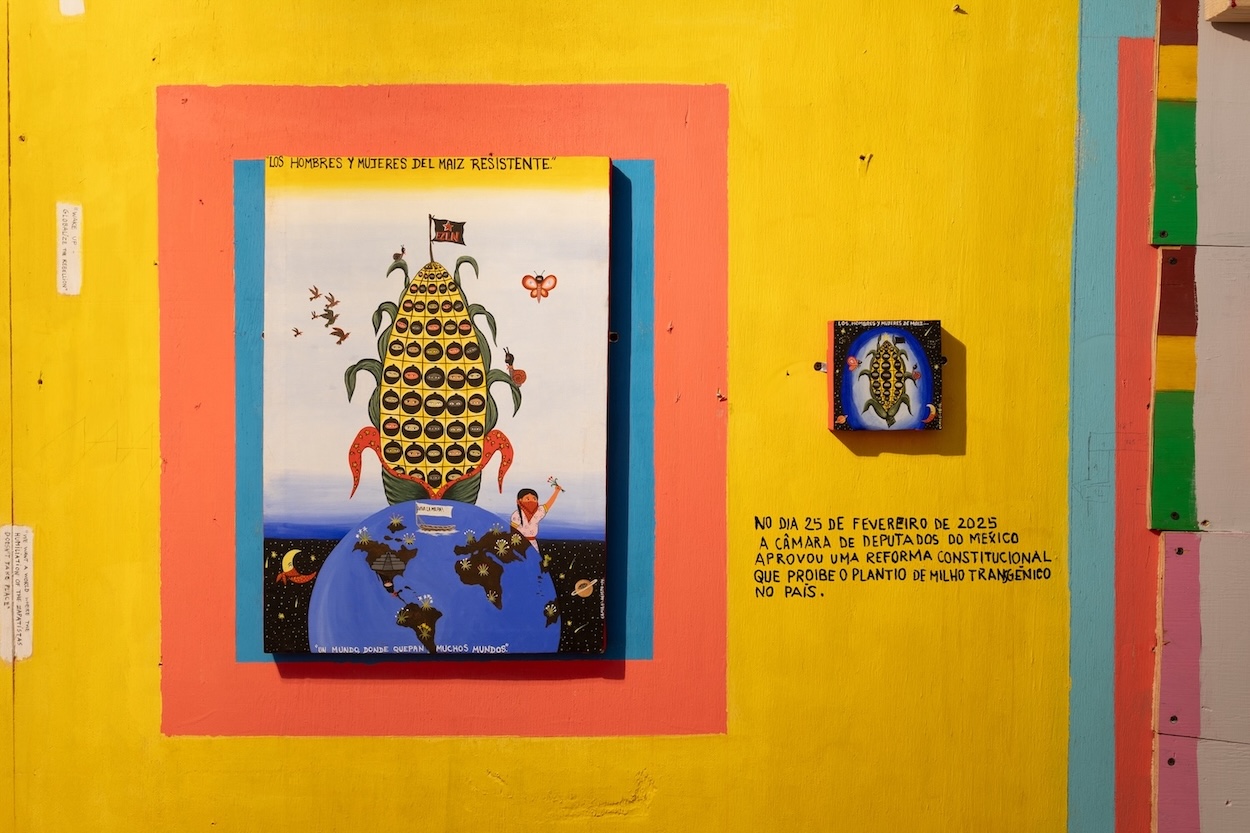
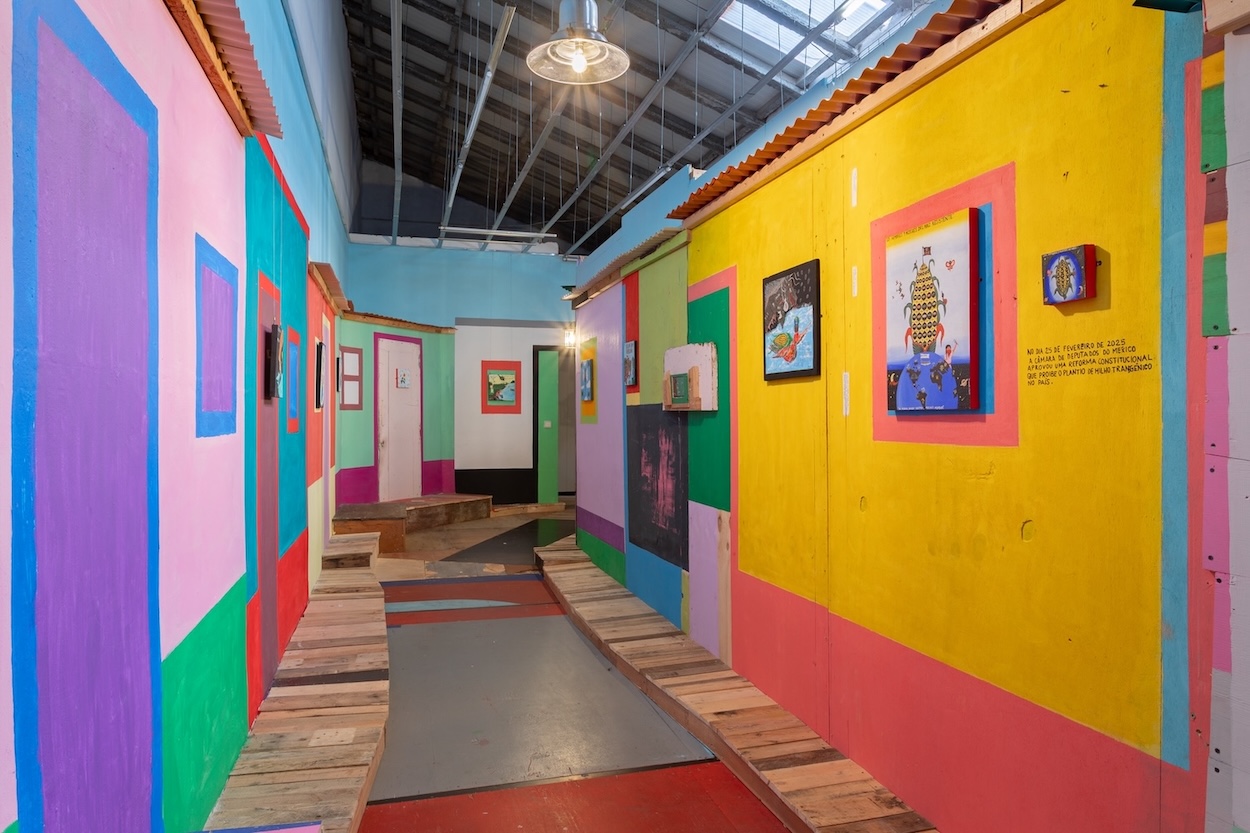
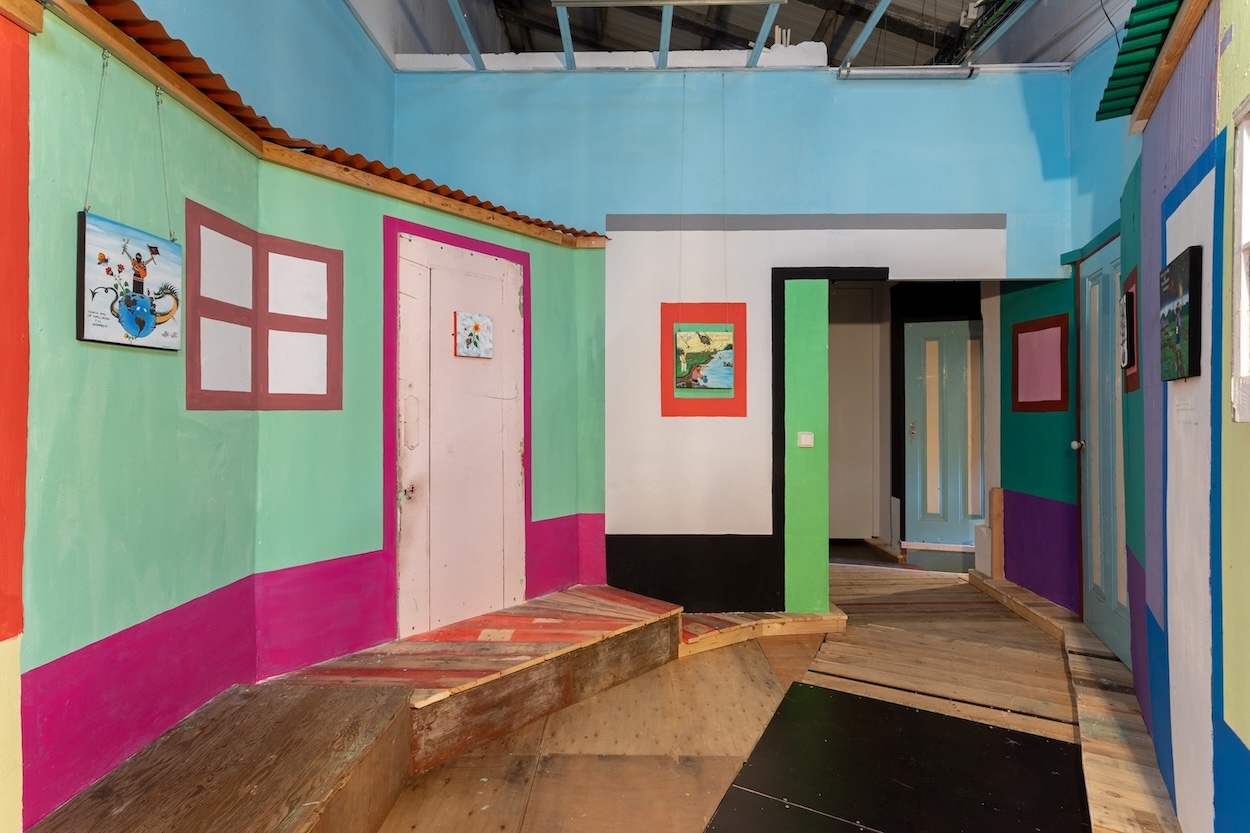
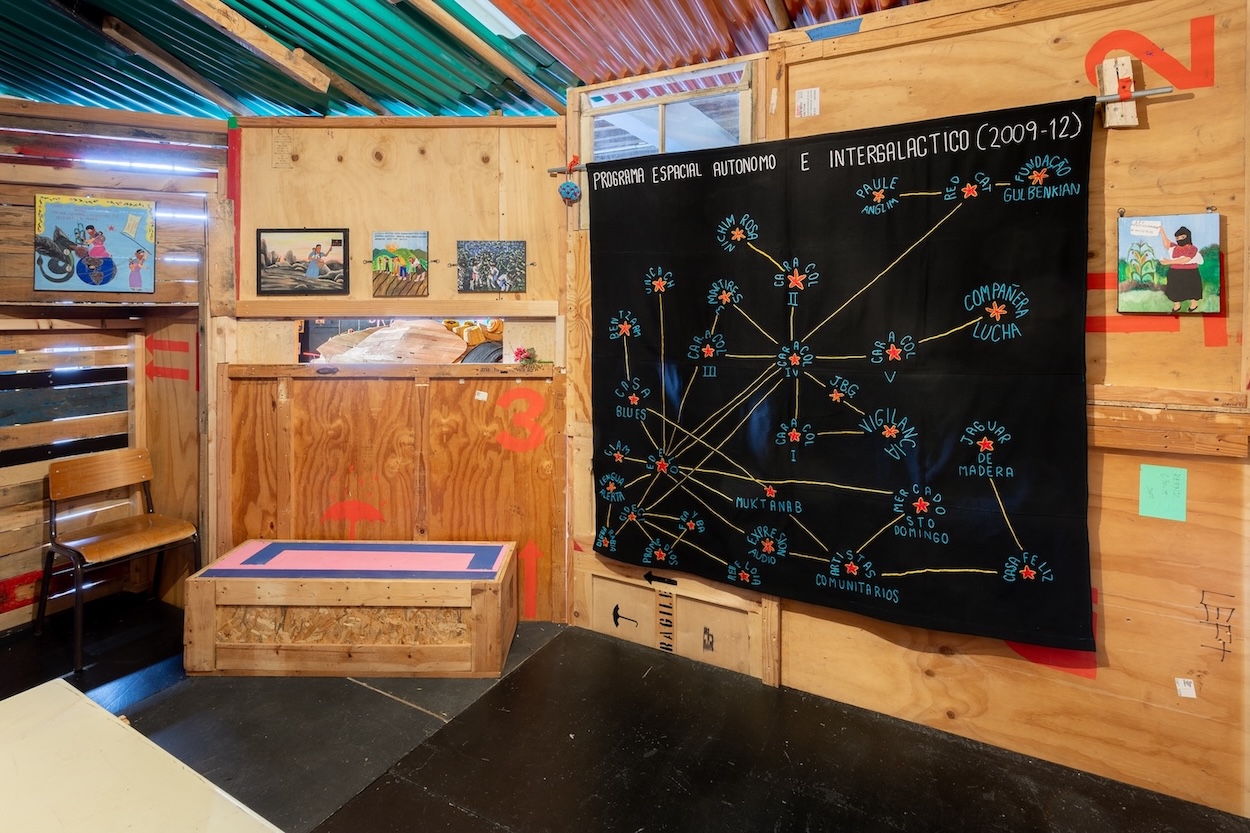
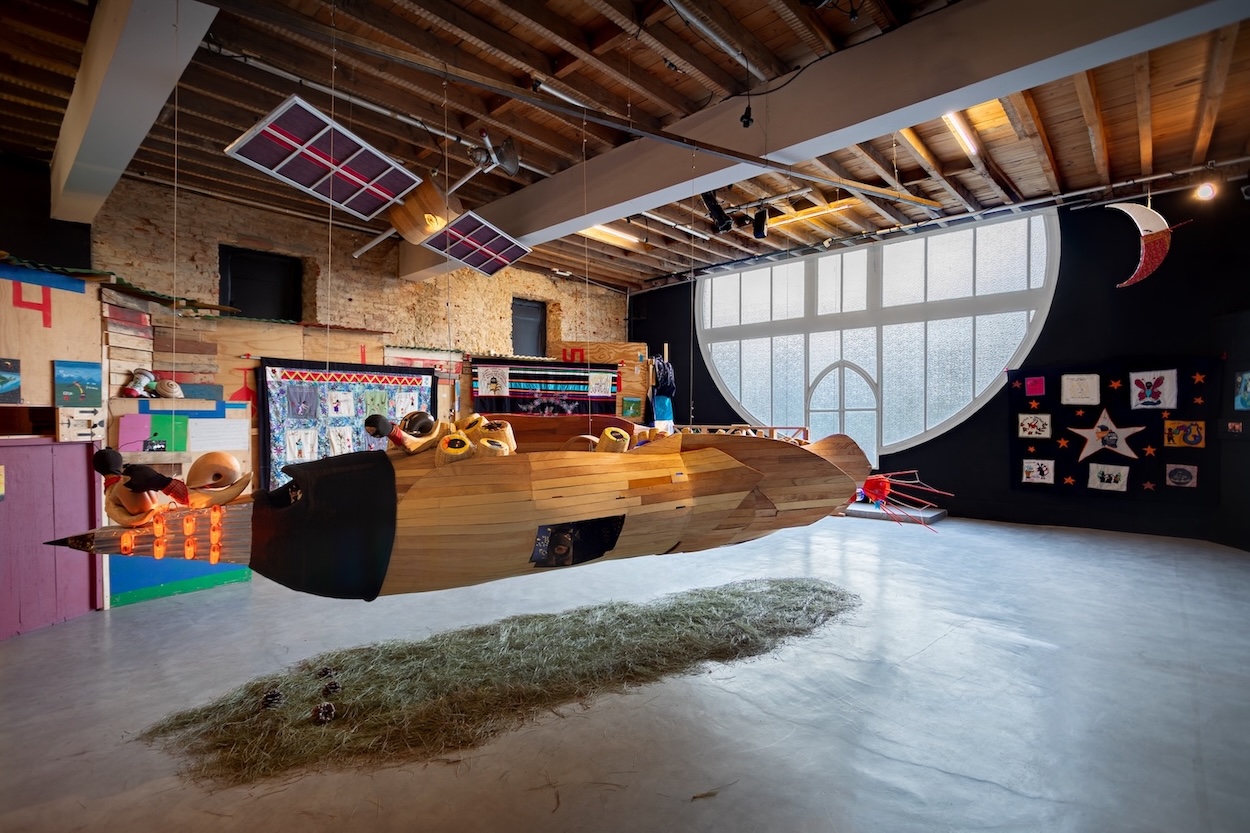
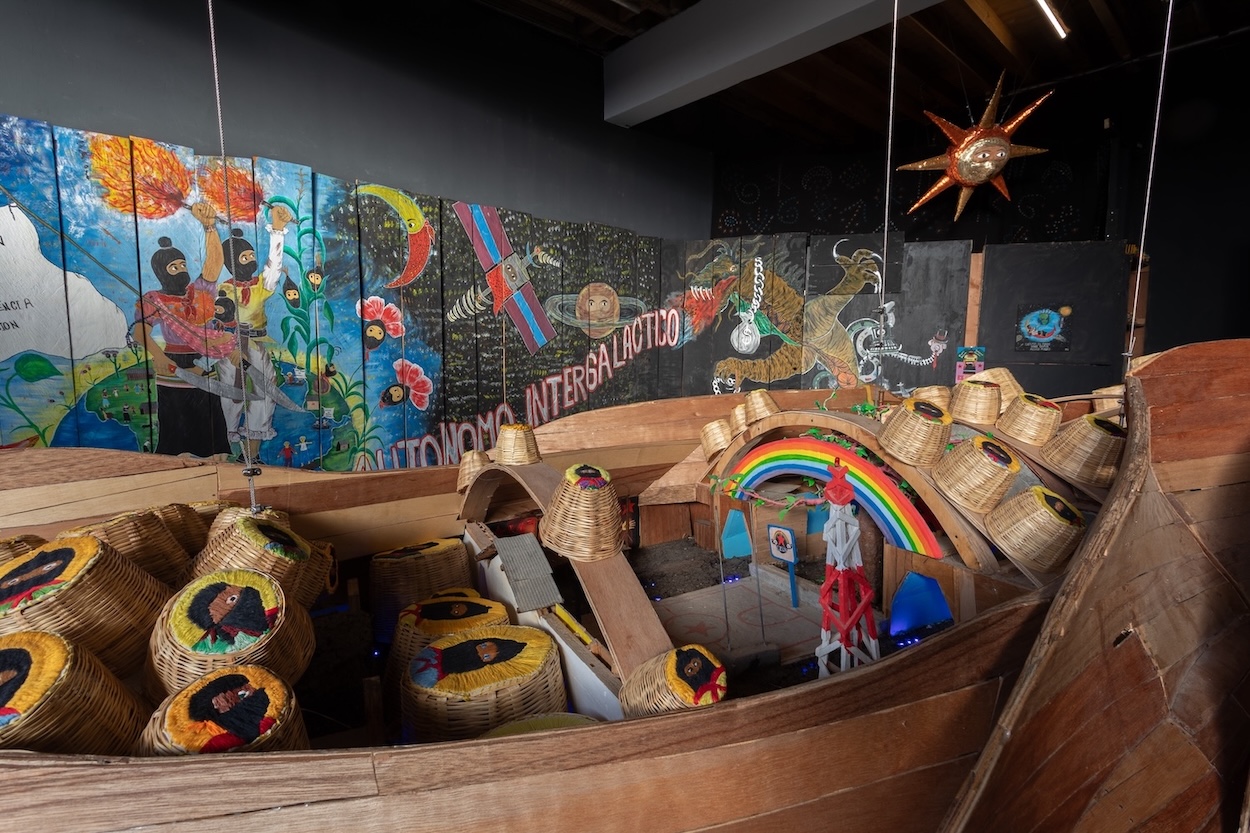
Programa Espacial Autónomo InterGaláctico. Exhibition views at ZDB 8 Marvila. Photos: Vasco Vilhena. Courtesy of the artist and ZDB.
Nota:
[1] *- “Basic Income: How do we get there? Brian Eno, David Graeber and Frances Coppola” Uploaded by letmelooktv, 10th of December 2015, 8’:10”-10’:30”, https://www.youtube.com/watch?v=62PfsX1Hxx4