
Pedro Moreira: Perpetual Motion Machine
Lately, I've been thinking a lot about the purpose of mythology—about how we can transfer this narrative tool into a contemporary world, or whether there still is a modern mythology, and in what form and for whom it remains relevant. During my brief research, I quickly came across the world of video games. Although I have never really been part of the gaming world myself, it might be the medium best equipped to create a sphere that can evoke our reality but transcend it in a multitude of imaginings—a sphere that creates a mutual space in which the individual can participate to build a communal experience. Moreover, it is a world of repetitions, a world whose endings are not finite, in which one can die a thousand deaths because there is always tomorrow, and tomorrow, and tomorrow.
Portuguese artist Pedro Moreira's exhibition Perpetual Motion Machine, curated by David Revés, is an extraordinary example of artistic storytelling that combines aspects of mythology, philosophy, theology, and worldbuilding while working with elements of video games. More than that, it is a show that gave me back the memory of a feeling—the feeling when you build yourself into a fantasy world and lose yourself in it, where all the physical means of this world become a metaphor for something greater in the other—while underlining how this imagination, when given a communal aspect, can become a collective story, or even a myth.
Pedro introduces the visitors of the Galeria da Boavista to a place called Domain. I wouldn't say that I actually entered Domain as a visitor to the exhibition. The exhibition feels more like a worldly translation, a testimony and retelling of the events that take place—or have taken place—in this world. I am vague here because it seems like Domain has fallen out of our linear time, and it is impossible to discern whether it is a place of the future, the past, or the infinitely continuing present. However, the spatiotemporal non-locatability with which the artist confronts us does not feel like a drawback, but rather like a favour from them to me as a visitor. Clear definitions do not seem necessary, as they would restrict, rather than promote, the possibilities of imagination and projection that we, as individual viewers, bring with us.
In Domain itself, there is no real end and no unique beginning, as death exists only as a reset but not as a conclusion. It is a place in constant flux where four personified principles, moving within that state, balance each other in their antagonism: Tertius (Law), Obris (Chaos), Uqbar (Neutrality), and Tlön (Truth). Tertius and Obris clash endlessly, while Uqbar mediates their conflict, maintaining the rhythm of Domain. Tlön, as the silent observer, seeks truth amidst the flux.
The arrival of a mortal human disrupts this harmony. For the first time, a finite being exists in Domain, their mere presence representing an unfathomable distortion of the normality that had existed until then. In a chaotic impulse, Obris kills the human. This act introduces mortality into Domain, shattering the endless cycle of rebirth and leaving the realm consumed by conflict. Uqbar and Tlön, though they do not fully understand this shift, feel its effects deep within. As they attempt to comprehend this transformation, a first truth is revealed to them—Dukkha: to live is to suffer.
Struggling to process the implications of mortality, Uqbar and Tlön engage in a philosophical conversation, questioning their existence and the meaning of life that is limited by death. Their search for understanding eventually leads them to the Pillars of Eternity. Here, Tlön is given a final message: a real end is now possible, offering release by allowing the inhabitants of Domain to reach a personal heaven. However, this release comes at a price—Tlön must die by ten swords to make it possible. Tlön accepts their fate, though Uqbar, bound by deep connection, resists. Obris and Tertius strike Tlön, and Uqbar, overwhelmed by grief, delivers the final blow. Tlön’s essence returns to the clay of Domain.
Alone, Uqbar retreats to Tlön’s cave, surrounded by their inscribed tablets of truth. There, they realise suffering stems not from death but from the pain of loss and severed connection. In a final act of acceptance, Uqbar pierces their own chest, seeking reunion with Tlön. Through this act, they accept the suffering for what it is, and a feeling of release fills them for an end that lies beyond knowledge.
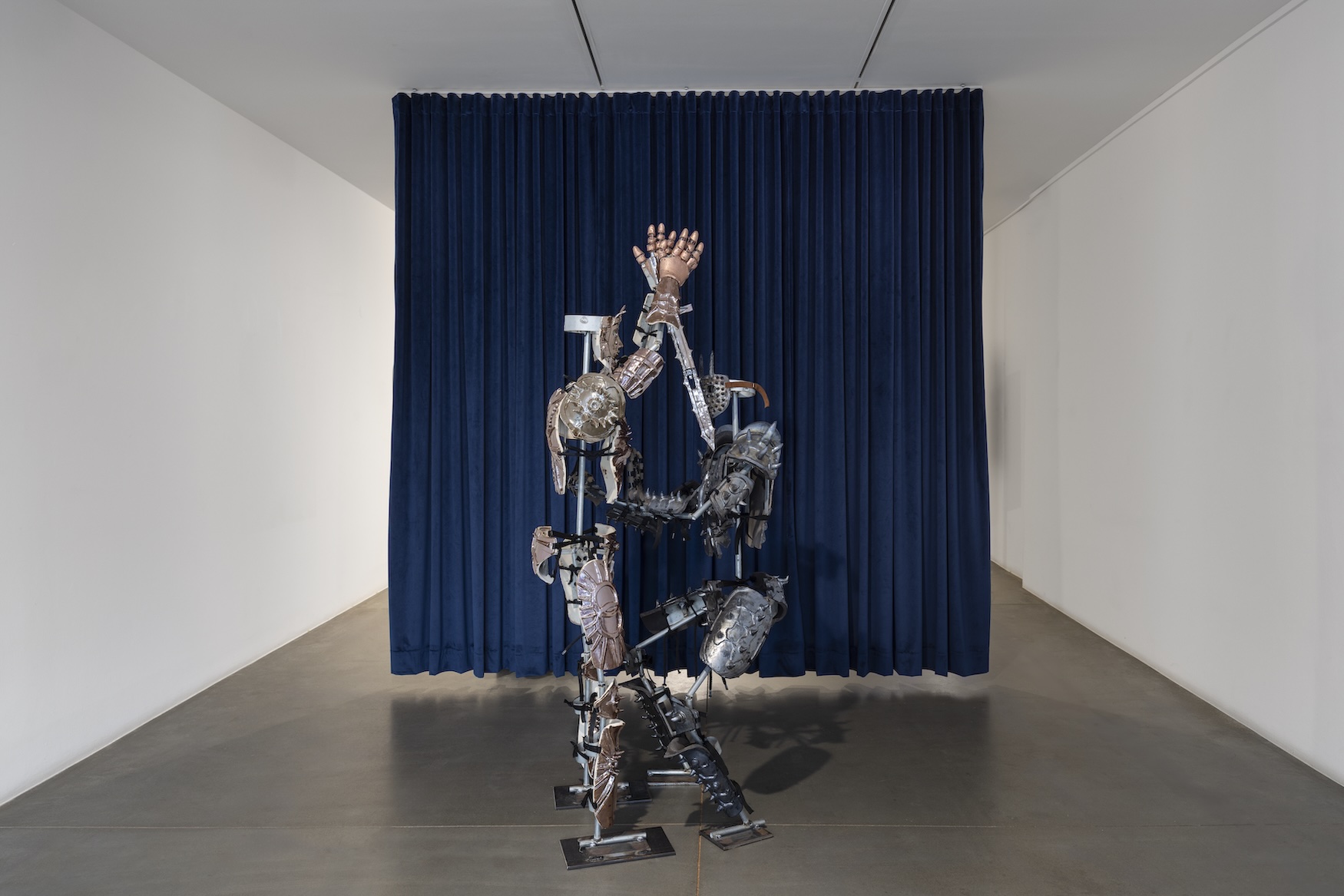
The visual elements of the exhibition feel like a mixture of theatrical staging and physical testimony, unfolding in about three acts in the Galeria da Boavista. The first scene does not depict the murder of the human, as I first thought, but rather a clash between Obris and Tertius. The titles of the pieces—Obris’ Vengeance and Tertius’ Retribution—reveal this confrontation, a visual representation of the cyclical struggle between chaos and law. At the same time, the introductory section of the story is displayed on a screen with text resembling a video game, describing the events from this indeterminate world.
As the story progresses, you enter another scene where the timelines of the narrative and visuals diverge and unfold in a seemingly disjointed manner. On screen, the story continues, while the room reveals its conclusion: in the solitude of Tlön's cave, Uqbar plunges the sword into their chest as a painful memory of the loss of Tlön.
As one climbs the stairs, past a suspended silver sword, two scenarios play out. On the ground, Tlön's figure lies on a mound of earth, their body destroyed by the ten swords. Meanwhile, the philosophical dialogue between Tlön and Uqbar plays on a screen—a conversation about the search for truth through knowledge without ever quite finding it, about feelings and what they might mean, about the mutual incomprehensibility of the other and the simultaneous closeness they feel towards each other.
Upon descending the staircase, one returns from the centre to the end, and finally to the beginning. This spatiotemporal loop reflects the cyclical nature of death and rebirth in the narrative, evoking the eternal flow of the realm. All physical elements of the installation—death masks, atmospheric music, and figures encased in hollow ceramic armour supported by steel frames—create a world that feels tangible and infinite at once. Every object—each mask, each sword—bears its own title, enriching the field of metaphors and inviting the viewers' discovery of further layers. These titled works ground the abstract narrative in a material realm, enhancing the interplay between story and symbol even more.
Adding to this rich tapestry, the exhibition is based on a book of the same name written by the artist in 2017. This book delves into the story in far greater detail, providing a deeper exploration of the characters, themes, and events within Domain. Moreover, the titles for the four characters are taken from Argentinian writer Jorge Luis Borges's book Tlön, Uqbar, Obris, Tertius .
What Pedro has achieved with this exhibition goes beyond its immediate aesthetic impact, even though all the ceramic and video figures on display have been beautifully crafted with incredible care for detail. They have created a space that sits on the border between utopia and dystopia, between virtuality and reality, between past, present, and future, between good and evil, and beyond definitions of gender. It is not a moral world, but an ambiguous one, where the lack of finite answers invites limitless questions.
Perpetual Motion Machine opens up opportunities: to use myths and imaginations as bearers of future worlds, to enable a shared confrontation with an otherworldly reality, and to gain insights, precisely because this world differs from our own. It offers the possibility of constructing in this world what is absent in ours—a space into which we can render our own desires and fears and, at the same time, receive the truths that it reveals.
It is such a rich exhibition in both the material and figurative sense. I would invite anyone who visits it to really take the time to let themselves plunge into this world—as the longer you spend in it, the more you uncover, and the more you want to return to it once you leave.
G. Boavista — Galerias Municipais de Lisboa
Valerie Rath is an Austrian cultural producer and curator with an academic background in art history and art and cultural management. She is currently living in Lisbon. Since April 2024 she is working as an in-house Curator for DUPLEX_AIR. Her curatorial practice is driven by a deep curiosity about the influence of past narratives on our collective and individual abilities to imagine future worlds — and how artistic interventions can expand that imagination.
Proofreading: Diogo Montenegro
Other articles about Pedro Moreira at Contemporânea:
It's a date por Alberta Romano
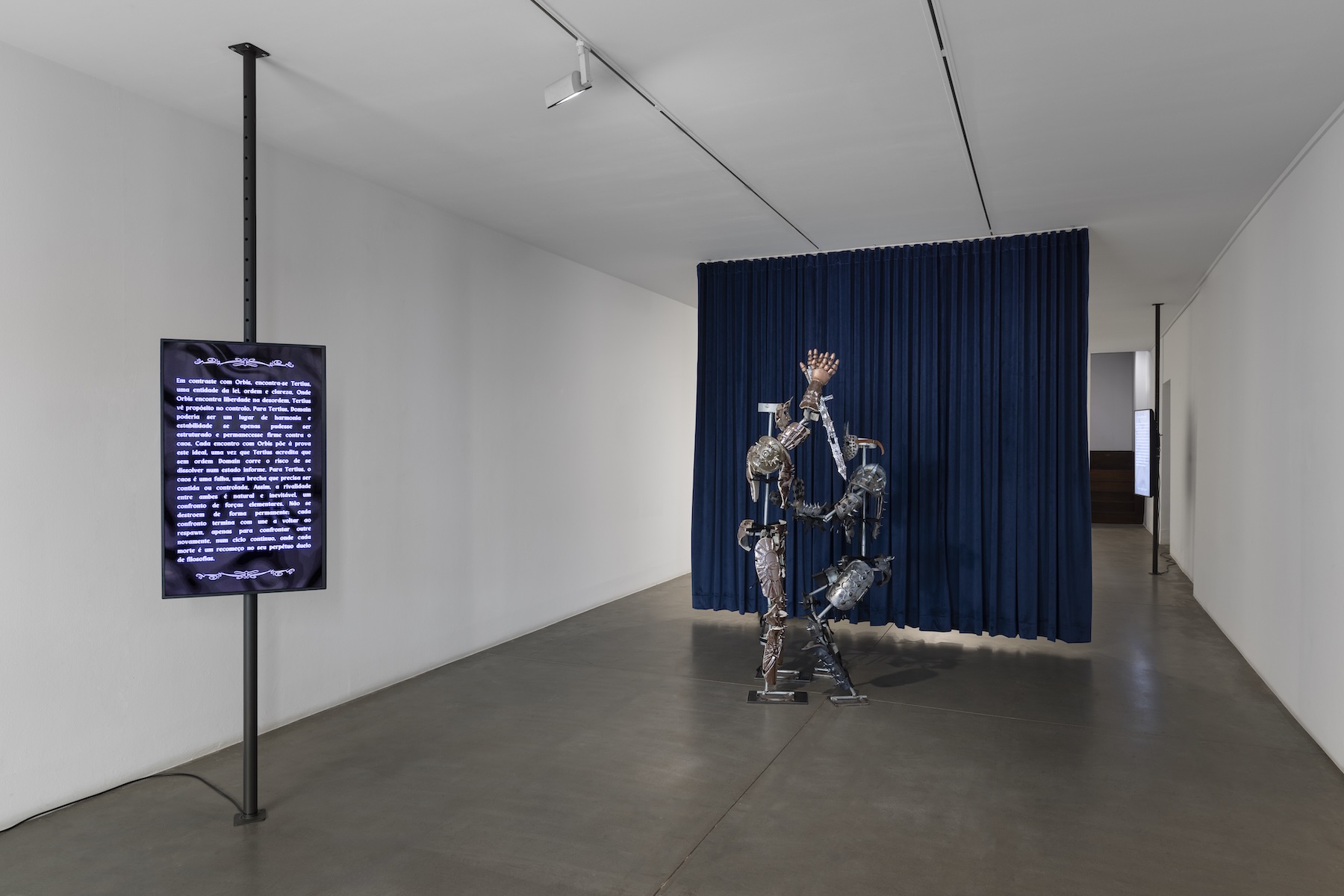
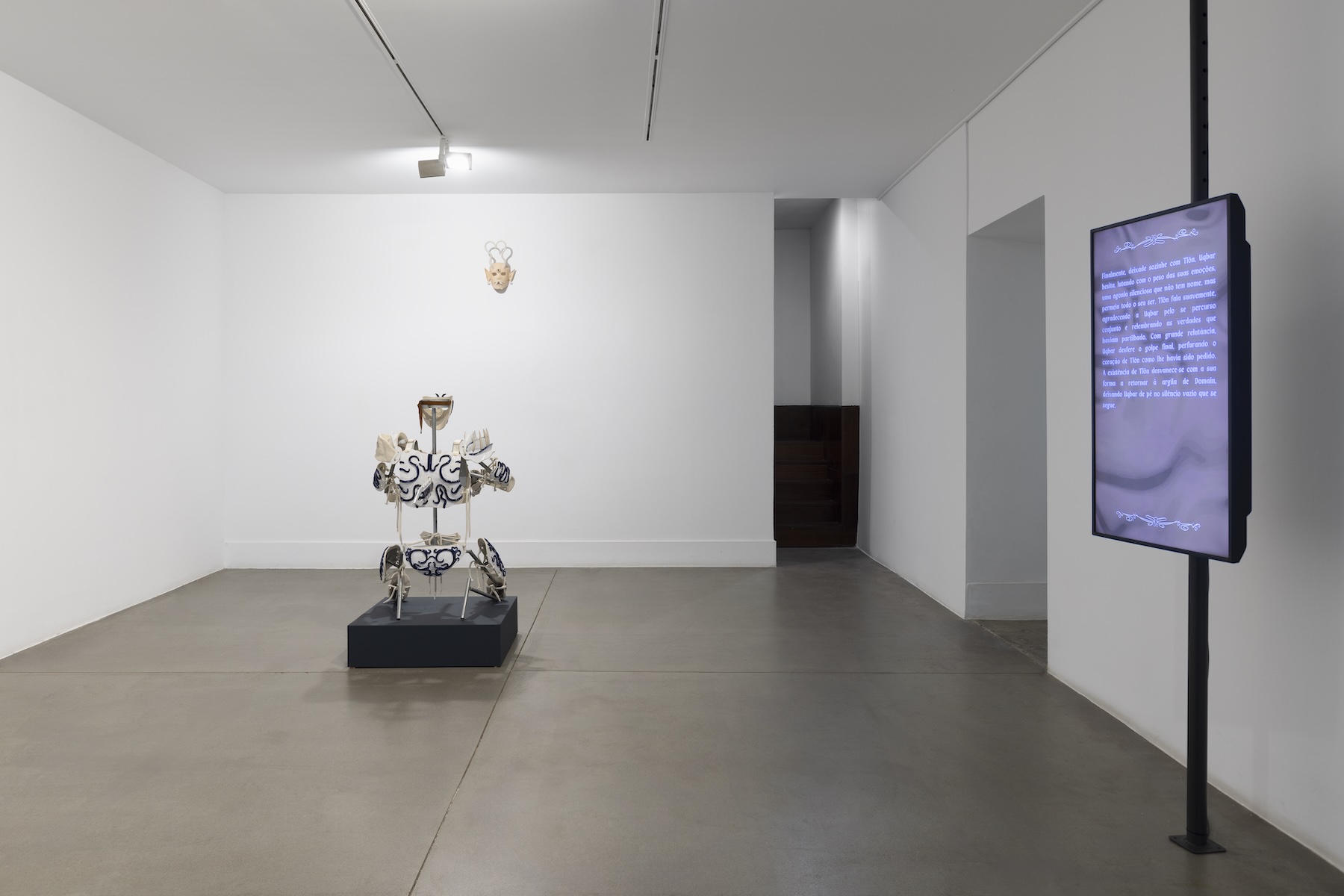
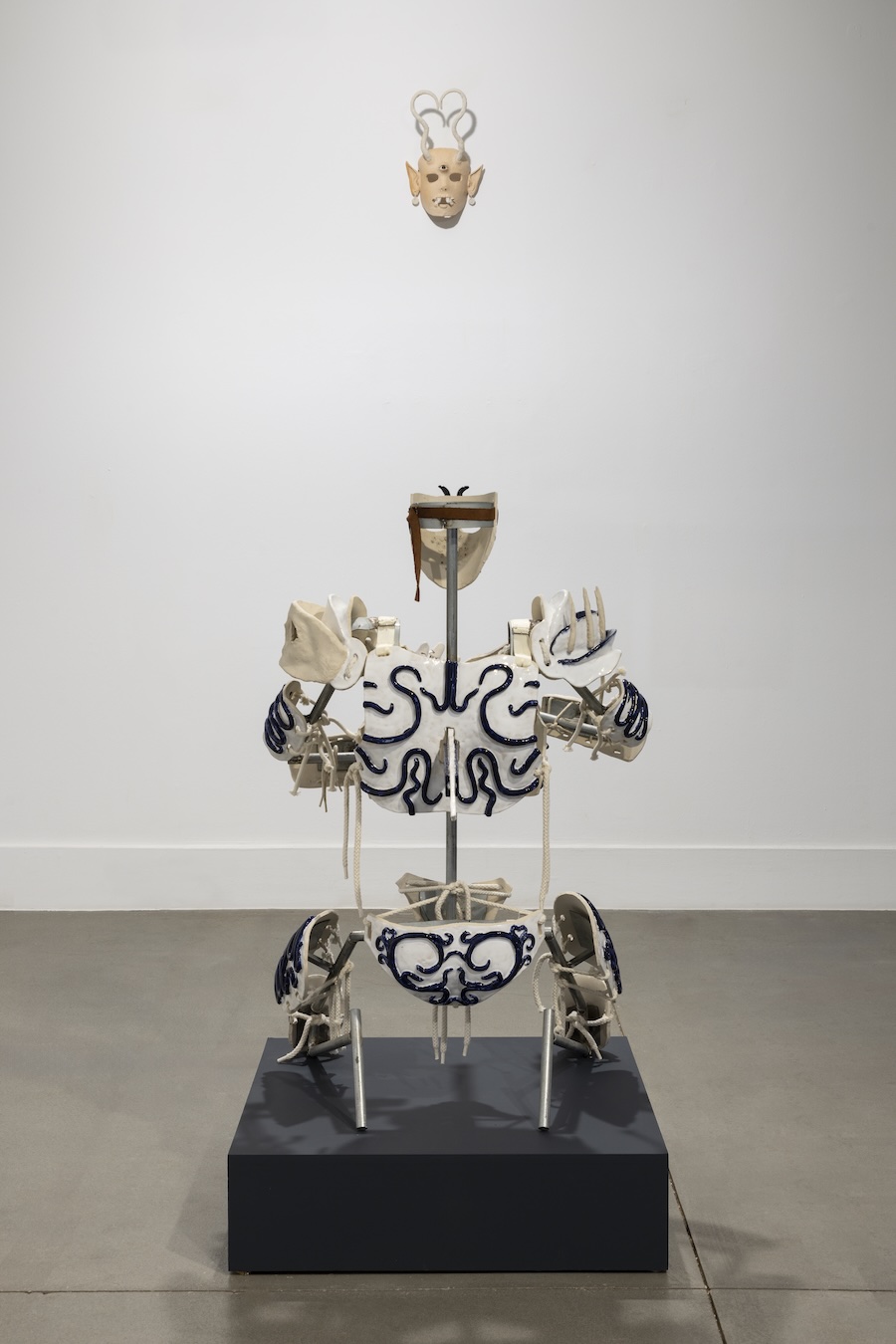
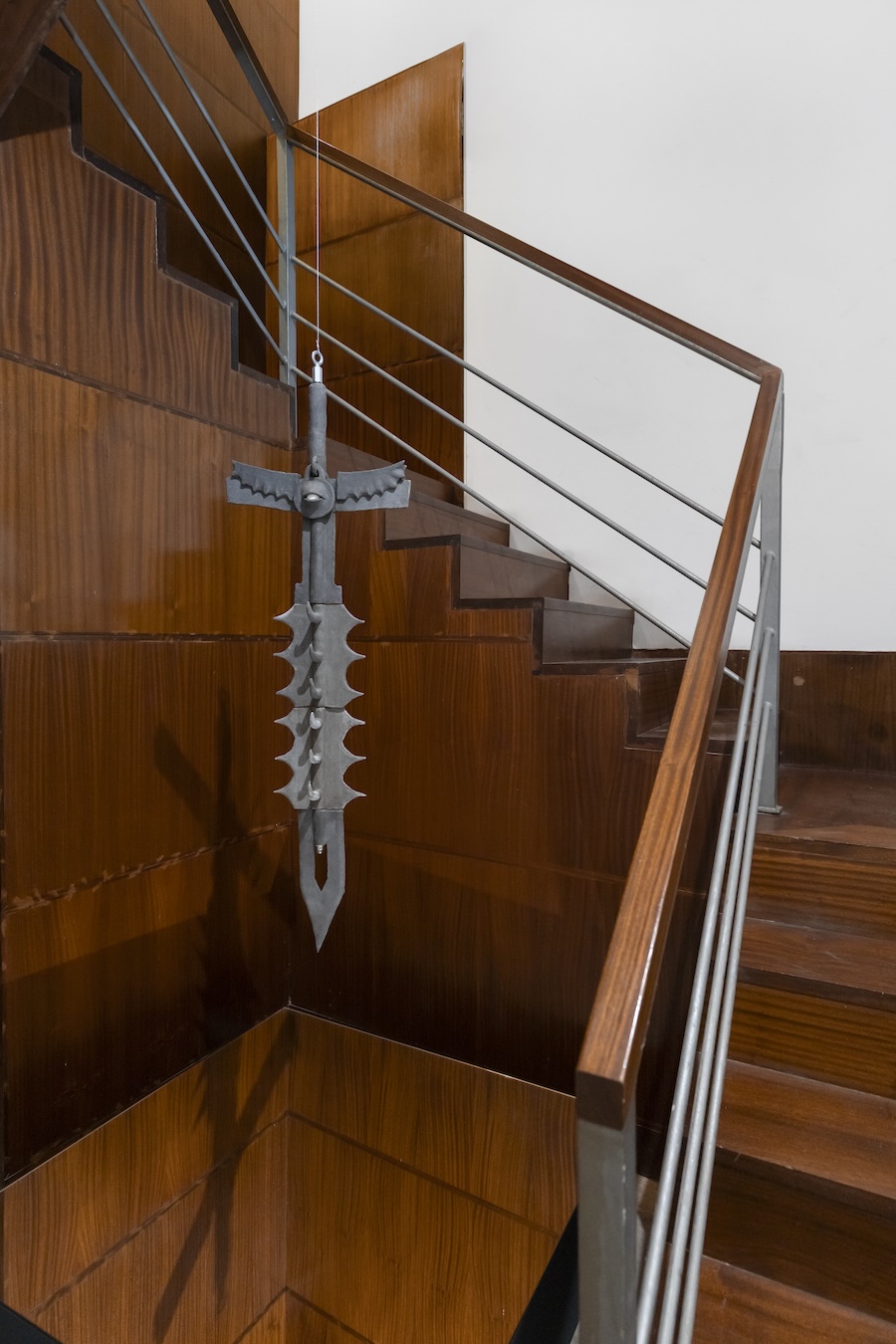
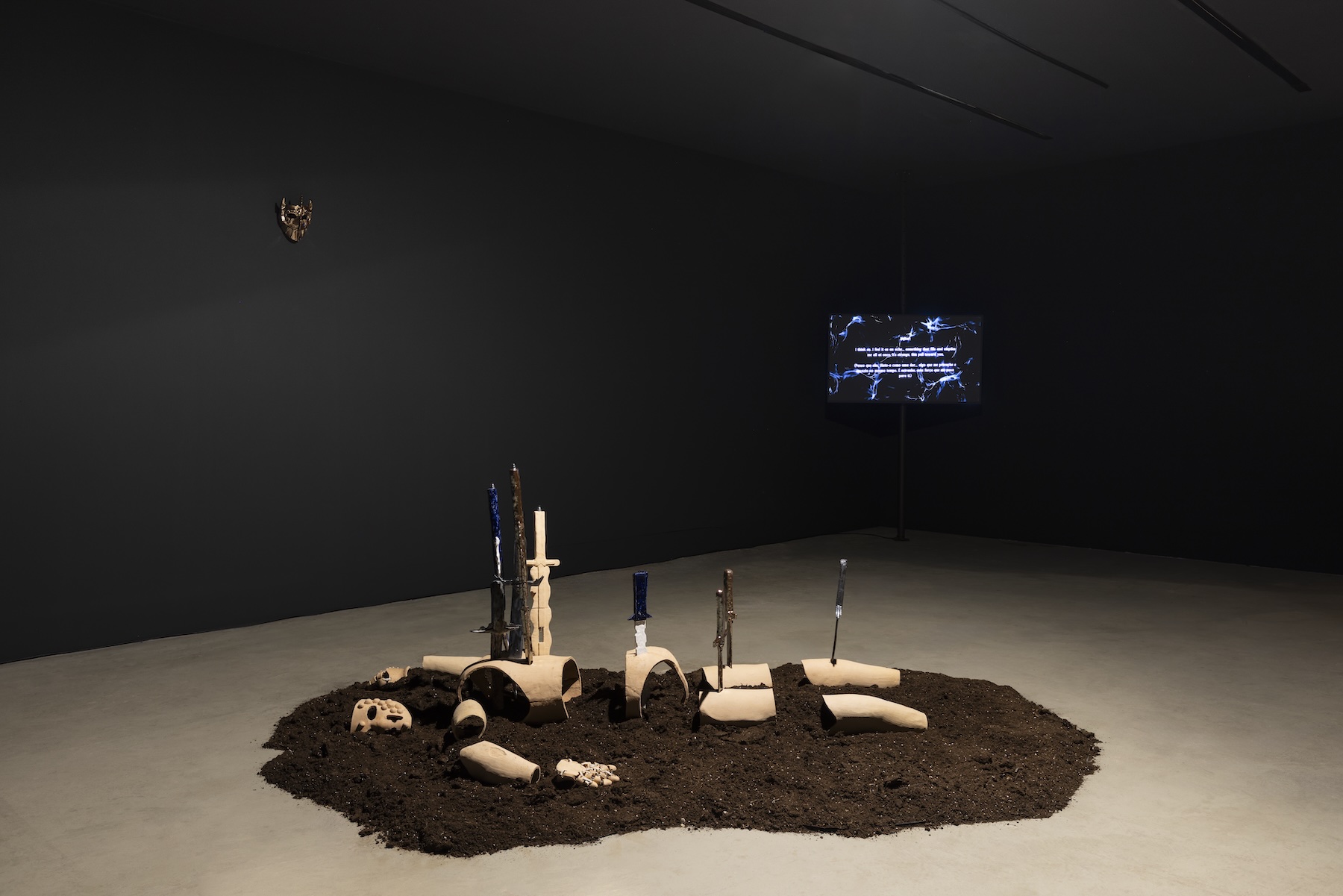
Pedro Moreira: Perpetual Motion Machine. Exhibition views at Galeria da Boavista, Galerias Municipais de Lisboa, 2024-2025. Photos: Bruno Lopes. Courtesy of GML/Egeac.