
Isabel Cordovil: The Enigma of Arrival
The House Is a Prison: Notes on The Enigma of Arrival by Isabel Cordovil
The First House
On 25 July 2016, during the Democratic National Convention in preparation for the US elections the following year, First Lady Michelle Obama gave an emotional speech in support of a presidential candidate. Speaking of her personal experience, she said: “I wake up every morning in a house built by slaves.” The first lady's speeches were carefully written by Sarah Hurwitz, a Harvard-educated lawyer who was also Barack Obama's speechwriter. In 2017, another president would take office to change the way politics is done across the Western world from the White House.
The official residence and workplace of the President of the United States, the White House was designed by Irish architect James Hoban in the neoclassical style. Built between 1792 and 1800, the exterior walls are made of Aquia Creek sandstone painted white. In 1814, during the War of 1812, the White House was burned down by British forces during the Fire of Washington, in retaliation for the acts of destruction by American troops in Canada. After several refurbishments in 1948, the presidential palace became so unstable that President Harry Truman had to leave the building, only to return in 1952, when most of the original interior finishes and stucco were too damaged to be reinstalled. Only the exterior walls of the original building remained, and the entire interior structure was replaced with metal beams.
Sandstone was used on the outside of the house. A sedimentary rock that results from the compaction and lithification of a granular material the size of sand, sandstones are siliceous sedimentary rocks made up of grains of silica or quartz bound together by siliceous clay or limestone cement. They are used in coatings and resist attacks from aggressive agents in the atmosphere.
Between 1961 and 1962, Jacqueline Kennedy directed an extensive historic decoration of the house where different periods of the early Republic and world history were chosen as themes for each room. In a televised visit to the House on Valentine's Day 1962, Jacqueline Kennedy showed the public her restoration of the White House. This visit was reconstructed in the 2016 film Jackie, directed by Pablo Larraín, with the role of the First Lady played by Natalie Portman.
The Second House
The Parthenon is one of the most iconic buildings in the history of Antiquity and Western art, in its classical Ancient Greek style. The main building on the Acropolis of Athens was built to be the temple dedicated to the Greek goddess Athena, and is made of marble from Mount Pentelic. The ancient quarry is protected by Greek government law and used exclusively to obtain material for the Acropolis restoration project. Its name comes from the Greek word “παρθενών” (parthenon), and means the “room of the unmarried woman” in a house. In the Parthenon, it seems to refer to one of the rooms in the temple dedicated to Athena.
The Acropolis of Athens has been one of the most disputed sites over the centuries. Conquered, rebuilt, and vandalised by various empires, it has been a place of religious worship, politics, and culture. The Parthenon, like most Greek temples, also served as the city's treasury. It was the symbol of power, protected by its location but exposed to everyone's scrutiny. Harpocration wrote that some people used to call the Parthenon the “Hekatompedos,” not because of its size but because of its beauty and proportions. Archaeologist Joan Breton Connelly recently defended the coherence of the Parthenon's sculptural programme in presenting a succession of genealogical narratives that trace Athenian identity through the ages: from the birth of Athena, through cosmic and epic battles, to the great final event of the Athenian Bronze Age, the war of Erechtheus and Eumolpus. Connelly indicates a pedagogical function for the sculpted decoration of the Parthenon, which establishes and perpetuates the founding myth, memory, values, and Athenian identity.
In 1204, the Crusaders invaded Athens and renamed the Parthenon “Notre-Dame of Athens,” making it a Catholic temple. By the end of the 19th century, the Parthenon was widely regarded by Americans and Europeans as the pinnacle of human architectural, becoming a very popular destination. The ruins of the Acropolis of Athens are one of the greatest examples of the influence of Classical Antiquity, the period of cultural history between the 8th century BC and the 5th century AD centred on the Mediterranean Sea, comprising the intertwined civilisations of Ancient Greece and Ancient Rome known as the Greco-Roman world. This was the period in which Greek and Roman society flourished and exerted great influence throughout Europe, North Africa, and Western Asia.
The Third House
The text accompanying Isabel Cordovil's exhibition The Enigma of Arrival at the Pedro Cera Gallery in Lisbon refers to the Timaeus dialogue, written by Plato around 360 BC. Perhaps for this reason, it was obvious to me that the relationship to Classical Antiquity was a particular reference for the group of works in this show. Curiously, the artist has used a dense and philosophical text that is revealed through the simplicity of her use of words as subject matter.
The Timaeus dialogue begins with a distinction between the physical and the eternal world. The physical world changes and disappears: it is the object of irrational sensation. The eternal world does not change: it is therefore apprehended by reason. In this text, Plato uses the figure of the demiurge as the intelligence responsible for ordering the universe. The demiurge is “the one who works for the public, the craftsman, the manual labourer.”
Plato was sceptical of sensory experience, seeing it as misleading and unreliable for obtaining true knowledge. In contrast, Aristotle, his disciple who confronted him with a different view of the world, saw the senses as crucial to understanding reality, arguing that knowledge begins with sensory perception, which forms the basis for intellectual investigation. Plato intends to give a body to thought by the way he shapes ideas into words. More abstract and idealistic, he emphasised the realm of forms and the limitations of sensory experience. Aristotle's philosophy is more empirical and practical, focusing on the natural world and the importance of observation. He believed that the essence of an object (its form) could be understood by studying the object itself.
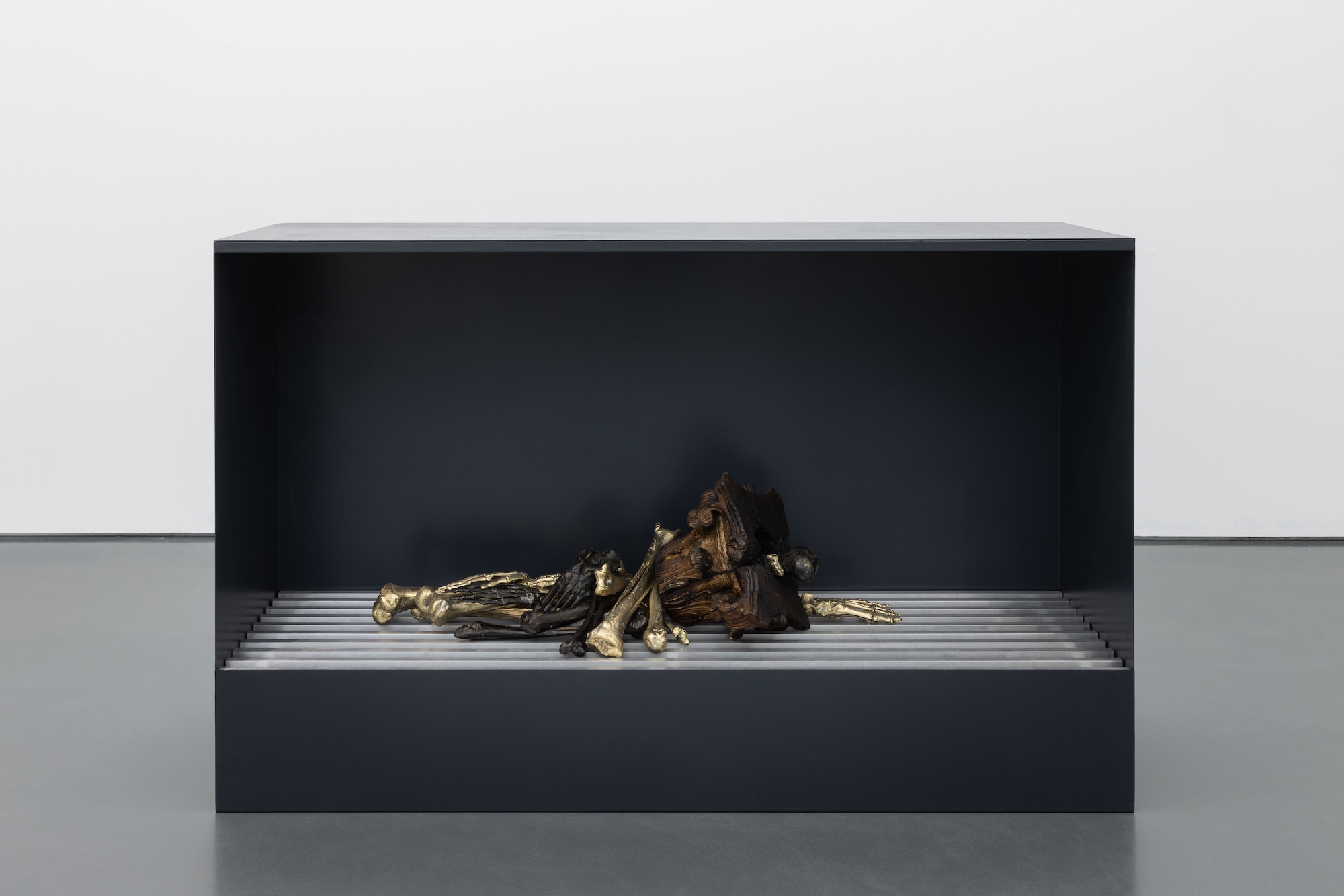
In The Enigma of Arrival, Isabel Cordovil uses elements from Classical Antiquity in the construction of some of her works. Examples include the Corinthian capital in the sculpture Stadium fever (2025); the negative print of classical columns on a gallery wall in the work Ontem não te vi em Babilónia (Yesterday I didn't see you in Babylon, 2025); and the sculptures Aller and Retour (both from 2025), which feature plinth bases reminiscent of a classical entablature. The references to classicism in these works are an attempt to appropriate a historical narrative that treats time as the sculptor par excellence. There is a programme that draws on this to address the most important theme in this group of works: time. The use of recognisable classical forms, together with the Timaeus dialogue, give the works a gravity, a weight, and a seriousness which seem to bring with them many layers of history.
The work that lends its title to the exhibition, The Enigma of Arrival, is reminiscent of a model of a building or a temple, with a solemn staircase. At the top of the stairs, there is a music box, a miniature sculpture that plays a piece by the romantic composer Joana Benedita de Faria Pinho, inviting a unique moment of intimacy and proximity to the work. When played, the music box produces an effect throughout the exhibition by switching off the gallery's general lighting and activating the light present in some of the works. This event allows the exhibition to be seen in both "daytime and "night-time" lights.
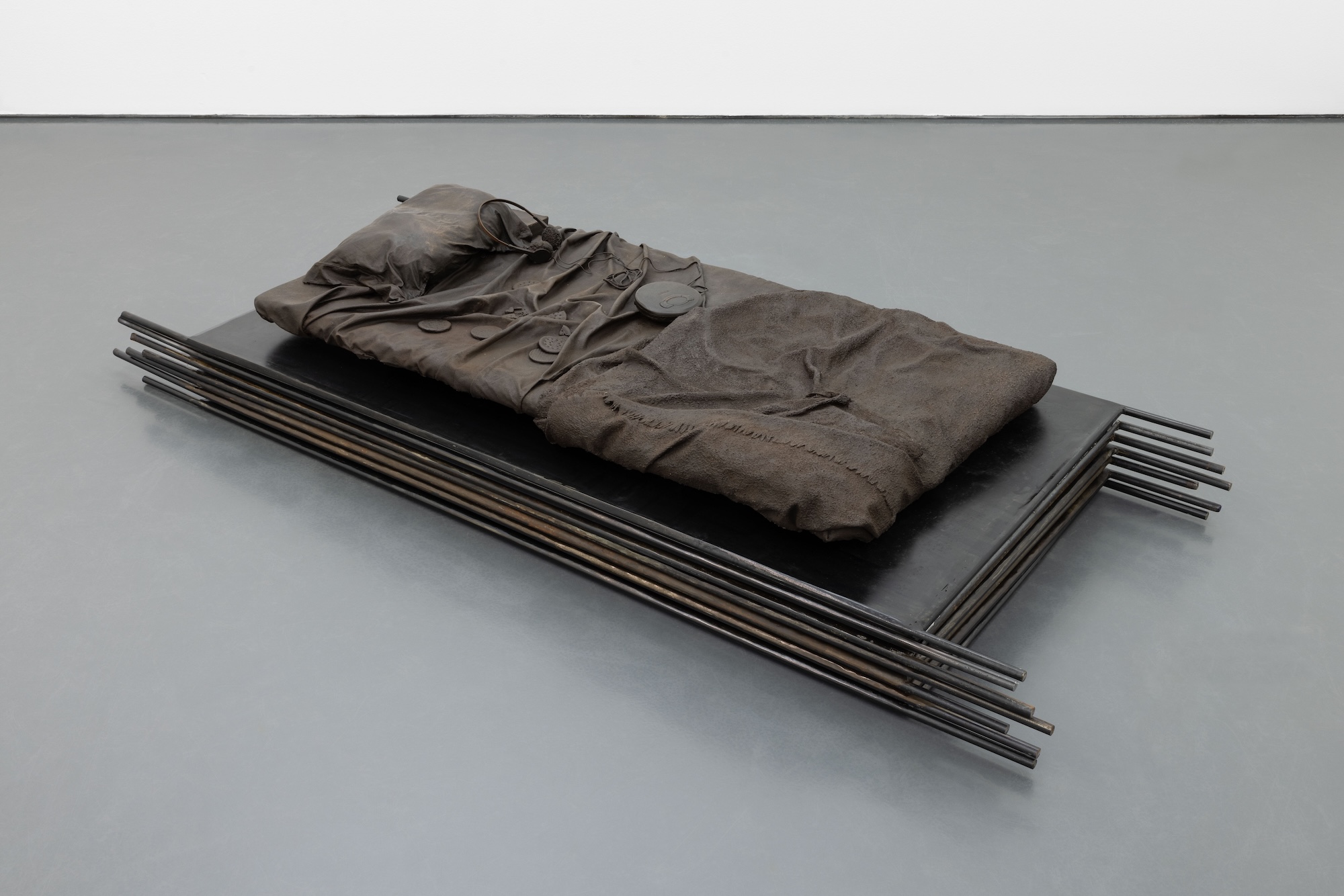
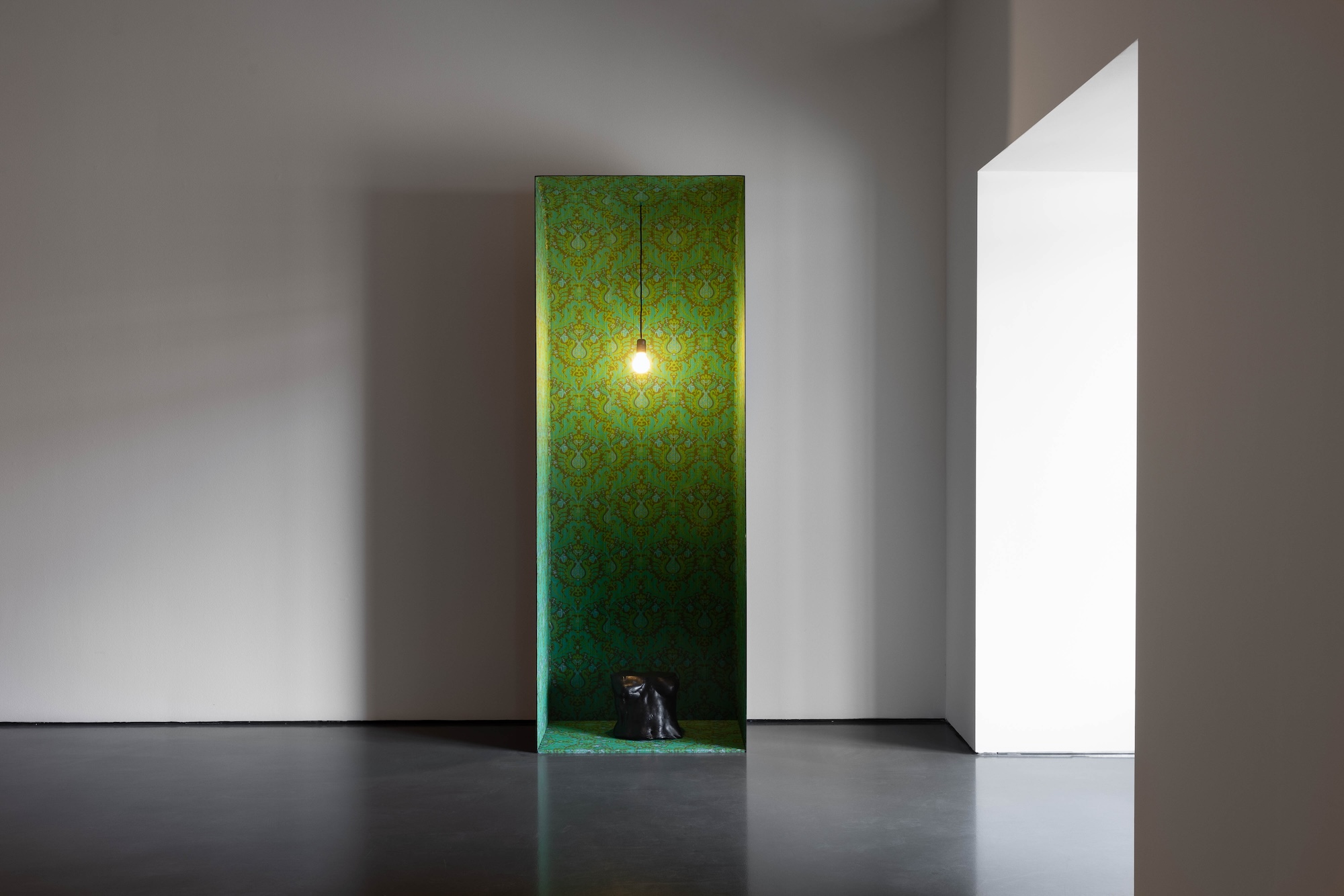
The scenography that the artist decided to create for the sculptures makes us think of the gallery as a house, as if the works had always belonged there. The relationship between the space of the house and the objects that occupy it is visible throughout the exhibition. From outside the gallery, part of the work Incoming, homecoming (2025) comes into view—a post box containing brass envelopes with no inscriptions, no sender, no recipient, as if words had been excluded from the experience. Other works use human figuration: the sculpture First things first (2025) features the torso of a woman who greets us at the entrance. Then, we find fragments of the human body in other works: skeletal bones, masks, or a bed/stretcher with rumpled sheets and a compact disc for listening to music (Fantasy rider, 2025).
The shifts in scale across the works call upon the viewer's body, making it inevitable to feel a sense of otherness and empathy, as if for a brief second we inhabited and existed in the works. The exhibition achieves something rare: it creates the illusion of suspended time. Although the artist's presence is felt throughout the exhibition, we are active spectators as we move through it. The works became true containers of meaning, forcing us to imagine a series of experiences.
The colour palette used by the artist leads us to the essential, to the unadorned, as if the form and its presence were constant and continuous. We are reminded of the production of industrial objects at the turn of the 19th century, which compartmentalised all production and thus expanded market possibilities. Objects produced before industrialisation retained a form closely tied to their function; their normative subjectivity predates a capitalist world flooded with objects and their ideas.
Western philosophy is part of the culture we inhabit—a house whose pillars, though in a state of constant collapse, we must nonetheless continue to uphold. The dichotomies that form the basis of Western thought are a form of binarism that opposes good and evil against each other, placing them on opposite sides as if in a struggle. This struggle is part of a narrative that divides the world between light and shadow, expelling possible nuances. The houses of democracy are decaying because their values are being called into question irrationally, motivated by individual rather than collective interests. Looking at the pillars of the White House specifically, we notice how they differ from those of the Parthenon. Brick or marble, metal structure or plasterboard wall, construction has become increasingly lighter, easier to consume, and quicker to build.
The house is the prison of beauty. Or perhaps we might reverse it: beauty is the prison of the house. Or say it differently still. Accepting the complexity of discourses and the proliferation of concepts of beauty is a strategy for surviving the conventional. Aesthetics has been replaced by various forms of the sensible. The neoconservatism of politics that can be observed in the Western world has fused together the figure of the author, the artist, the figure of the entrepreneur, the idealisation of the hero who fights against everything and everyone, forgetting they emerged from a community, a collective, and are part of the extended family that created them. This applies to all individuals. The system we live in, with its origins in Classical Antiquity, is still obsessed with success and tragedy. And beauty justifies violence, such as stabbing the emperor in the back on the steps to the senate, the temple, the court, the parliament, where everyone awaits his acclamation or his death.
Pedro Barateiro (Almada, 1979) lives and works in Lisbon. Works with a variety of techniques, ranging from film, to performance and writing. His work has been centering on the attepmt to deconstruct binary narrative of ocidental tought and culture. Solo exhibitions include spaces like: Kunsthalle Basel; Museu de Serralves; Kunsthalle Lissabon; REDCAT; Museu Coleção Berardo; Pavilhão Branco - Museu da Cidade; Netwerk Aalst; Basement Roma; Kettle's Yard; Parkour; Lumiar Cité; and Spike Island. Collective exhibitions: 13th Sharjah Biennial; 29th São Paulo Biennal; 16th Biennal Sidney; and 5th Bienal of Berlin. His performances have been presented in Centre Pompidou, Théâtre de la Ville, L’école nationale supérieure des beaux-arts - ENSBA and Fondation Ricard (Paris); 98Weeks (Beirute); ZHdK (Zurique); Teatro São Luiz (Lisboa); SESC Pompeia, Centro Cultural São Paulo and Galeria Vermelho (São Paulo). His work is present in different private and public collections: Deusche Bank Collection; Fundação EDP; Museu de Serralves; Fundación ARCO; Fundación “la Caixa”; and Fundação Calouste Gulbenkian. Barateiro organizes events and exhibitions in the space Spirit Shop.
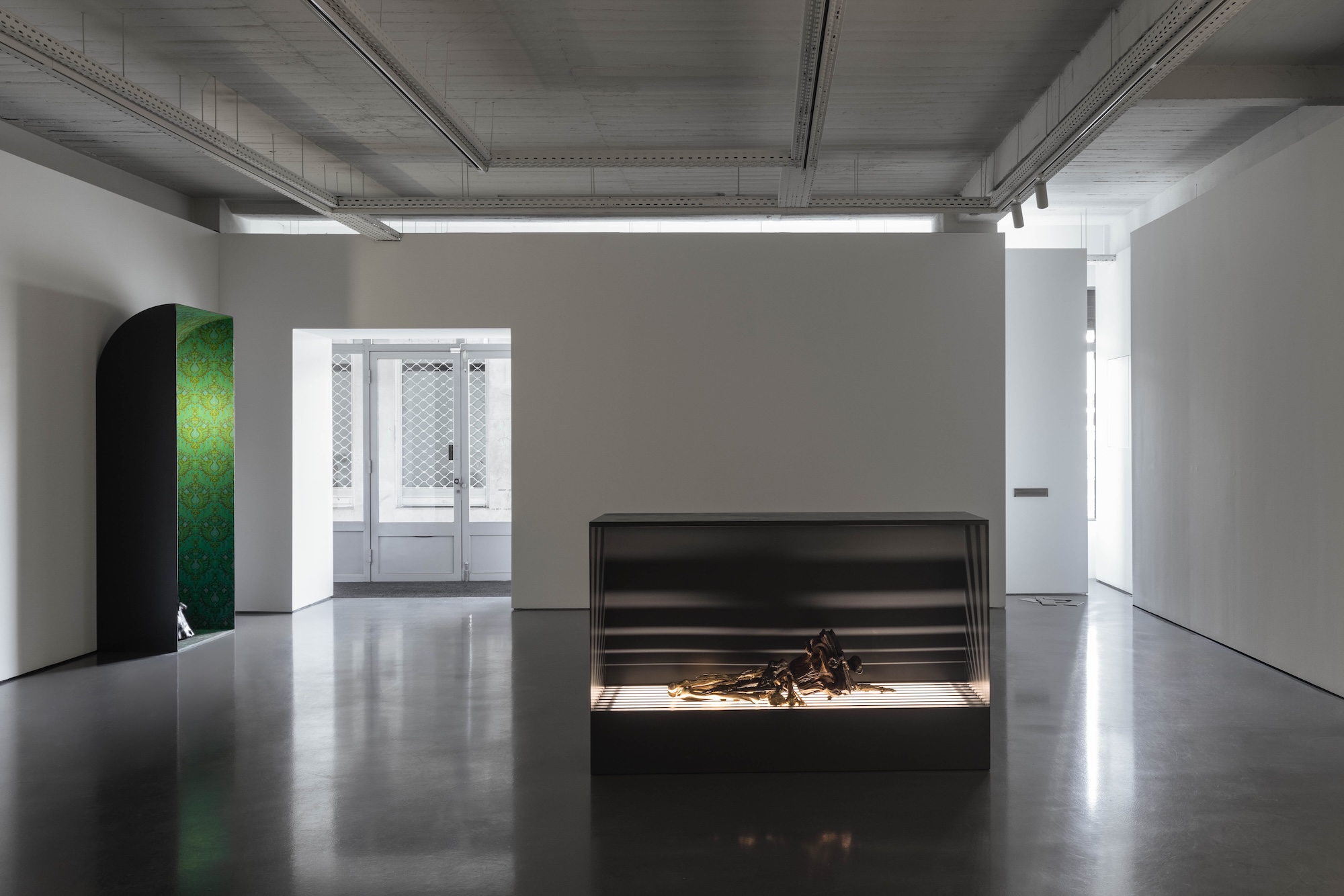
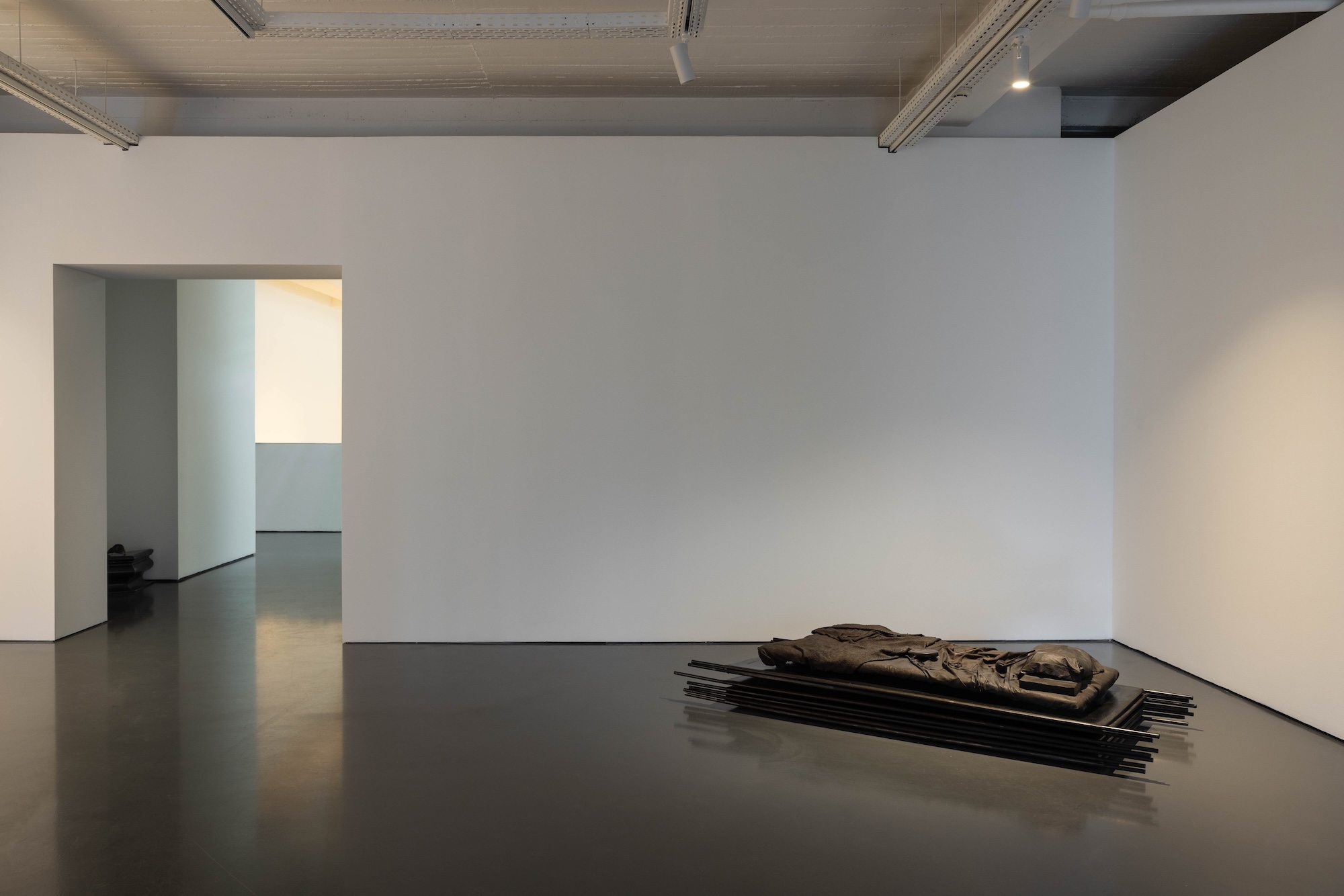
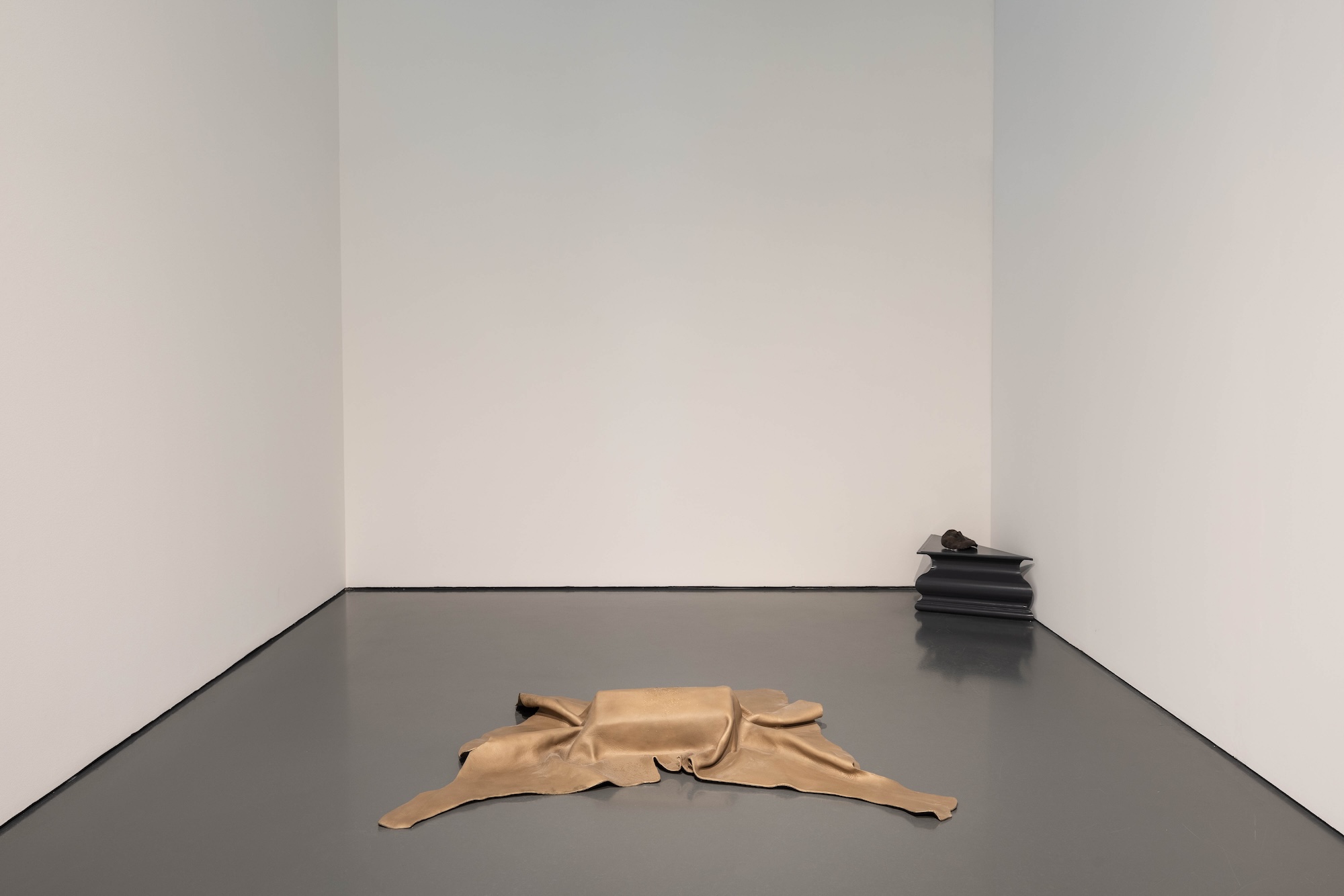
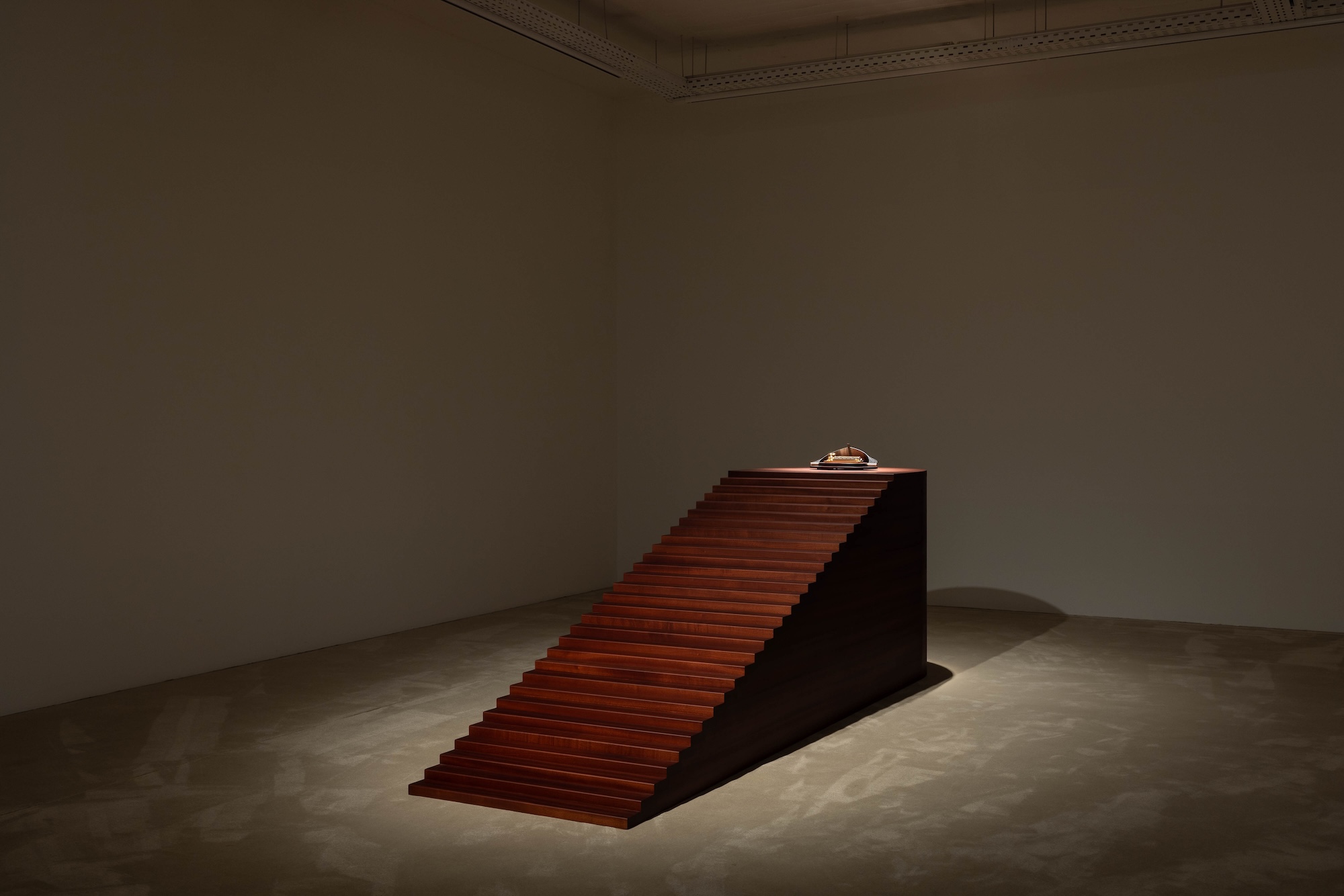
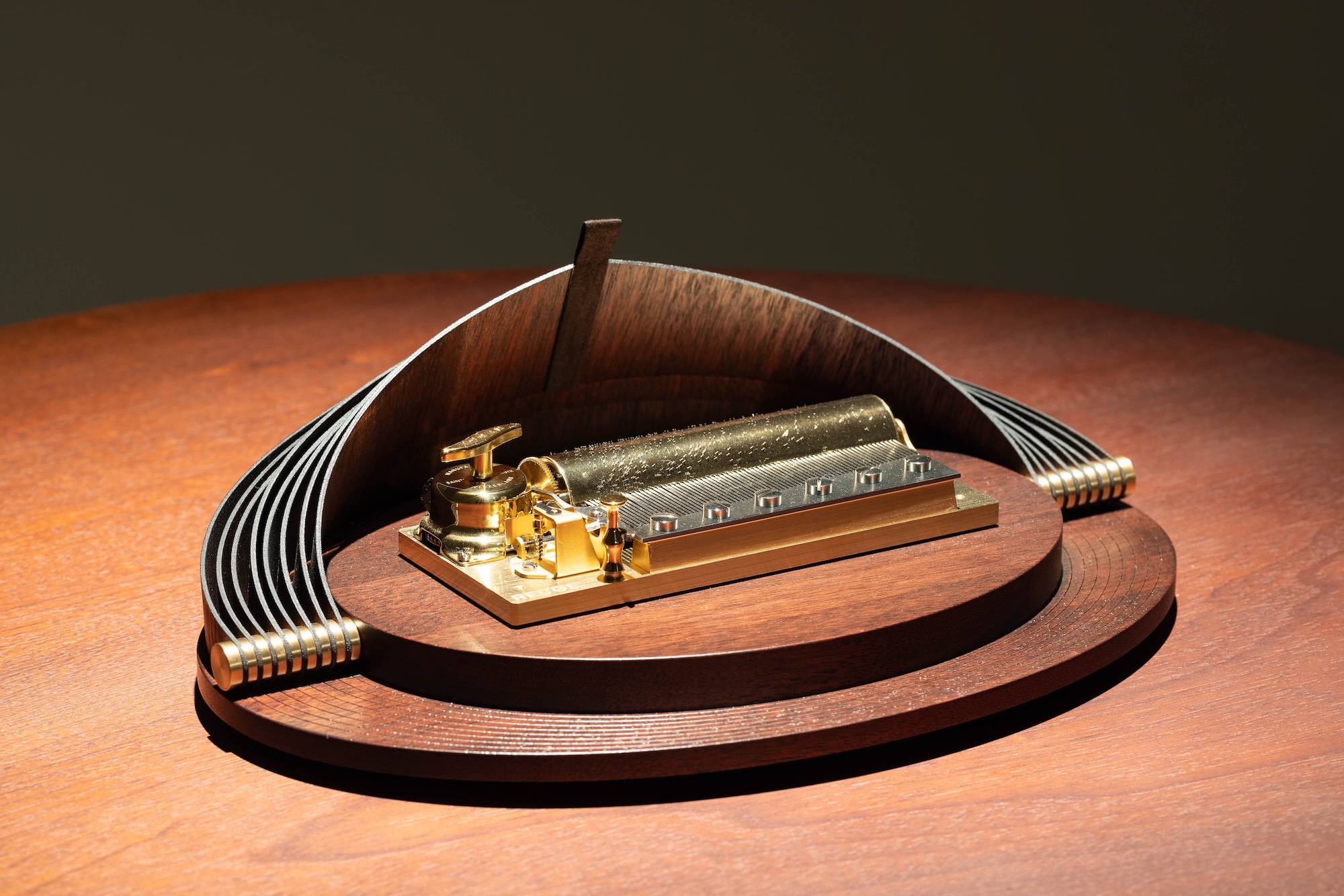
Isabel Cordovil: The Enigma of Arrival. Exhibition views at Galeria Pedro Cera, Lisbon, 2025. Photos: Bruno Lopes. Courtesy of the artist and Galeria Pedro Cera.