
Jumana Manna: Broken, Taken, Erased, Tallied
“I am part of nature. Nature… is me.”
Jumana Manna’s solo exhibition Broken, Taken, Erased, Tallied at Rialto6 sheds light on alternative narratives of Palestinian daily resistance to the homogenous oppression and colonial extractivism of the Zionist project. Unpacking the pervasive genocidal destruction not just of the Palestinian people but of ecology, plants, the land itself, and its peoples’ ways of life, knowledge systems, and cultural diversity, the show features three installations, namely Cache (2019), Old Bread International II (2023) and Water Arm I and II (2018); the two images of The Cleaning Collages (2018 and 2023); and three bi-weekly interchanging films, specifically Foragers (2022), A Magical Substance Flows Into Me (2016) and Wild Relatives (2019).[2] As a whole, it rejects the framing of a bilateral Israeli-Palestinian conflict for a deeper understanding of how our global social order causes deep destruction of sustainable ways of life, which is particularly clear in the Zionist Western-colonial capitalist genocidal project of Palestinian occupation.[3]
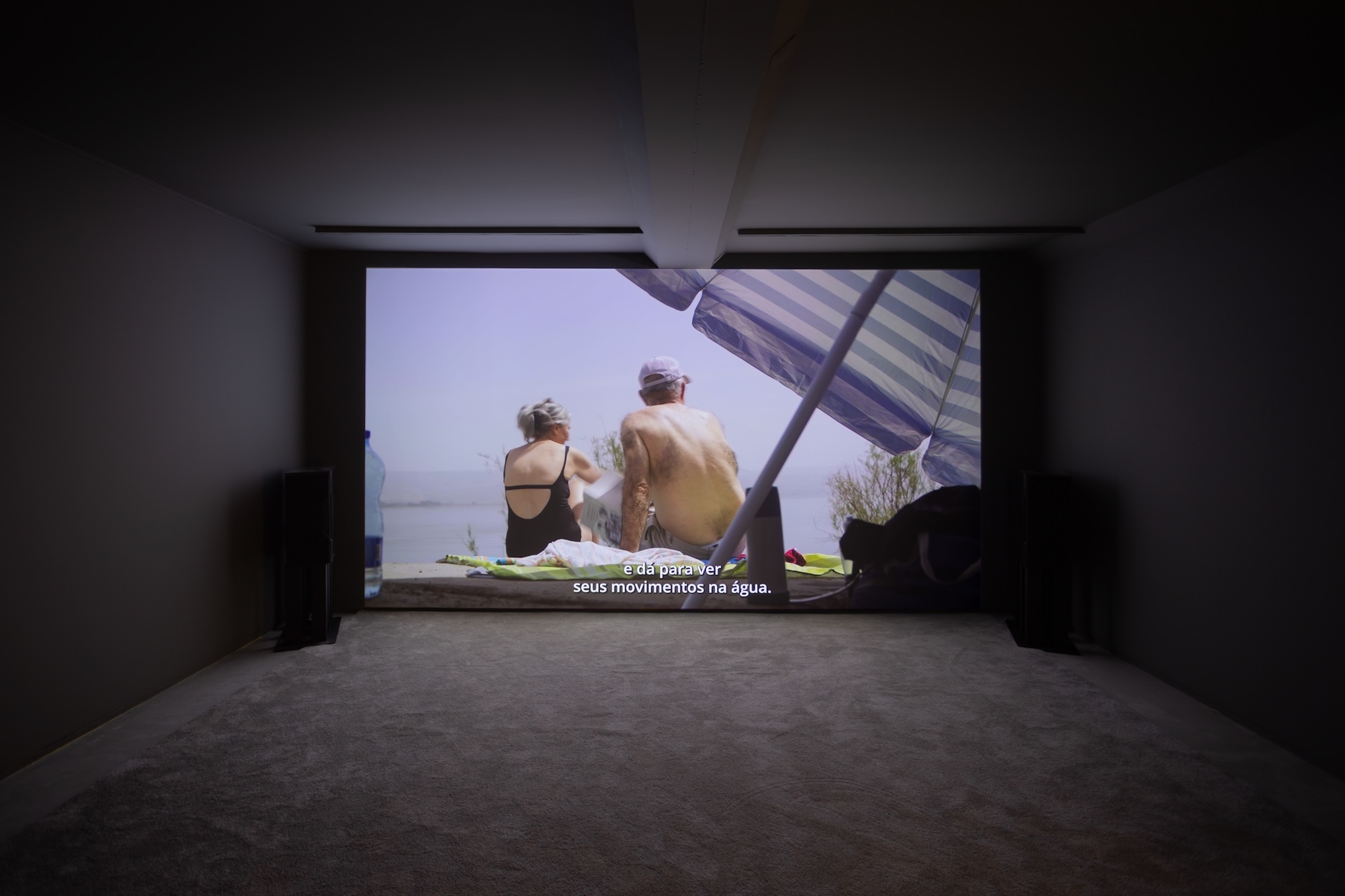
Manna tackles this subject with unflinching love, humour, and nuance, traversing across topics of seed banks and regeneration, foraging and agricultural practices, musical traditions from Samaritan, Kurdish and Moroccan Jewish, and Bedouin cultures, storage systems, and all the small acts that bring out the reality of quotidian resistance. Grounded in a keen understanding of the rhythm of the land, her films connect traditions of and from the land with a homely, captivating quality of kitchen scenes that place you right at the centre of daily resistance. Their showcasing in the comfort of the cinema room of Rialto6—with its simple set up of two armchairs, a sofa, a carpet and a large screen, with a sound system of the highest quality—heightens the intimacy that Manna’s work breathes.
Upon entering the first floor of Broken, Taken, Erased, Tallied, the viewer is faced with Cache. This installation of ceramic sculptures is decodable through the exhibition text, which tells us that the tube-vase shapes are “inspired by the remains of khabyas, structures for grain storage that were built into rural homes in the Levant, and have become obsolete with the advent of refrigeration.” Placed in the contemporary setting of Rialto6 and its big glass windows, the sculptures feel uncannily magnetic as a reminder of that which the urban is ignorant of. Down some stairs in the adjacent space is Water Arms and Old Bread International II. The latter features a spread of mouldy pieces of leftover bread made in clay and spread out on newspapers from different countries (perhaps in reference to the globality of the question). As the exhibition text explains, the piece “mimics a common sight … across the Mediterranean: along ledges or beside trash bins, uneaten bread is laid out as an offering to be taken, consumed, or grow stale and rot … the leftover bread is ‘gifted’ to unknown receivers.” The feeling of the piece is a mixture of delight and the horror of poverty, as magnetic in its attraction as the intercultural practice of breaking bread.
The non-fiction narratives of the films, shown one at a time depending on the week, connect the “little life” with the bigger concepts, thereby opening the understanding of colonial oppression and eradication as a pervasive system that uproots all that grows—and that is resisted in small subversions most prevalent in areas where the state’s reach is limited. This is exemplified by the words of a young woman featured in A Magical Substance Flows Into Me: “While Israeli society tried to flatten, annihilate and erase cultures of diaspora,” the Samaritans,[4] who kept speaking Arabic and continued some Arabic heritage, too, were “relatively able to hold onto their tradition there without much disturbance.”[5]
Magical Substance follows in the footsteps of German Jewish Robert Lachman’s archival project of the 1930s which explored East Jewish and Palestinian musical traditions in the British colonial state-owned Palestine Broadcasting Service. The project encompassed the music of Kurdish Jews, Palestinians, Bedouins and Samaritans. The film’s strongest scenes are located in the kitchen: for example, the previously quoted young woman stirring a pan in the kitchen, singing to the play of a young man sitting by a table in the background. After the song, the film shows her standing in the middle of the kitchen, facing the camera with a kitchen towel thrown over her shoulder and speaking of her grandmother; of growing up in a household with an Israeli flag; and, with time, of rejecting the myths she was fed for a greater understanding of her tradition. This is an intimate, personal portrait of one perspective among thousands that lovingly connect the individual with the collective.
Foragers also features a strong kitchen scene: three elderly yet incredibly energetic ladies cooking and then eating food with za’atar and ‘akkoub—watching them, you cannot help but chuckle happily. The telephone rings; one of them answers. “Do you have any ‘akkoub? Well, my sister Aziza and Umm Anwar will come down and get some from you.”[6] Behind this conversation is the wider subject of the film: the Israeli Nature Protection Authority’s ban of foraging these traditional herbs. Foragers are persecuted and hit with heavy fines, favouring Israeli settlers’ agricultural production and destroying the natural rhythm of foraging in harmony with the land. While the Nature Protection Authority, in line with Western greenwashing practices, has simply declared the plant as endangered and banned foraging, the reenacted scenes of questioning of foragers tell a different story: when you forage properly, you never take the root; and without foraging (thereby trimming the plants), the plants now grow less. Despite the fines, the foragers persevere in the dead of the night—the film’s opening scene even shows a man cutting the tires of a Nature Protection Authority van. In one reenacted questioning scene, a woman laments that they let her work all day before stopping her. In another, a man states how it is illegal to forage if you are Palestinian, but not if you are Jewish.
The third film, Wild Relatives, further underlines the intricacies of ecology and the world hegemony that erodes organic ways of life. It tells the story of how seeds were retrieved from the Svalbard Global Seed Vault in the aftermath of the Syrian War to regenerate the land in Aleppo. The Vault, known as the "doomsday vault," is part of a research centre network that emerged out of the Green Revolution, which “believed it could end world hunger and in the process fight Communism.”[7] The idea behind the project is a back-up of a global standard of seeds from all over the globe in case of apocalyptic disaster. Given the need to retrieve the seeds in the wake of the eco-apocalyptic disaster of the Syrian War, it follows that we are already living in apocalyptic times, even if these are unevenly spread across the globe. At the same time, it shows the pervasiveness of a hegemonic world order as global standard modernised high-yielding plant varieties eliminate local ones, highlighting the industrial research centre—funded by the Svalbard Vault, as a representative of the centre underlines—which stands in stark contrast to grassroots ways of local preservation. Wild Relatives shows the latter through the practices of organic farmer Walid El-Youssef and a local house of seeds, aimed at multiplying local varieties organically. The setting is homely, rural, and wooden, diverging aesthetically from the laboratory setting of Svalbard. Even stronger are the words of the farmer: “We collect seeds whenever we find people planting local varieties. We try to stay in touch and build strong friendships. We exchange seeds as well as experiences and ideas with one another.” He speaks of worms, of how to make a happy soil, of “sustainable production for the earth and for us.”[8] This mutual aid approach is built on affinity and friendship, rather than relying on one-directional aid and technology.
The economy plays into the ecosocial destruction too. “If you cultivate the land, the returns won’t cover what you invest in it. The refugee business is more profitable than agriculture. Because when you try to sell your produce, you are competing with imported produce.”[9] Yet another example of how the global hegemonic order oppresses and erodes organic knowledge systems. However, Manna’s loving camerawork shows the continuous resistance in daily life.
Unhesitant in its complex diversity, Broken, Taken, Erased, Tallied intrinsically links the social and ecological aspects of oppression, and thereby showing the resistance—“I am part of nature. Nature… is me,” as the interrogated forager says. The show can even be seen as a representation of the ecocycle of the land: seeds and planting represented in Wild Relatives, plants through agriculture and foraging in Foragers, food storage in Cache, cooking as a theme across all three films, and leftovers as passed on to others in Old Bread. As a whole, it uncovers the destruction of a global ecosystem—including peoples and nature as one—that the global hegemony is attempting to eradicate, resisted by people everywhere in small, subversive actions of keeping traditions, foraging with care, and simply being part of nature.
Maria Kruglyak is a researcher, critic and writer specializing in contemporary art and culture. She is editor-in-chief and founder of Culturala, a networked art and cultural theory magazine that experiments with a direct and accessible language for contemporary art. She holds an MA in Art History from SOAS, University of London, where she focused on contemporary art from East and South East Asia. She completed a curatorial and editorial internship at MAAT in 2022 and currently works as a freelance art writer.
Proofreading: Diogo Montenegro.
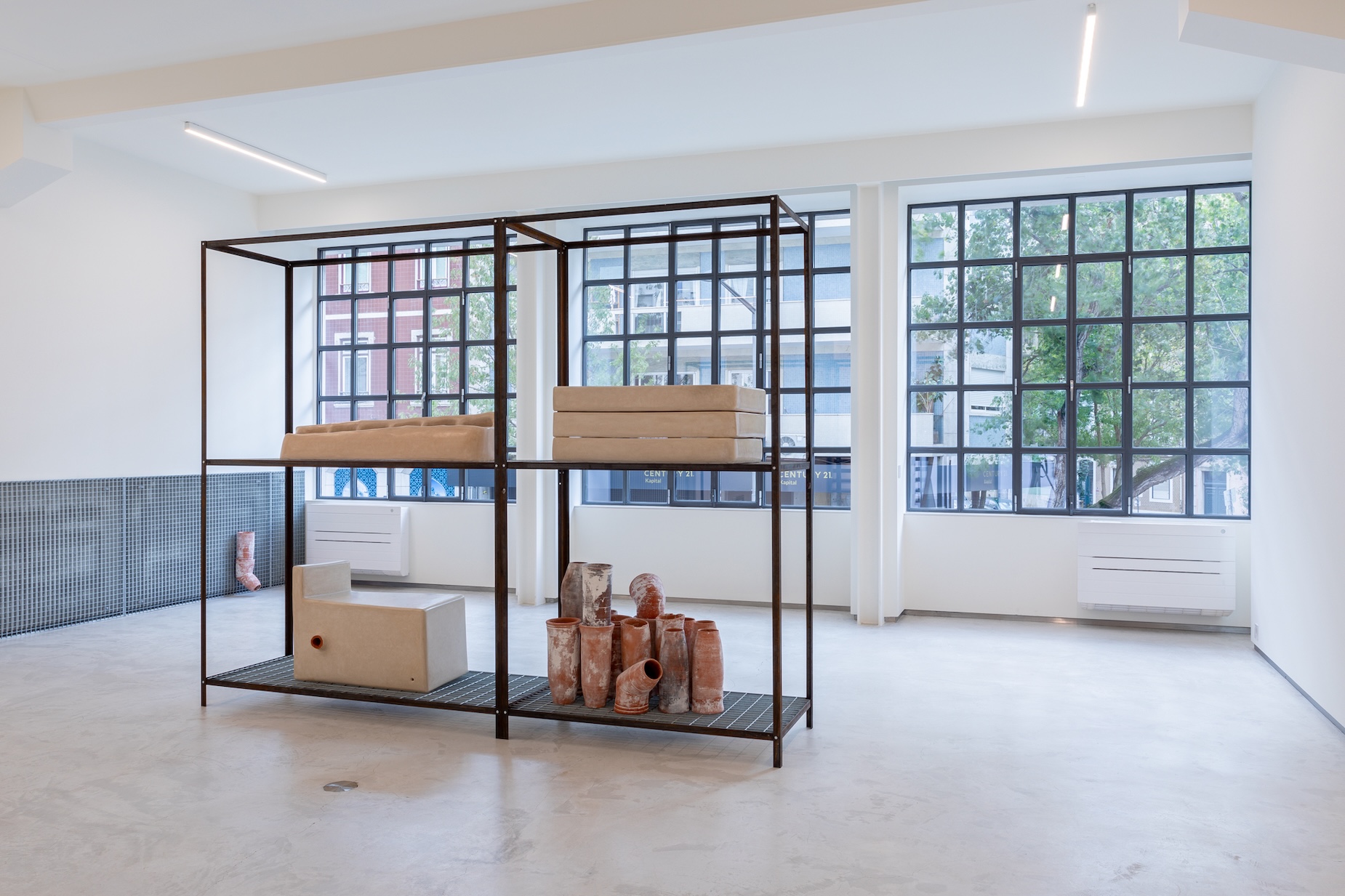
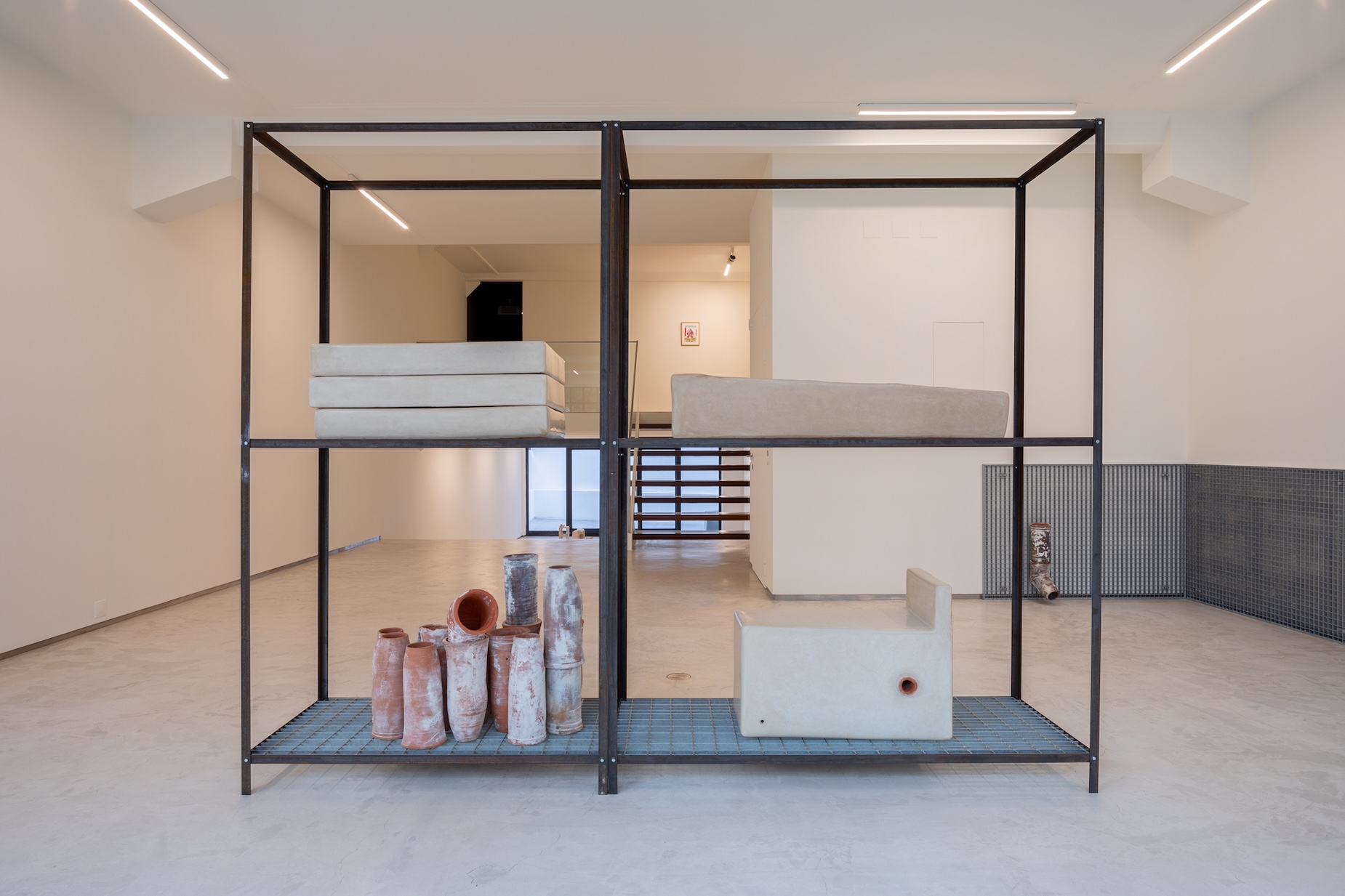
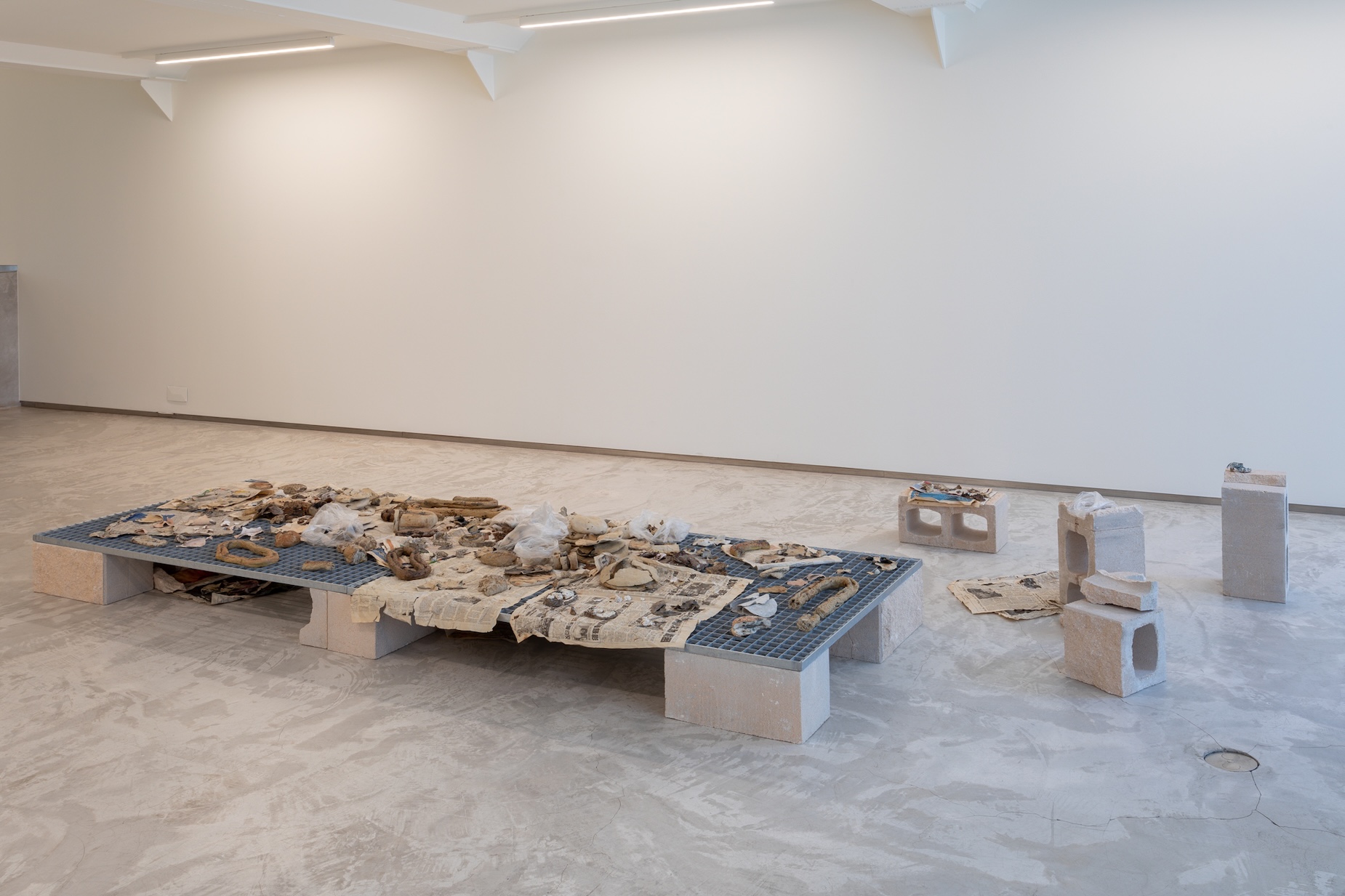
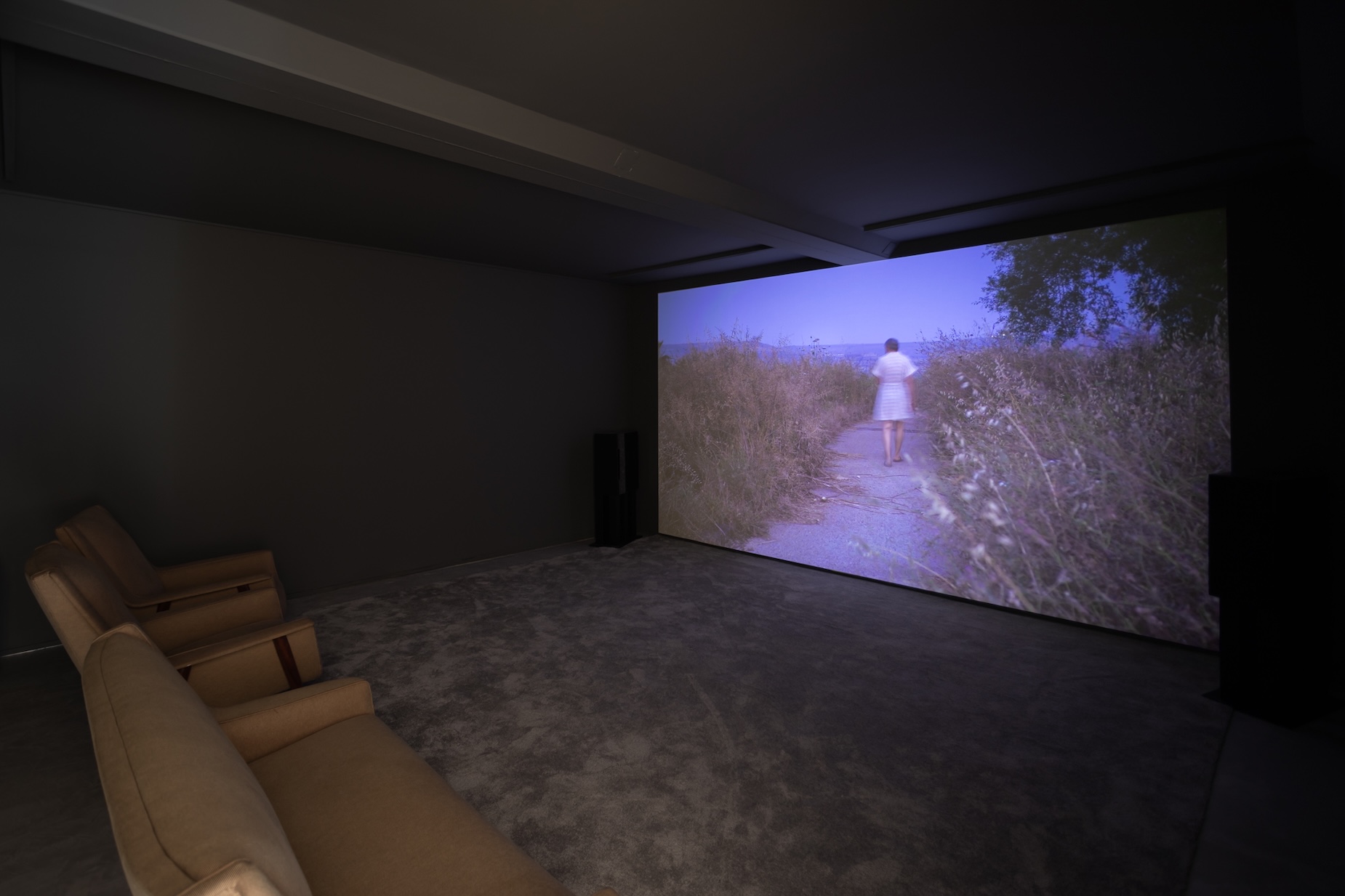
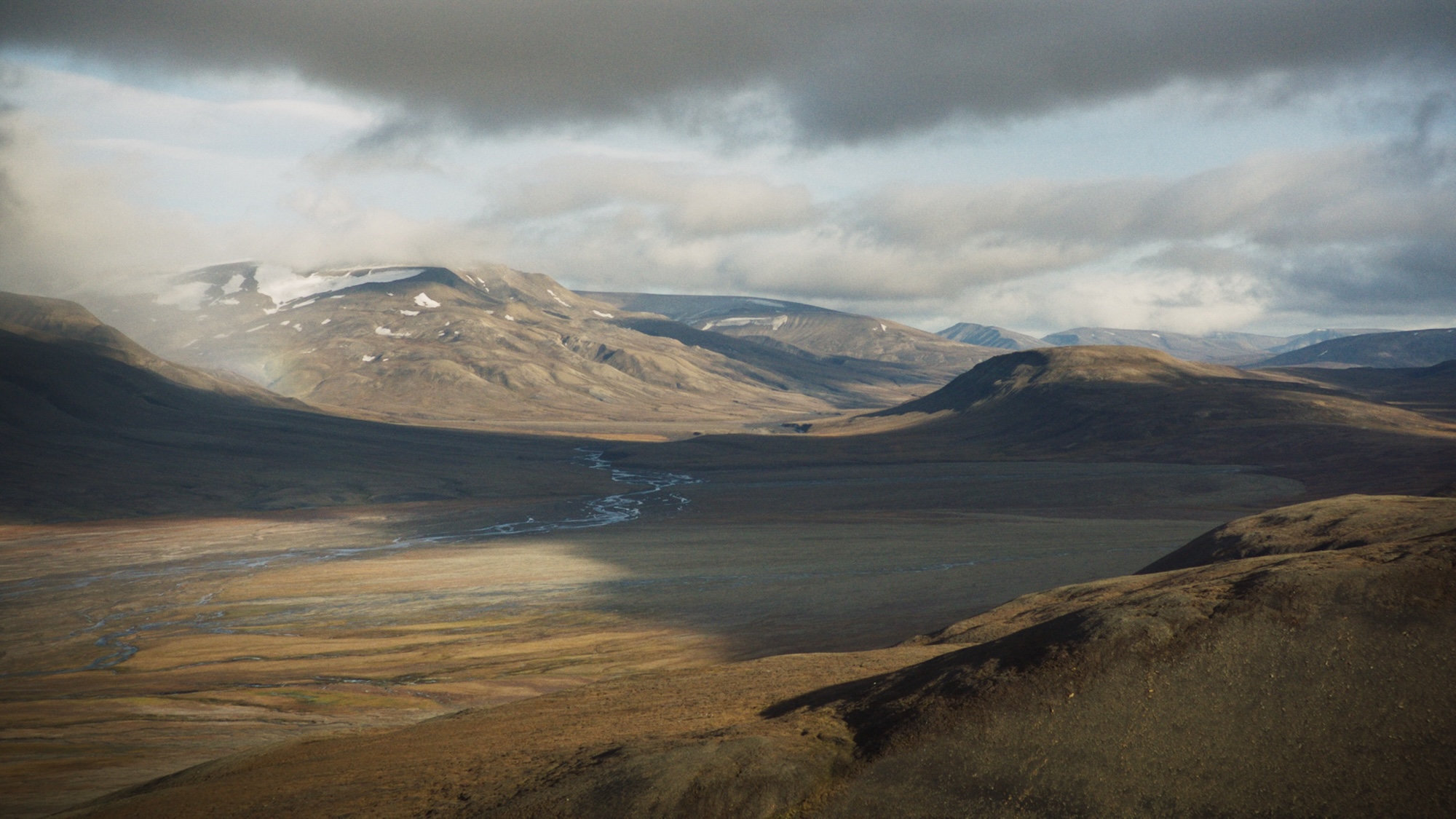
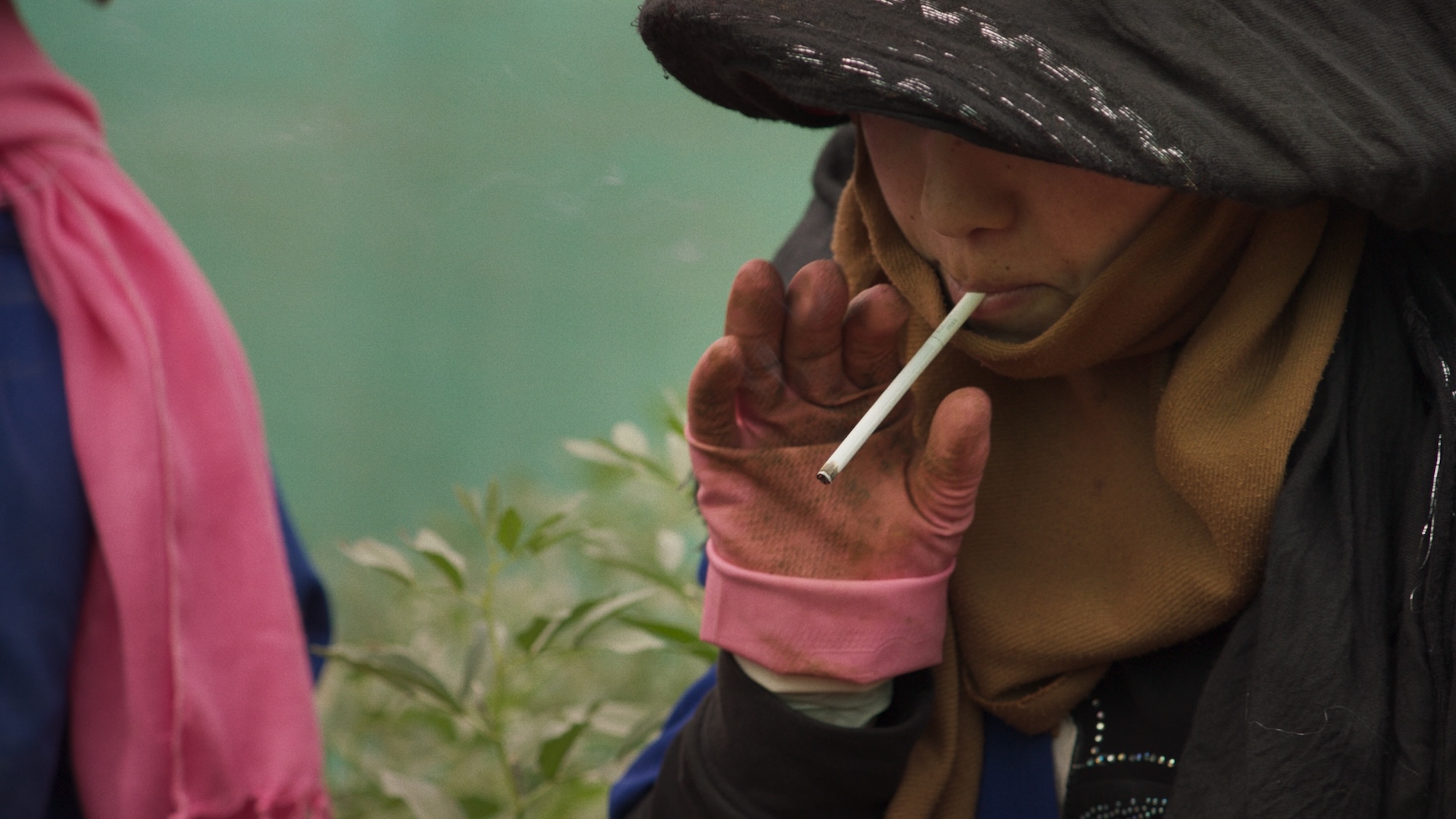
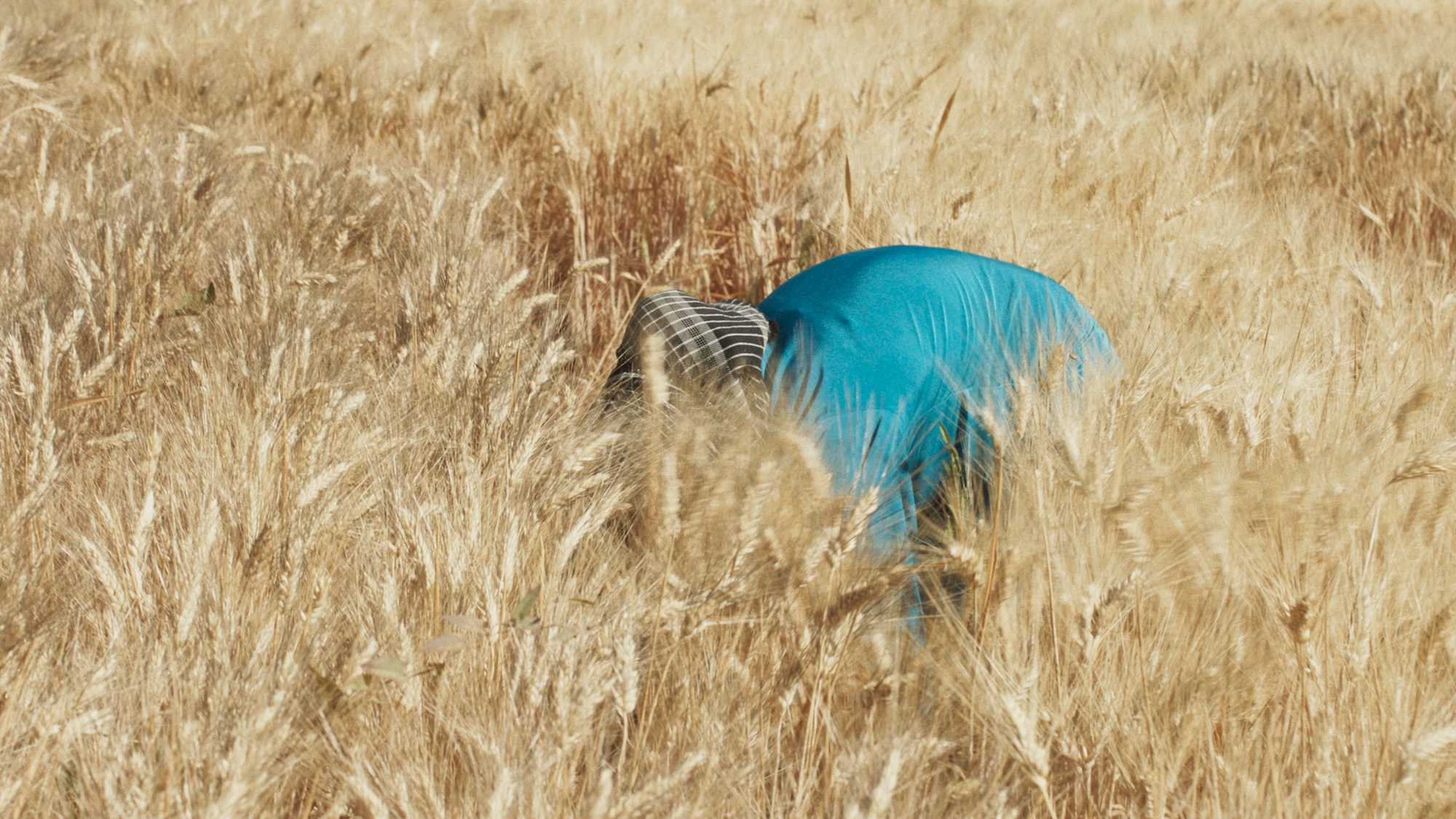
Jumana Manna: Broken, Taken, Erased, Tallied. Exhibition views at Rialto6, Lisbon 2024-2025. Photos: Vasco Stocker de Vilhena. Courtesy of Rialto6. Movie stills Wild Relatives (2019). Courtesy the artist.
Notes:
[1] Quote from an interrogation of Ahmed who is accused of foraging za’atar. Acted by Mahmoud Shawahde in Jumana Manna’s Foragers (2022).
[2] The coming weeks’ schedule interchanges weekly, with Foragers screening on 3/1 and 24/1; A Magical Substance Flows Into Me on 27/12 and 17/1; and Wild Relatives on 10/1.
[3] To paraphrase Egyptian activist Hossam el-Hamalawy, the Palestinian struggle is the struggle that unites all struggles.
[4] The Samaritans are the only people that inhabited the land from the ancient times to the present day, secluded almost to extinction. There are now around 900 Samaritans, half living in Holon, Israel and half in Nablus, West Bank. While the Zionist myth has invaded some of its recent cultures, the traditions of Samaritans counter that narrative. As the young woman previously quoted says of her grandmother, who believed the Zionist myth: “My grandmother was never afraid of Arabs. I am even diminishing it by saying it like that. Actually she would wait for an Arab to pass by in the street, so she could invite them in for tea. Her experience was of someone who did not integrate. She barely left the house. She lived in her Morocco within her own four walls. Her home was Morocco and outside was another world, where she never went. With her spices, bending down on her knees, preparing dough, baking bread… This seemed magical to me. As if she came from a world that I was drawn to. One I wanted to get to know.” Quoted from Jumana Manna, A Magical Substance Flows Into Me (2016).
[5] Quoted from Jumana Manna, A Magical Substance Flows Into Me (2016).
[6] Umm Usama quoted in Jumana Manna, Foragers (2022).
[7] Quoted from Jumana Manna, Wild Relatives (2019).
[8] Ibid.
[9] Ibid.