
Gabriel Abrantes: Standard Error
“Once upon a time and a very good time it was there was a moocow coming down along the road d this moocow that was coming down along the road met a nicens little boy named baby tuckoo..."
In this opening passage of Portrait of the Artist as a Young Man (1916), James Joyce introduces the reader to the world of his protagonist as a child—through a nursery rhyme and onomatopoeia, the famous “moocow”—, immersing them directly in his muffled childhood consciousness. This is not a simple artifice, but a precise formal choice: the novel does not begin by narrating, but rather by recording sounds, just as the mind of little Stephen Dedalus perceives them. Language, for the child and in the novel, is not yet a logical and articulated system, but rather sensory matter, rhythm, timbre. Language will develop in the book in tandem with the psychological development of the narrator. Onomatopoeia is one of the first tools for appropriating the world; the child imitates and repeats, establishing a link between a sound and an object, between perception and symbol. It is a fundamental threshold: through vocal play and the imitation of noises, the child experiences the possibility of language as representation. Joyce echoes this original moment in his writing: moocow is not only the acoustic memory of childhood, but the very image of the birth of language.
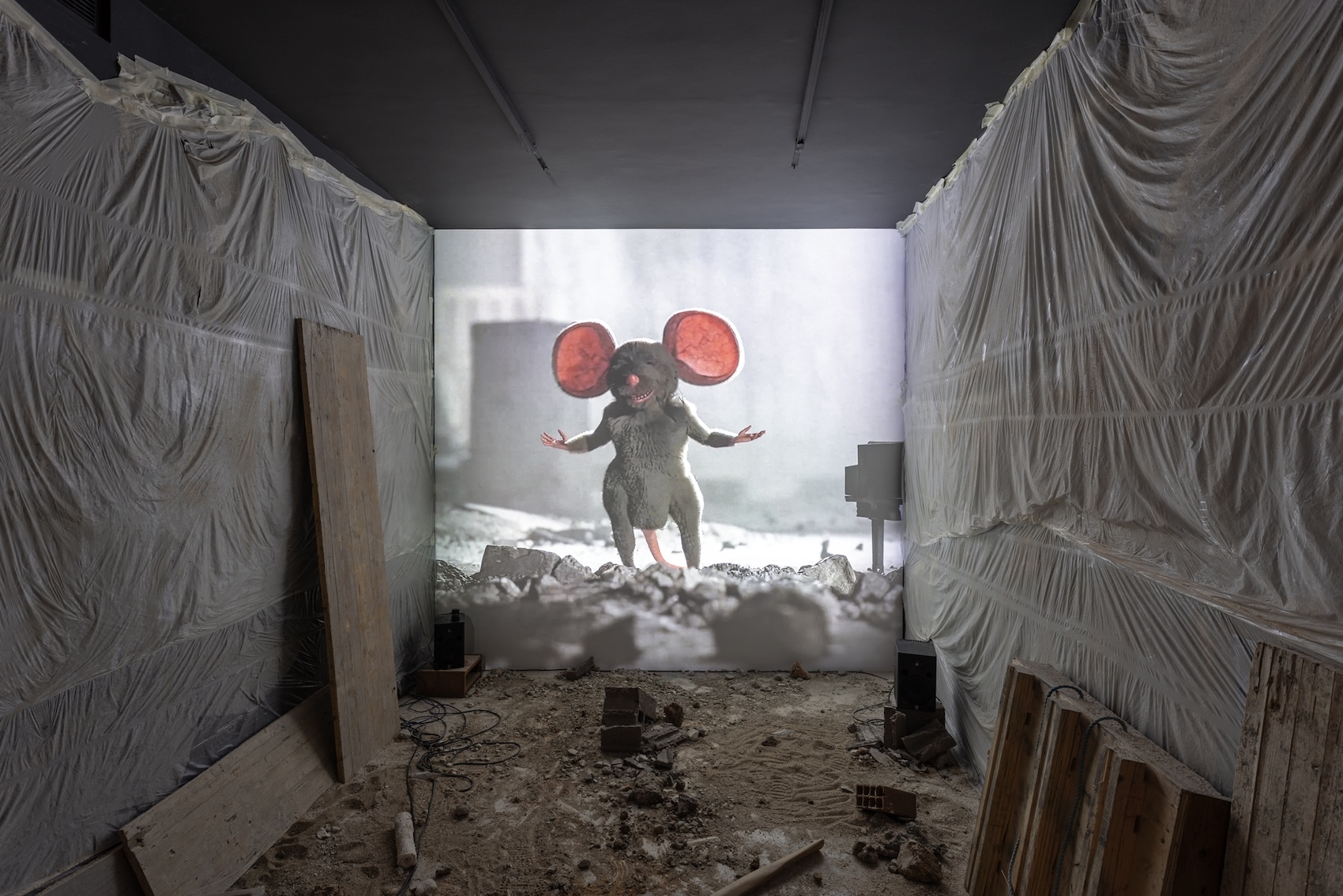
Steamboat Willie, the first cartoon with synchronised sound, created by Walt Disney in 1928 and starring Mickey Mouse, is the oldest piece featured in Standard Deviation, a group exhibition conceived by Gabriel Abrantes as a counterpart to Standard Error, the exhibition of his latest work, Rattrap (2025). The project is divided in two parts, corresponding to the two spaces of Rialto6 where it takes place, but is conceived as a unified whole: the works in the group exhibition on the upper floor create a conceptual unity with Abrantes’ new animation, installed in the basement. The project is unified by its theme—almost all the works on display feature animals or depict their behaviour, reminiscent of apologues. But also from a formal point of view, in terms of language, it is possible to glimpse a trajectory that goes from the animation of Mickey Mouse in Steamboat Willie to the highly sophisticated Ratzo, the mouse protagonist of Rattrap, who interacts with the viewer with his glib talk. Both are laboratory mice for technological and linguistic experimentation, as well as experimentation with meaning—in an ‘evolution’ reminiscent of that of Stephen Dedalus and his meta-language used by Joyce in the novel.
In Steamboat Willie, linguistic innovation is supported by a deliberately ‘primitive’ sound language. The animals, ‘played’ by Mickey Mouse, give life to a concert with their sounds. It is significant that, at a time when cinema is experimenting with the fusion of image and sound, it chooses to do so through onomatopoeia, the most elementary and universal form of communication, which children spontaneously imitate in order to enter into language. The technological modernity of the cartoon, which inaugurates a new audiovisual language with synchronised sound, does so by recovering the auroral phase of communication, where meaning arises from sound emulation and rhythm, not from ordered words.
Among the constellation of works/artists significant to Abrantes displayed on the upper floor, where one can recognise more or less direct influences on his latest animation, there is another old animated short film, Minnie the Moocher (1932), directed by Dave Fleischer and starring Betty Boop. Frustrated by her parents’ authoritarian behaviour, teenager Betty Boop runs away from home with her friend Bimbo. Both find themselves confronted with the harsh and dangerous reality of life on the streets, and are tormented by ghostly visions (metaphors for the degradation of contemporary urban society). In the end, after a daring escape, they decide to return home. The short film played an important role in the reinvention of the rotoscoping process, developed by Fleischer, an animation technique obtained by tracing scenes from a previously filmed movie. In Minnie the Moocher, the dance moves of the ghost-like walrus are traced over the dance steps of Cab Calloway, from whom the music for the jazz piece that gives the cartoon its title is also taken. It is a technical element that resonates in Rattrap, in which actors Ana Tang and June João embody Ratzo’s movements, along with his voice and linguistic patterns.
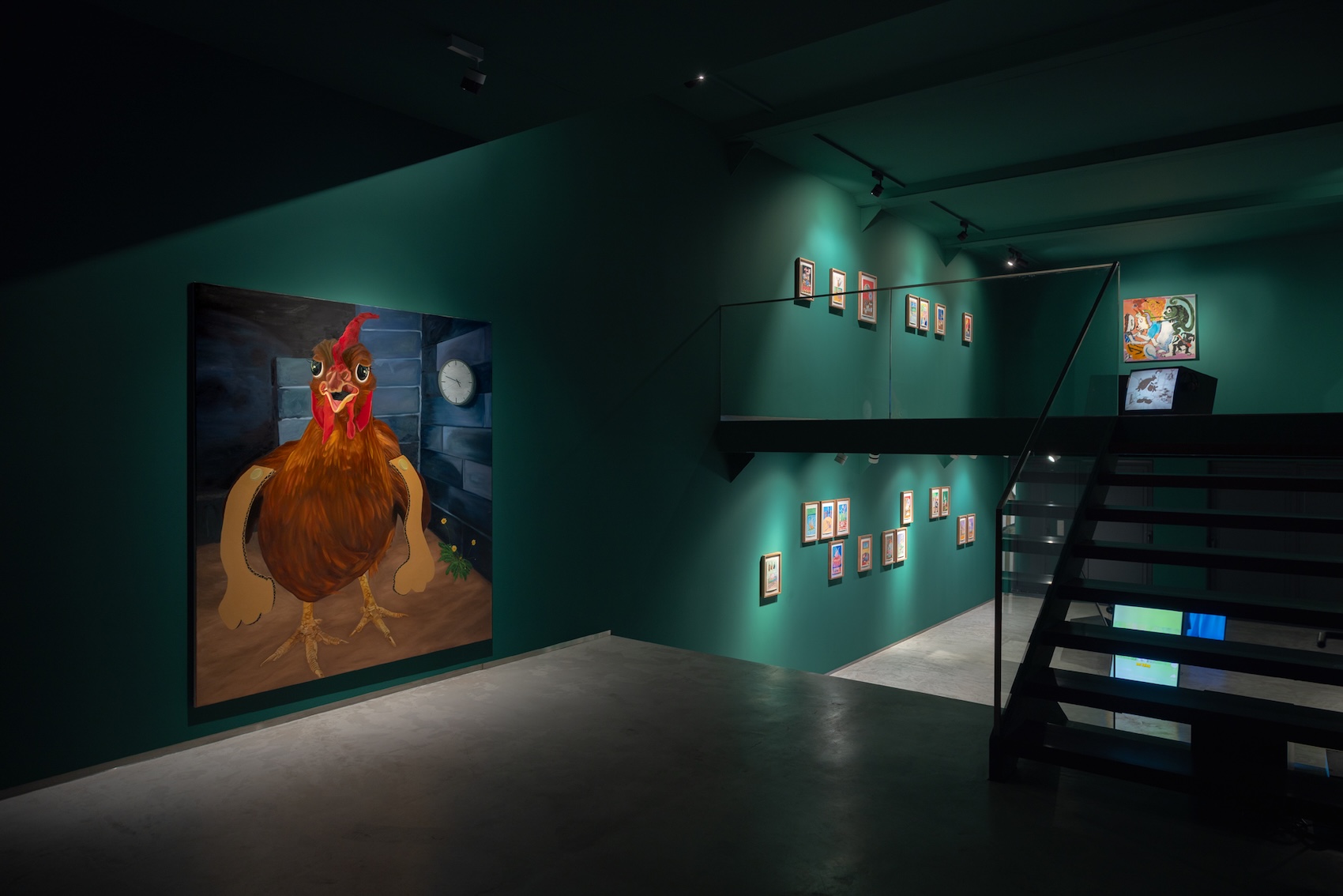
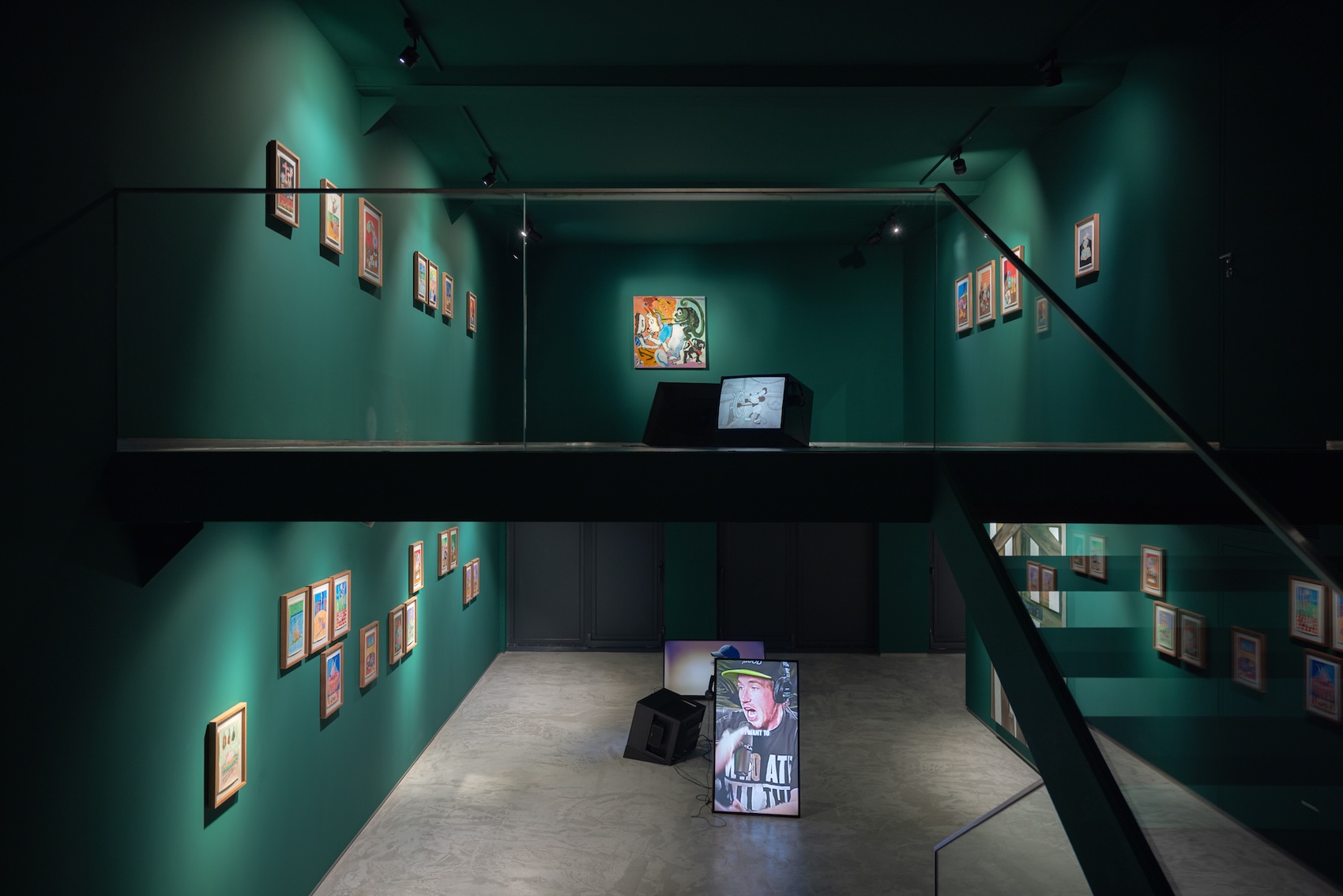
In the Betty Boop cartoon, everything is animated—the daisy on the table trying to feed her, the figurine trying to comfort her, the handkerchief talking to her—just as animated as the still lifes drawn by Carla Dias in the series of drawings that unfold along the walls of the exhibition space. The bright colours, the quick and loose strokes of the markers, and the Moleskine pages used as a medium express the impromptu nature of the drawings, like pages from a visual diary, almost like snapshots of a domestic theatre. Apart from a hand and a foot, human beings are absent from the images—but they are recounted by the objects that surround them. Everyday objects, half-eaten food, kitsch trinkets, cigarettes, household products, books, magazines, and pesticides, statuettes of Madonnas and saints make up the visual vocabulary of these ironic and surreal contemporary vanitas, evoking the customs and traditions, desires, and above all vices of humanity, while at the same time bringing out a subtle critique of consumer society. The objects drawn have the value of talismans, the packaging of the products recites oracles and warnings, which lead to awareness, but with a shrewd, brilliant and light tone that makes you smile. These drawings accumulate the debris of a dystopian reality––a drone appears behind Saint Anthony, and it is no coincidence that 1984 is among the books depicted and Animal Farm is the title of a drawing depicting a column of animals, reminiscent of the Town Musicians of Bremen, formed by an inflatable, Jeff Koons’ balloon dog, a floating duck, surmounted by a Lindt bunny. Animals play a prominent role in Dias’ visual universe, but are translated into their commodified dimension, as toys, piggy banks, stuffed animals, pop icons, figurines, or trophies.
In a certain sense, Inês Raposo’s pair of paintings, if related to each other, may also allude to Orwell’s Animal Farm or the Town Musicians of Bremen—in both stories, animals take power. The hen in Cardboard Hands (2025) seems to be wearing boxing gloves and aggressively breaking through the fence of the chicken coop depicted in Portão de madeira (2025).
A diary-like approach similar to Dias’s can be found in the episodes of 2 Lizards (2020), a collaborative project developed by Meriem Bennani and Orian Barki during the COVID-19 pandemic. In the 3D animations, often mixed with real footage of the city in lockdown, the two anthropomorphic lizards roam an unusually deserted New York City, gripped by the pandemic and prolonged isolation. Their conversations reveal fears, boredom, and a desire for freedom, but also a desire for social redemption, highlighting in a serious, ironic, and poetic way the powerlessness and uncertainty felt by many during that period, but also the unexpected moments of sharing and connection within the community. It is impossible not to smile when, driving through an empty New York, a simple latex glove flying across the windshield is enough to cause anxiety about contagion, or when a lizard thinks someone has spat on it, when in reality it was just a raindrop. The fact that these thoughts are interpreted by lizards, the artists’ alter egos, emphasises the sense of alienation we feel today towards a behaviour, a state of mind of suspicion, which we also experienced in that state of emergency, but which, with the passage of time, seems so absurd.
Contemporary society, particularly that of the United States, with its addictions, obsessions such as conspiracy theories, and unmentionable desires, is the focus of videos by American comedian and YouTuber Conner O’Malley.
In Coreys (2024), he stages a fierce and alienating parody of the identity crisis and contemporary bourgeois masculinity: a man, Cory, falls into an existential delirium after discovering his double—freer, wilder, more radical—who lives in Las Vegas and seems to satisfy what for the first Cory are only unfulfilled desires. The fusion of the two “Coreys” produces a grotesque metamorphosis, somewhere between chaotic comedy and psychological horror. Coreys stages a small contemporary tragedy, a portrait of male alienation and fragility, which—albeit through excess and black humour—reveals a disturbing reality: the search for oneself as an escape from oneself. Also featured in the exhibition are two other videos by O’Malley, Pipe Rock Theory (2025) and Rebranded Mickey Mouse (2023). In the latter, O’Malley takes on the role of one of pop culture’s iconic symbols—Mickey Mouse—and transforms it into a disturbing, grotesque, and radically destabilizing figure: Mick, the new ‘rebranded’ version of the mouse, is an anti-mascot for generations tired of the “Disney brand,” a concentration of violence, excess, disillusionment, and compulsive consumption. The short video uses found footage, with tones of dystopian horror and exaggerated satire: Mick emerges from forests or urban streets, immersed in degradation and technological alienation, an anti-fairy tale in which the Disney smile is corrupted by anguish and derailment. This reversal functions as social criticism: it is not just a parody of an icon, but an attack on consumerism, the culture of partying, marketing, and dehumanisation—as if Mickey became the mask of a generational crisis.
Traits of anti-fairy tales are also present in Paula Rego’s works inspired by the stories of outsider artist Henry Darger, from which her Vivian Girls series (1984) derives. Darger’s style, based on Victorian children’s literature, is completely transfigured by Rego’s expressionistic force in Beam Chameleon, Dog (1984), exhibited here, made even more disturbing by the ambiguity of the scene and the action in which the various figures, both human and animal, are involved. Through the Vivian Girls, Rego tackles complex themes such as power, domination, obedience, sexuality, violence, female identity, and repression—through a register that combines fairy tales, metaphor, the grotesque, and social commentary. Her girls embody the conflict between innocence and corruption, freedom and oppression, childhood and trauma—in a dialogue that mixes fantasy and reality. Darger’s figures, filtered through Rego’s imagination, lose their original naive character and become protagonists in a story in which childhood is not innocence but a place of opposing forces, fears, and desires, a sort of emotional laboratory in which the tensions of adult life are refracted.
This tension between different moods can be felt when faced with Ratzo, Abrantes’ animated mouse, who we already encountered in the street window video, engaged in a dance and a singing performance.
To get to know him face to face, you enter a dark room and descend into the underground environment where the video animation is installed, a room that looks like a construction site full of debris, where the work in progress seems to have been at a standstill for years. This desolate environment continues into the grey landscape, full of rubble, with a post-apocalyptic feel, where Ratzo moves. At the opposite end of the spectrum from the onomatopoeia of Steamboat Willie, Ratzo converses—in Portuguese, but he asks if you prefer English—with great eloquence. He wants to get to know you and tries to put you at ease, but the effect achieved is the exact opposite. This rat, with human movements and speech, alternates ingenious metaphors, puns, and caricatural diminutives, often pushing words to a grotesque exaggeration. He aims to shake you up, to provoke an emotional response. And yet, behind this aggressive and histrionic surface, fragility and a need for recognition emerge. His tone changes abruptly: affectionate but paternalistic one moment, mischievous or suggestive the next, then sharp, caustic, suddenly cruel—faithfully reproducing the dynamics of contemporary digital culture, where judgment and public sanction are always lurking. As Marie-Therese Bruglacher recalls in the insightful text accompanying the exhibition, “Yet, in all its unpredictability, Ratzo remains AI programmed and, hence, should be predictable. (…) Over months, Abrantes has fed his rat with content for it to evolve and mature into its current form and keen awareness of digital culture, systemic isms, and contemporary social critique. Trapped in between language and imitation—who is mirroring whom?” And this reversal appears with force in front of Ratzo, who is expecting you to answer questions about your unconfessable desires or what you like to do most in bed, while you, microphone in hand, awkwardly try to dodge the rat’s impertinent questions, while he observes you in silence, moving his tail or tapping his foot on the ground. (Seen from the outside, the scene must be rather odd!) And you yourself have somehow trained the mouse to outwit your attempts to outwit it. The experience creates a strange change of direction, a short circuit, leaving you with the feeling that you are the lab rat on which an experiment has been conducted—and is still being conducted—not only of a linguistic nature. It would not be the first time that the fate of mice and men proved to be the same.
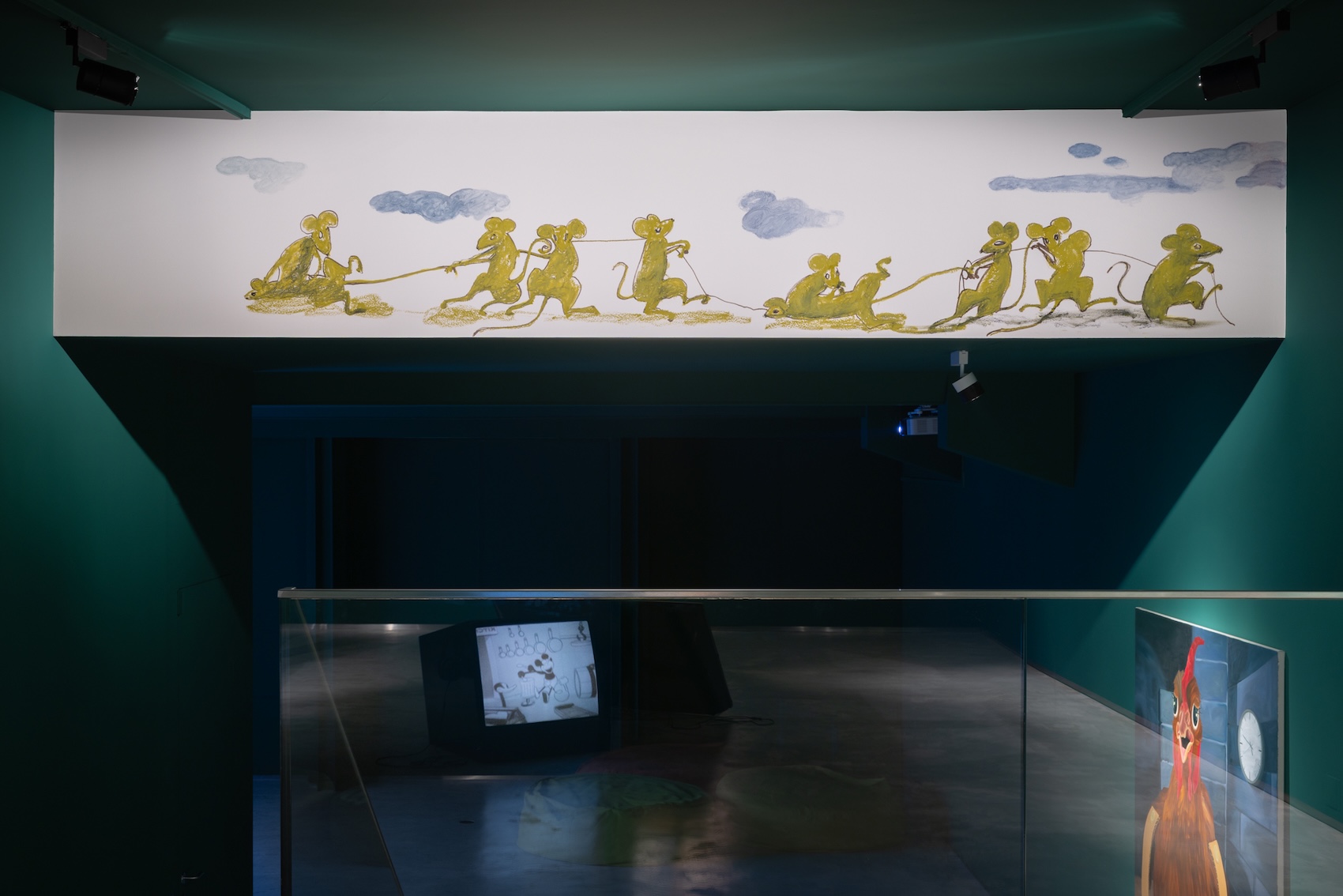
The site-specific frieze Comic Opera (2025), painted by Ana Jotta upstairs specifically for the exhibition, comes to mind: a group of mice march to the right in a parade reminiscent of the legend of the Pied Piper of Hamelin. In this strange procession, they are all joined together by their tails and whiskers to form a single thread in an ambiguous atmosphere. It is unclear whether they are playing, dancing, or torturing themselves, whether they are trapped, bound together with no escape by the thread of destiny.
‘“Alas’ said the mouse” —in an extraordinary tale by Franz Kafka—“‘the whole world is growing smaller every day. At the beginning it was so big that I was afraid, I kept running and running, and I was glad when I saw walls far away to the right and left, but these long walls have narrowed so quickly that I am in the last chamber already, and there in the corner stands the trap that I am running into.’
‘You only need to change your direction,’ said the cat, and ate it up.”
Sara de Chiara is an art historian, critic and curator of contemporary art. She received her PhD in art history from Sapienza University of Rome in 2022. Since 2019, she has been in charge of publications at the Centre d'Art Contemporain Genève, where she also collaborates on some exhibition projects as a researcher and curatorial assistant. She has contributed essays to numerous catalogs and monographs, collaborates with several art magazines, including Contemporânea, Frieze, Flash Art International and writes on the cultural supplement of the Italian newspaper Il Sole 24 Ore.
Proofreading: Marta Espiridião
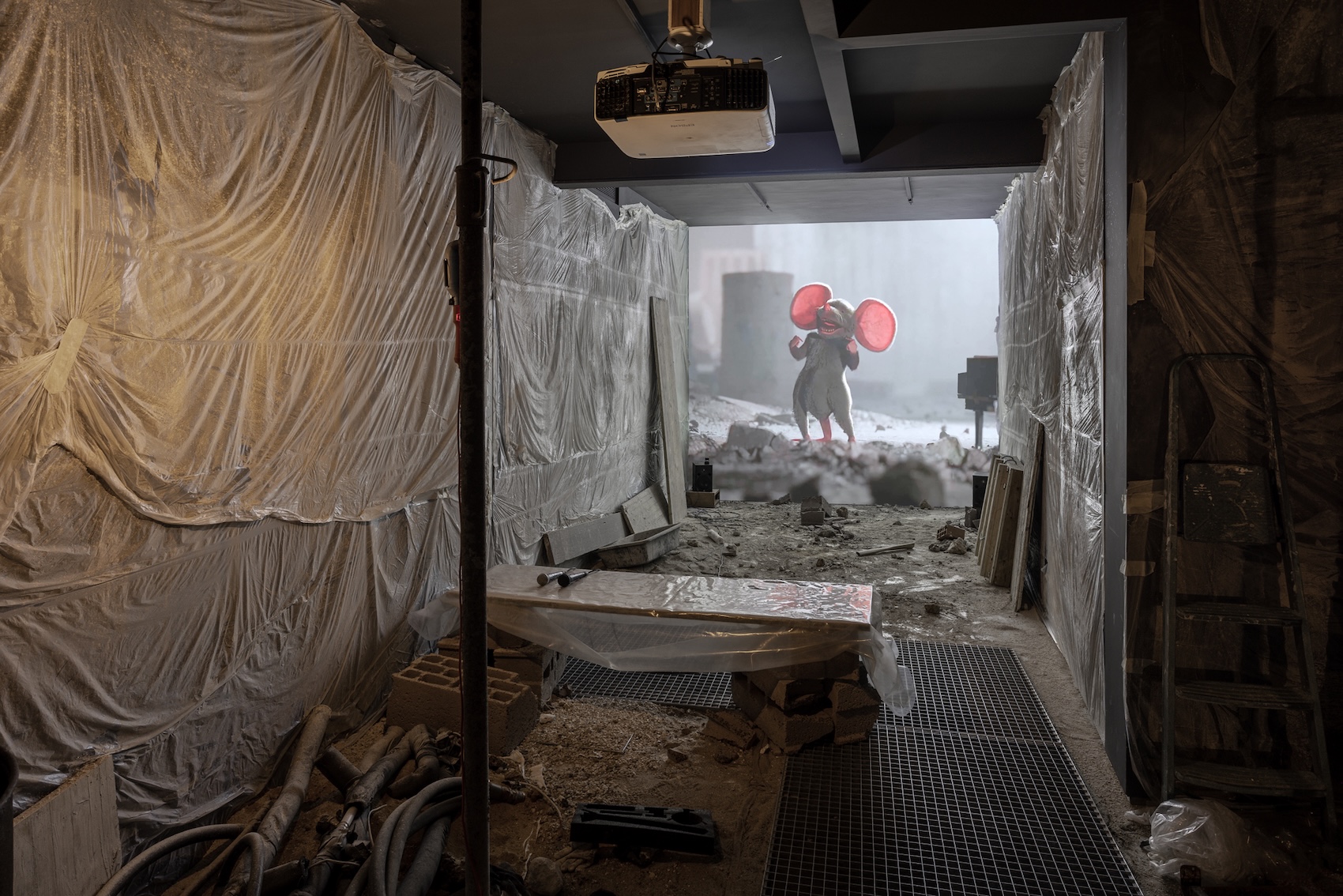
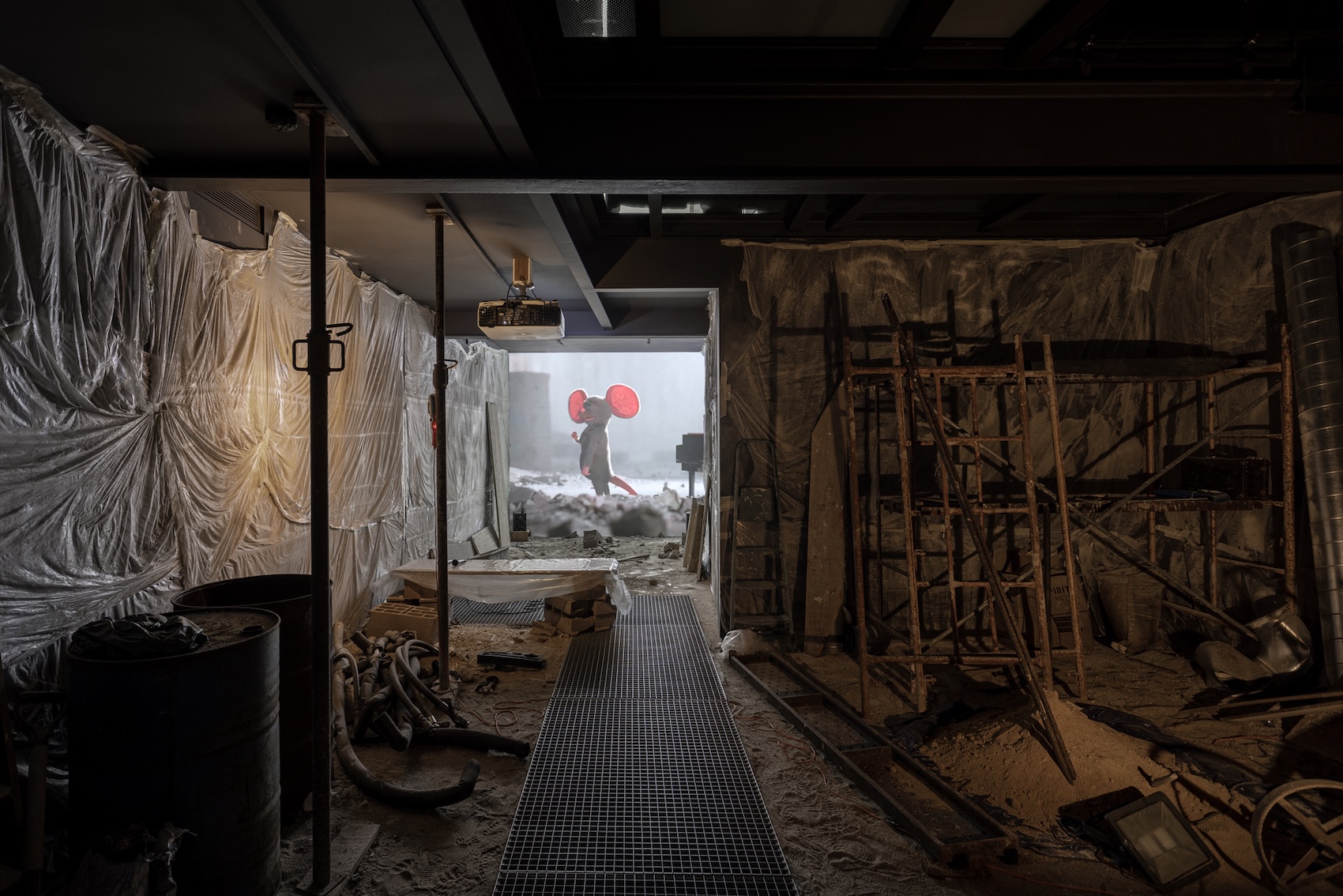
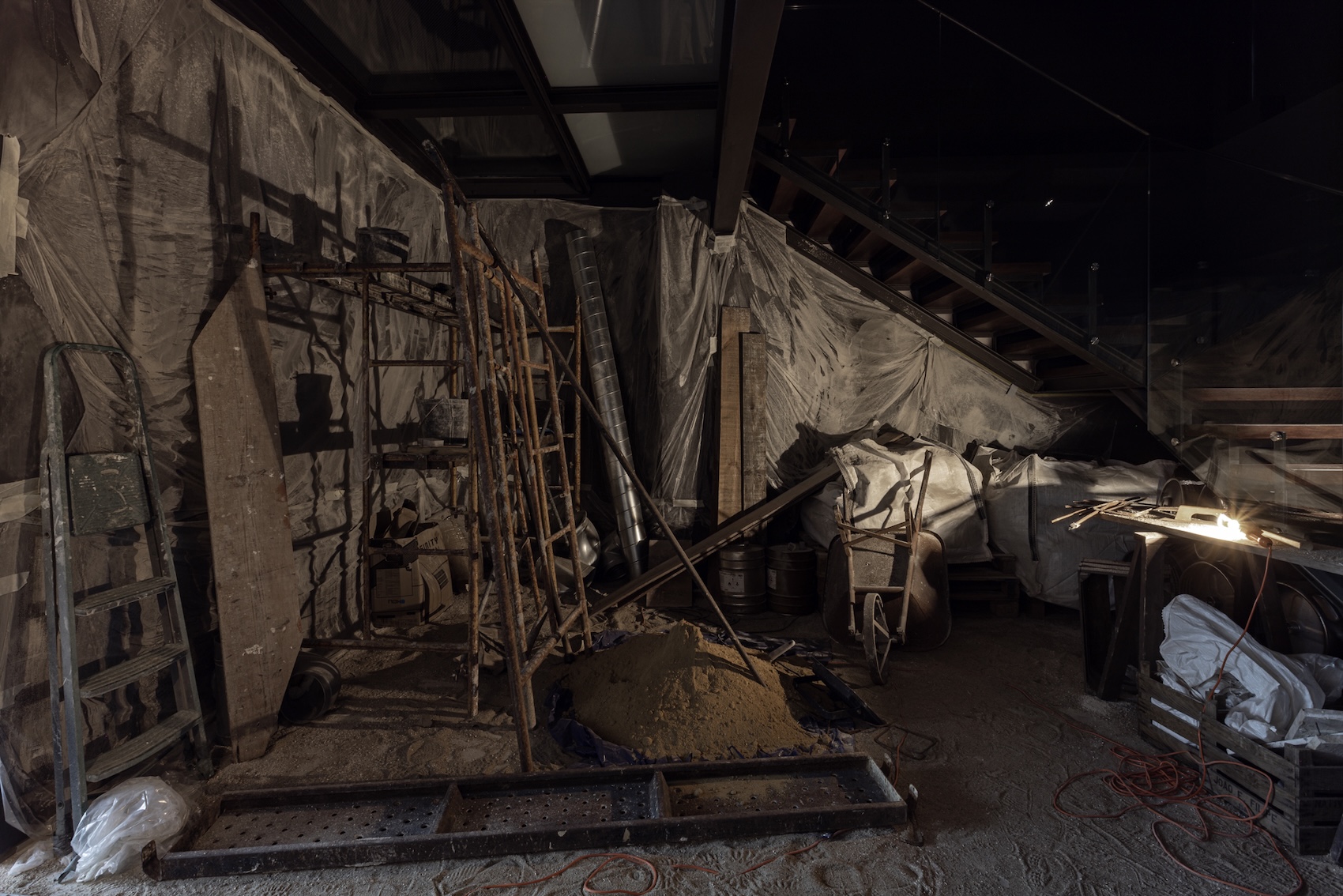
Gabriel Abrantes: Standard Deviation. Exhibition views at Rialto6, Lisbon, 2025. Photos: Vasco Stocker Vilhena. Courtesy of the artist and Rialto6.
Gabriel Abrantes: Standard Error. Exhibition views at Rialto6, Lisbon, 2025. Photos: Vasco Stocker Vilhena. Courtesy of the artist and Rialto6.