
Ana Botella e Benjamin Weil

Interview with the directors of the CAM — F.C.Gulbenkian
Luísa Santos (LS): Dear Ana, dear Benjamin, thank you for taking the time to discuss your ideas for the CAM. In one of our first meetings, you told me that you are more interested in what lies ahead of the CAM than in addressing its past, which is an approach that I praise because of the manifold possibilities it encompasses. I’ll borrow that approach to guide the questions in this conversation. I would like to start by asking you what sparked your interest in the CAM and how you envisioned the future of the CAM when you applied for your current position.
Benjamin Weil (BW): Building the CAM was the result of an interesting process. Since 1958, Fundação Calouste Gulbenkian has been acquiring contemporary art to support Portuguese artists, but perhaps even more importantly, to acquaint the Portuguese people with contemporary art and to promote Portuguese art abroad. This means that it is a collection with a very specific identity, since the initial goal was not to form a collection. Two decades later, it became evident that this collection needed a permanent home. While it elected to build this new space, the board of trustees of the Foundation also decided to acquire Jorge de Brito’s extraordinary collection of Portuguese modern art, in order to create a historical context for the works it had accumulated over the course of 20 years. One could argue this is really when the CAM collection was born. It is more interesting to me that the same board decided to build not a museum but an art centre. Indeed, from the onset, the CAM—Centro de Arte Moderna Gulbenkian—was thought out as a venue for displaying a coherent selection of modern and contemporary art, but also a place to showcase all forms of contemporary art and emerging artists—the ACARTE programme exemplified that will.
So, the CAM was envisioned as a kunsthalle with a collection: this duality really interested me and fuelled my proposal to the board for a new CAM, bringing a kunsthalle approach to the presentation of the collection rather than a more museological one. The fact the CAM building has been closed for four years, combined with it having ceased to exist as such (for five years, the institution was operated as a part of the Museu Calouste Gulbenkian), enabled a complete rethinking. The same way the building was reimagined, the CAM had to be a new institution, not without taking into consideration the first 40 years of its existence.
Ana Botella (AB): When Benjamin first shared with me the opportunity, in 2021, I was immediately excited about 1) opening—and imagining—a contemporary arts organisation incorporating all of the institutional reflection and learning derived from the very turbulent previous few years (COVID-19, Black Lives Matter, #metoo); and 2) the privileged situation of having a contemporary arts centre within a very established and influential Foundation. I had previously worked in a very responsive, risk-taking mid-scale arts organisation (FACT, Liverpool) and then in a very strategic best-practice museum in the second biggest Foundation in the world (Wellcome Trust, London), and had often fantasised about the possibility of bringing both worlds together to ensure experimentation and impact—the CAM, in the context of the Gulbenkian Foundation seemed to be just this.
Both reasons have remained my drivers since I joined. Over the first year we developed a strategic plan following a collaborative methodology entailing a lot of listening—both internally and externally. The resulting vision states, “the CAM aims to unlock the transformational power of art to effect personal and societal change,” and this has guided all our programmes and initiatives. We were very clear that we would achieve this through creating new publics, engaging with the most pressing issues of our time, positioning the collection at the centre as a resource with which to create new narratives, and leveraging our influence through partnerships and collaborations. Along the way, we have tried different approaches and tactics, but the backbone vision has remained the same.
LS: For four years, the CAM didn’t have physical walls. The projects of the CAM were organised in public spaces, including in various neighbourhoods of Lisbon (such as the 4 ODJU in Chelas and the Exchanged gazes, (un)common places in the Alcântara Library), in the gardens (such as the Cuisine Existentielle, by Lei Saito) or in spaces of the Calouste Gulbenkian Foundation (such as the Manga Scroll, by Christian Marclay and Ami Yamasaki). How did the lack of physical walls affect the way you conceptualised the artistic programme and reached the public?
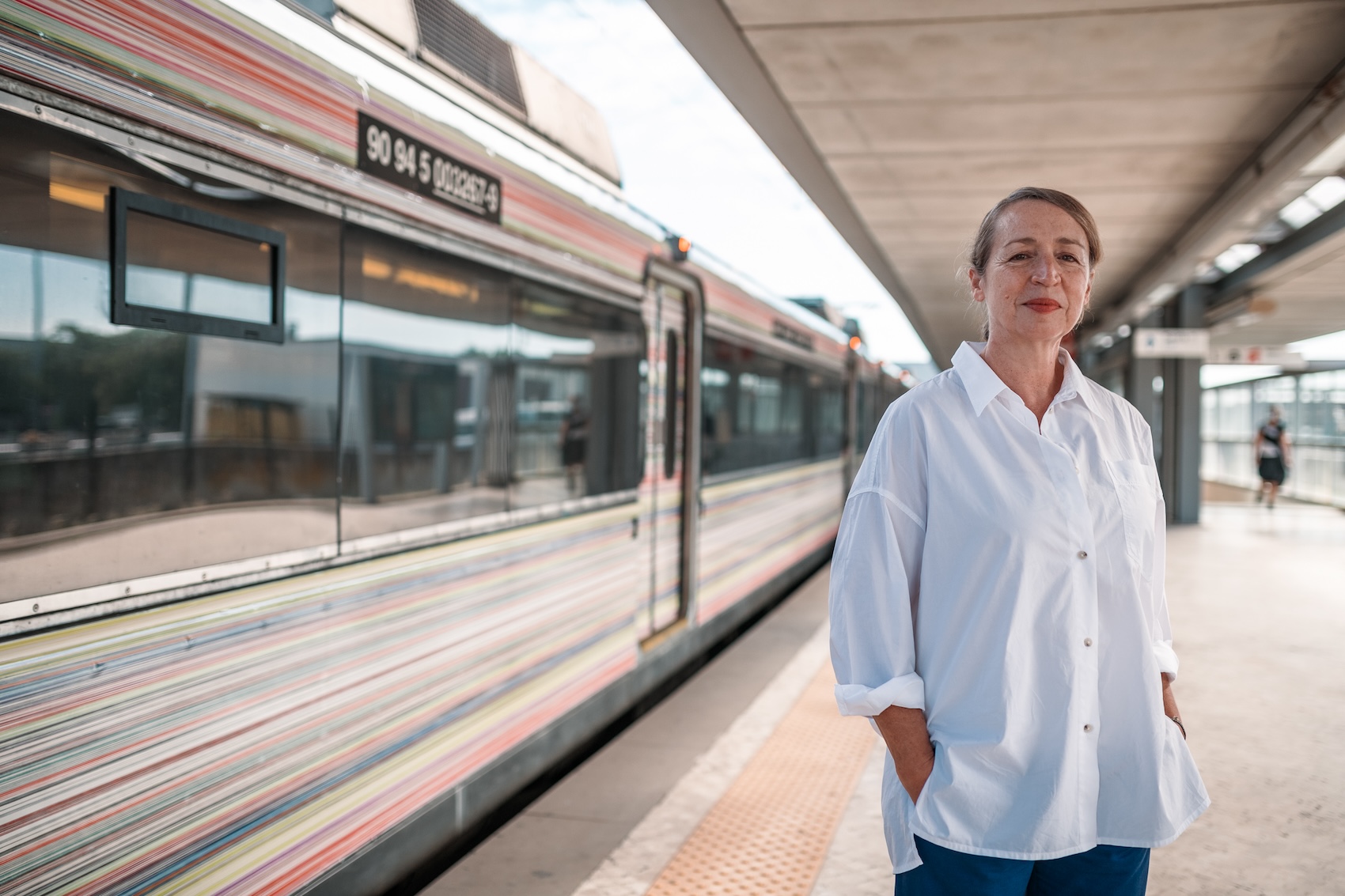
BW: CAM em Movimento (CAM in Motion) was born out of necessity: how to exist without walls. The idea was to find spaces we could do projects in, including the public place. Our first project was to commission two artists—Fernanda Fragateiro and Didier Faustino—to each conceive a project for a train. A key reference for this project was the extraordinary “advertising campaign” conceived by Felix Gonzalez-Torres in 1991. When invited to exhibit at MoMA (NY), he decided instead to conceive a project for advertising billboards around New York. The black-and-white image of an empty bed was posted all over the city. It was extremely compelling. Showcasing the intimacy of the bedroom on a billboard and using a black-and-white image questioned all the rules of advertising. The contrast was so strong people noticed that image that was there, not selling anything. Trains are now often covered with advertising, and I thought we could try something similar. The effect of our first project within CAM em Movimento was quite extraordinary, although a survey we carried out showed us most people who travel on the train pay little attention to the train itself, so only relatively few noticed our project. Proceeding with our exploration of art in the public arena, we commissioned artists to intervene in shipping containers and display them in the city. We then learned that displaying art was not enough. This is why our subsequent projects sought to engage communities in a more dynamic fashion. Our collaboration with the Alcântara public library on a participatory curatorial project—Exchanged gazes, (un)common places—was yet another learning process. Fifteen library users worked with the CAM staff to produce an exhibition with works from the CAM collection: we now know we can engage audiences and invite them to own their viewing experience by being actively involved. All these experiments will of course affect the way we work in the new building. This calls for a continued reflection about display strategies and formats.
AB: As Benjamin pointed out, this was born out of necessity: not having a building forced us to look outwards, to get out there and meet others (organisations but also artists and audiences) in their own spaces and in their own terms. Very quickly, this started softening the edges of the organisation. Over our “nomadic years,” we developed projects with multiple communities and organisations, both inside and outside of the art world: cultural institutions of all scales, schools and universities, civic organisations. Only when the CAM opened did I realise the extent of the relationships we had nurtured and cultivated over the years. Suddenly, with the new building, they crystalised and came together as our community—a community which is diverse and wide-ranging. In similar situations, it tends to happen the other way round—first the inauguration and then the community-building, which is so much harder. We were extremely fortunate with our “nomadic years” because we opened gradually and are now ready to go. I truly believe there is nothing more valuable for an arts organisation than these relationships of trust, “relationship capital” if you will. We will now continue to invest in them and expand them. Every project is designed to enable this.
LS: When the CAM was closed to the public, you and your team had the opportunity to rethink the CAM as an institution and its role in the artistic ecosystem, at the local, national, and transnational levels. You created a Youth Advisory Group (YAG) with nine people who were selected through an open call to reflect on the needs of the new generations with the CAM team until the reopening. Can you share more about the work undertaken and the methodologies employed with and by the YAG? I’m thinking, particularly, if you have had discussions on inclusive language and social representativity (of people of diverse physical and cognitive capacities, all genders, ethnicities, and socio-economic backgrounds) in the collection, the public programming, and the staff.
BW: It seems to me that the conflation of three major global events has profoundly affected the way we all relate to the world in which we live: the Black Lives Matter and the #metoo movements; and then the COVID-19 pandemic and the resulting lockdown, during which we had a lot of time to think. As Westerners, we suddenly were compelled to a complete reassessment of all the fundamentals of our culture. Of course, institutional critique, as well as the feminist and the post-colonial discourses, pre-existed these awareness-shifting events, but in my mind, these concerns became mainstream then. Also, being in lockdown made us (even more) aware of how fragile and, at the same time, how resilient nature can be; and how, after all, it is possible to actively partake in caring for each other, as well as for all other forms of life on our planet.
Regarding the new iteration of the CAM, we needed to think about how to play an active part in fostering perceptual shifts. In that sense, the social mission of the Foundation has also been a great source of inspiration: the CAM can be an agent of social change—and these are not vain words. Working with the YAG enabled us to think about how to reassess all institutional practice to make it more suitable, more relevant to the next generation. This is something essential if the CAM intends to continue to be gain more relevance in more people’s lives. The YAG examined every aspect of the institution diligently and generously. Their recommendations addressed every aspect of our practice, which was extremely helpful. Now we need to ensure we implement as many of those as we can.
AB: The YAG has had a profound impact on the CAM, and hopefully this is reciprocal. Over the course of ten months, every two weeks, they would meet with different CAM teams. The aim was to learn about their work and to provide feedback. There was no stone left unturned—from the strategic plan to the acquisitions policy, from the organisational tone of voice to the visitor experience. The initial defensiveness of the CAM team, only natural, was overcome as soon as it became clear that we all wanted the same thing—for the CAM to connect with the younger generations—and then it became one of the richest and most productive collaborative institutional projects I've known. Beyond the critical conversations and the ongoing feedback, the YAG programmed last year’s International Museum’s Day, shaped the Opening Party with Filho Único, wrote texts about the collection, and participated in the Foundation’s Strategic Away Day with the board of administrators and all directors. They are currently working on recommendations which we will be implementing over 2025. For me, the most important piece of learning for us at the CAM has been to understand that it’s OK not to know everything, and that producing knowledge with others is actually very rewarding and can take you places you would never get to on your own. As for the YAG, I hope part of its legacy is the realisation of their incredible power—collectively and individually—to influence and create change. Once we’ve had the chance to digest and implement the YAG’s recommendations which I mentioned before, we will replicate a similar model with other groups—this is only the beginning!


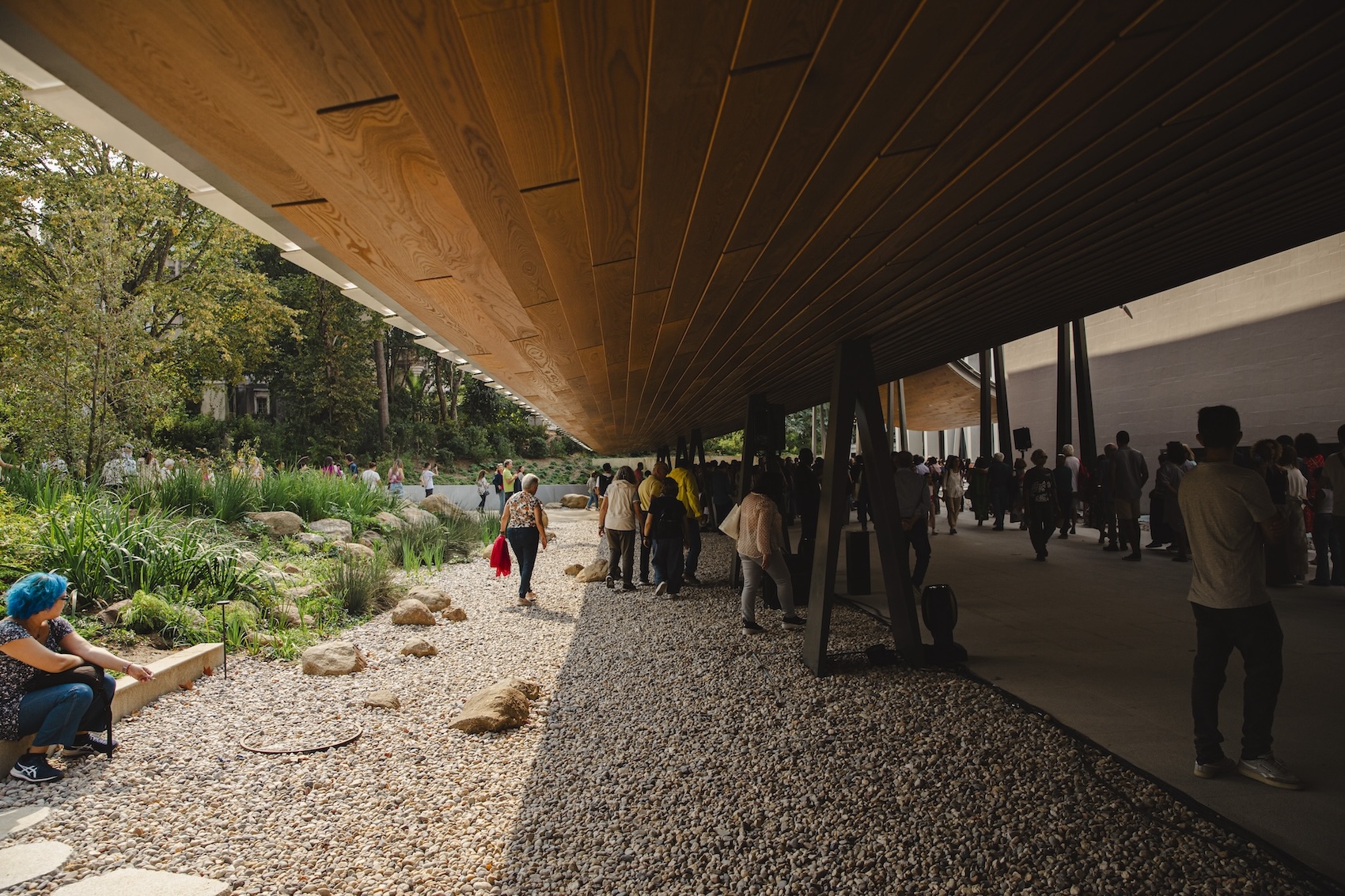
Luísa Santos (LS): The renovation project, led by the architect Kengo Kuma in collaboration with landscape architect Vladimir Djurovic, creates an entrance to the Foundation that changes the access to the building of the CAM, which is now done through a new garden and a new entrance on Rua Marquês de Fronteira. Until the Foundation acquired these two hectares of land, they were the private property of a family. From where I and most people could see it, outside of tall stone walls, this piece of land contained a garden and a house that resembled a small palace. It was impossible to gain access to the garden and to the house-palace unless you were a family member, a friend, or an employee. In turn, Kengo Kuma’s contemporary transformation seamlessly connects the building with the surrounding gardens and city. The stone walls were taken down, and both old and young trees in a fluid and dense urban forest are now visible, along with a 100-metre-long sweeping canopy, crafted from Portuguese ceramic tiles on top, with wood underneath. What was once visible to a select few became visible to anyone who wants to look and see. But the stone walls that surrounded the once private property are not the only structures that went down. The lateral wall of the former building of the CAM is now made of transparent glass, and the building can be entered from the garden via the canopy. Cracks were made in different walls of the former building; they evolved and eventually destroyed the walls to give rise to transparencies, fluidity, and open spaces. Can you discuss this openness (or making of cracks, both literal and conceptual ones) in the CAM?
Benjamin Weil (BW): In 1969, the walls that surrounded the land of the Gulbenkian “campus” were taken down. They were similar to the ones that surround the land the Foundation recently transformed into an extension of its existing garden, now the main access to the CAM. So, taking down the walls of the new land was obvious, and linking the garden to the city was not a new thing. What may be new, however, is how we linked the institutional building to nature. The garden is visually present in all the main areas of the new CAM building. This also means the content of the galleries is visible from the outside. So, in a way, those boundaries between nature and culture are erased. Our goal is to ensure people visiting the garden may be as spontaneous when they go into the building, which is now nested in the garden. The canopy on the southern façade also helps dedramatise the architecture, which is more integrated in the garden. One enters a garden and goes down towards a building that is far humbler: the house of art and culture is no longer a monument. Consequently, it should feel more accessible, less impressive. We hope that this in turn will help people feel the CAM is theirs, as much as they feel the garden is theirs. People’s relationship with the exhibitions and events hosted inside or outside should then be easier.
Ana Botella (AB): Yes, I couldn’t agree more. In this sense, for me the most powerful symbol has been replacing the previous perimetral wall with an urban bench—using the very same stones! The CAM is no longer separated from the world, and there is now a new relationship of porosity with energy flowing in two directions. In this sense, we say that beyond people “visiting” the CAM, we are interested in people “living” the CAM. The organisation has been designed in a holistic fashion to encourage this—the building, the garden, the exhibitions and the live arts events, the mediation and participatory projects, the restaurant, and the shop. There are many different entry points, and they are all connected.
LS: Still on the reimagining of the building of the CAM, the new roof is a sort of a social space for the public, inspired by the architectural typology of the Engawa, considered neither completely private nor completely public in traditional Japanese houses. While this hybridity makes it quite inviting for the audiences, it also makes it a difficult space to control, which makes it quite unique and experimental in the sense that parts of it will work and others will fail. Failure is part of the process in any experimental space, such as the Engawa, which, despite being grafted in a big institution that needs to plan everything in detail well ahead, it’s experimental and, if I understood correctly, will welcome trial and error. How did you conceptualise the various spaces of the CAM, and what are the main differences for the public (compared to before the extensive renovation)?
BW: On the one hand, the CAM is artist-centric. It believes in the transformational power of art, and thus entrusts the artists to produce the most compelling works with all our support. The institution will always seek to adapt to the artists' needs, in that sense it needs to always evolve with the way artists work, and the kind of works they conceive. This requires flexibility and adaptability to ensure the artists feel we are at their side. This is for instance what happened with Leonor Antunes with the creation of a new installation and with the staging of her selection of works from the CAM collection.
On the other hand, the CAM is public-minded. Indeed, without visitors, art is not activated; it does not achieve its function. We therefore need to listen to the different kinds of visitors and understand their specific needs, to accompany their experience of art the best we can. This requires thinking about new display strategies, new types of visits, new tools for people to engage with what is on view. Participation is also key. We need to keep thinking about how people actively create their own experience with art. For instance, when we organised Exchanged gazes, (un)common places at the Alcântara public library, the fifteen library users acting as curators also wrote the wall labels. These were very different to the ones usually encountered in any given art institution. We’re now thinking about having multiple wall labels and the way they could be accessed. Imagine how this could truly embody multiple interpretations of the same work!
The Open Storage, Drawing Room and Sound Room are different kind of venues where the paradigm of the exhibition does not need to apply. This also enables us to programme differently, more spontaneously, in a more open fashion, perhaps also leading to more participatory curating experiments. So, we will continue to experiment. "Engawa" is the name of the place where Japanese people socialised. It is a place of exchange. Emmanuelle de Montgazon (curator of the Japanese Season) was the first to point to the Engawa as a symbol. She decided to name our season of Contemporary Art from Japan Engawa after reading Kengo Kuma’s statement about his redesign of the CAM building and the importance of that new space, both physically and symbolically. As such, Engawa has become a crucial element in our thinking about how this building should function to be successful in its mission of unlocking the transformational power of art.
Luísa Santos: The CAM is a big institution, with a specific legacy; as such, most people in the artistic and cultural field in Portugal have strong feelings and emotions attached to it, as well as expectations on what it can or should become. How do you see the CAM in the local artistic ecosystem, which is made of a few big institutions, even fewer medium-scale institutions, and many small organisations, all with different capacities and roles? And how do you envision the future of the CAM as part of this ecosystem, and also in the larger, translocal, artistic ecosystem, considering the times we're living in, with their complex intersectional conflicts and translocal challenges?
BW: Maybe the garden is an interesting metaphor: a plot of land with trees that are over 100 years is reconfigured with new plants; some will grow, others will die. The configuration will be altered with the human touch—without being an overly manicured garden, human intervention is crucial in this place. In a way, we will proceed with building an institution that has 40 years of a rich history. We will seed projects that will become household, while others will soon be forgotten. The collection will continue to grow; it will continue to be displayed at the CAM and elsewhere in different contexts and new formats. The CAM will also continue to belong to a network of like-minded institutions here and there. Ideas and projects will travel, and collaboration will be a key element of our modus operandi. In a concert of institutional voices, we need to find the tone and way that dynamically engages with what others are doing.
AB: Lisbon’s cultural scene is in a very vibrant place, and we need to work together to maximise this opportunity. There is an incredible pool of creative talent in the city, the critical mass is growing, and so is the cultural public, and the whole world is paying attention—we need to rise to the occasion. Together with MAC/CCB we have created LAC—Lisboa Arte Contemporânea, a network of Lisbon-based contemporary visual arts organisations of all scales, with the shared aim of better coordinating, fostering collaboration, and developing sector agendas. This is a first step for all of us to work together in a more structured way. Gulbenkian, and the CAM, have an incredible power to convene different publics, different disciplines, and different ideas. How we use this power is a big responsibility, with so much potential for creating safe spaces where difference can thrive and ignite new imaginations.
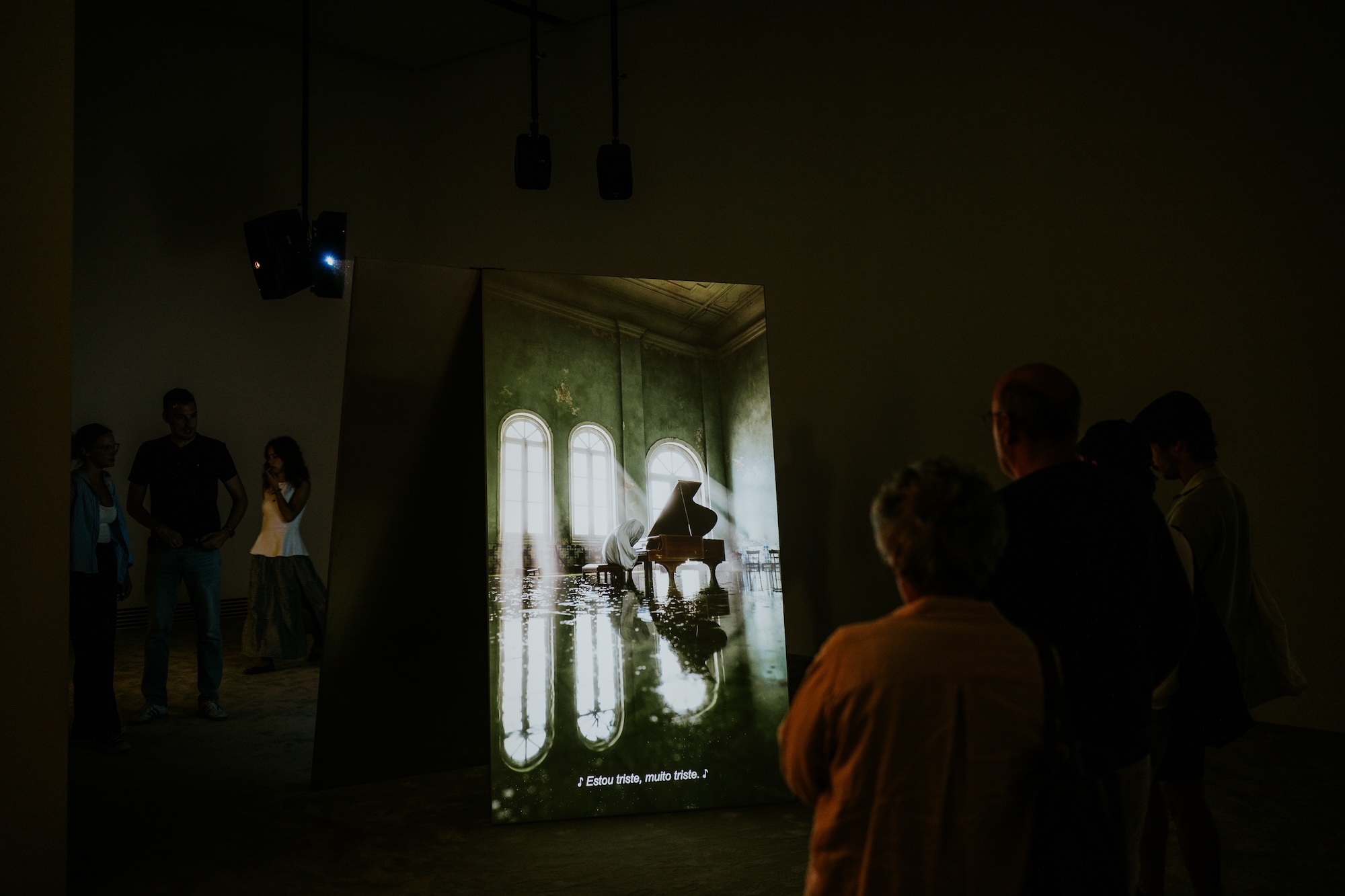
LS: In the opening programme, the audiences can see new commissions as well as existing works, in an articulation of perspectives across different histories (from modern times to now) and geopolitical contexts (from Portugal to Brazil and Japan) towards current planetary human and more-than-human emergencies. The programme includes a performance by Jota Mombaça (Brazil, 1991), inspired by the water from the garden, its history, knowledge, and memory; a film (Bardo Loop, 2024) by Gabriel Abrantes (USA, 1984), tackling broad individual and collective themes, such as the anxiety of the future; an immersive installation by Leonor Antunes (Portugal, 1972); Tide Line, with works from the collection; a large-scale video installation (M5A5, 2017) by Go Watanabe (Japan, 1975); the exhibition The Occidental Calligrapher. Fernando Lemos and Japan; and a series of live arts events, some of which organised in collaboration with local organisations such as Filho Único. I would love to hear from you how the different parts of the programme connect with one another, and how the programme is connected to your vision for the future of the CAM.
AB: The opening programme set the tone for what is to come. It is coherent yet polyhedric, because we want everyone to find something of themselves within it. Whatever your background or your personal taste, hopefully you will be moved, both emotionally and intellectually. We have deliberately brought emotion and sensuality into the experience of the CAM, which is not common in traditional museum practices. We want to produce embodied experiences which are conducive to the most important learning—the one that you create for yourself, whereby you create your own meaning. This goes back to the transformational power of art. Hopefully, after your visit, you will sense the world at least a tiny bit differently.
BW: There are different formats being offered in this inaugural programme: The “carte blanche” to an artist of international repute whose works have seldom been seen in this country will bring ambitious projects to the CAM, and specific approaches to the collection; a “season” of contemporary art from another part of the world; the presentation of a new commissioned work by a young artist, enabling them to break ground; the commissioning of a sound artwork for our new Sound Room will also enable visitors to acquaint themselves with the most recent practices in the field of sound art. These are important structural elements of our vision for the future, as are the Open Storage and the H BOX, which will enable us to programme part of the offering more swiftly, so people have the feeling they can experience something new upon each visit to the CAM. Ideally, going to the CAM should be as obvious as take a walk in the surrounding garden!
CAM Centro de Arte Moderna da Fundação Calouste Gulbenkian
Luísa Santos [1980, Lisboa]. Ph.D in Culture Studies by the Humboldt & Viadrina School of Governance, in Berlin, and M.A. in Curating Contemporary Art by the Royal College of Art, in London, Luísa Santos is an Assistant Researcher, in Culture Studies / Artistic Studies, since 2016 at the Faculty of Human Sciences of the Universidade Católica Portuguesa. An independent curator since 2009, she conducted research in curatorial practices at the Konstfack, in Stockholm, in 2013; since 2019, she is a research fellow at The European School of Governance (EUSG), in Berlin; and, since 2023, she is a teaching fellow at the Europaeum, in Oxford. She is the artistic director of the 4Cs: from Conflict to Conviviality through Creativity and Culture, the Arctic Routes, Southern Ways, and the Institution(ing)s. Luísa Santos sits in the editorial and scientific boards of the peer-reviewed magazines Estúdio, Gama, and Croma and of the Yearbook of Moving Image Studies (YoMIS – Research Group Moving Image Kiel), Büchner-Verlag. She has collaborated with various institutions such as Tensta Konsthall, SAVVY Contemporary – Laboratory of Form-Ideas, Fundació Antoni Tápies, Museet for Samtidskunst, P28, Gulbenkian Museum, Carpe Diem Arte & Pesquisa, Anozero Biennial, Frankfurter Kunstvrein, OK-Centrum, and curated numerous exhibitions with artists such as Miguel Palma, Nikolaj Larsen, Yorgos Zois, Ângela Ferreira, Amira Hanafi, Marilá Dardot, Jeppe Hein, Jane Jin Kaisen, and Rouzbeh Akhbari. Having authored various publications in the domains of art and society, Luísa Santos is, since 2021, editing a book series on the politics of immaterial cultures with the Routledge. Since 2018, she is the co-artistic director of the nanogaleria, an independent curatorial project which she co-founded with Ana Fabíola Maurício.
Proofreading: Diogo Montenegro.
Disclaimer
In 2023 I started working with the CAM on designing a European collaboration project titled Institution(ing)s, coordinated by the Universidade Católica Portuguesa. From 2025 until 2029, the project will be co-funded by Creative Europe. Many of the questions posed in this conversation are informed by the issues addressed in the project, which investigates how long-term collaborations focusing on socially, economically, and environmentally sustainable working methods can envision alternatives beyond institutional critique towards a healthier artistic ecosystem.


Images: General appearance of the building; CAM in Motion: Fernanda Fragateiro (CP); Exchanged gazes, (un)common places at Biblioteca de Alcântara, Lisbon. Youth Advisory Group 23–24. CAM opening; Leonor Antunes exhibition; Gabriel Abrantes Installation (Photos: Pedro Pina); Nala Sinephro concert, Anfiteatro ao Ar Livre (Photo: Joanna Correia). Courtesy of CAM—Fundação Calouste Gulbenkian.