
Zineb Sedira: Standing Here Wondering Which Way To Go
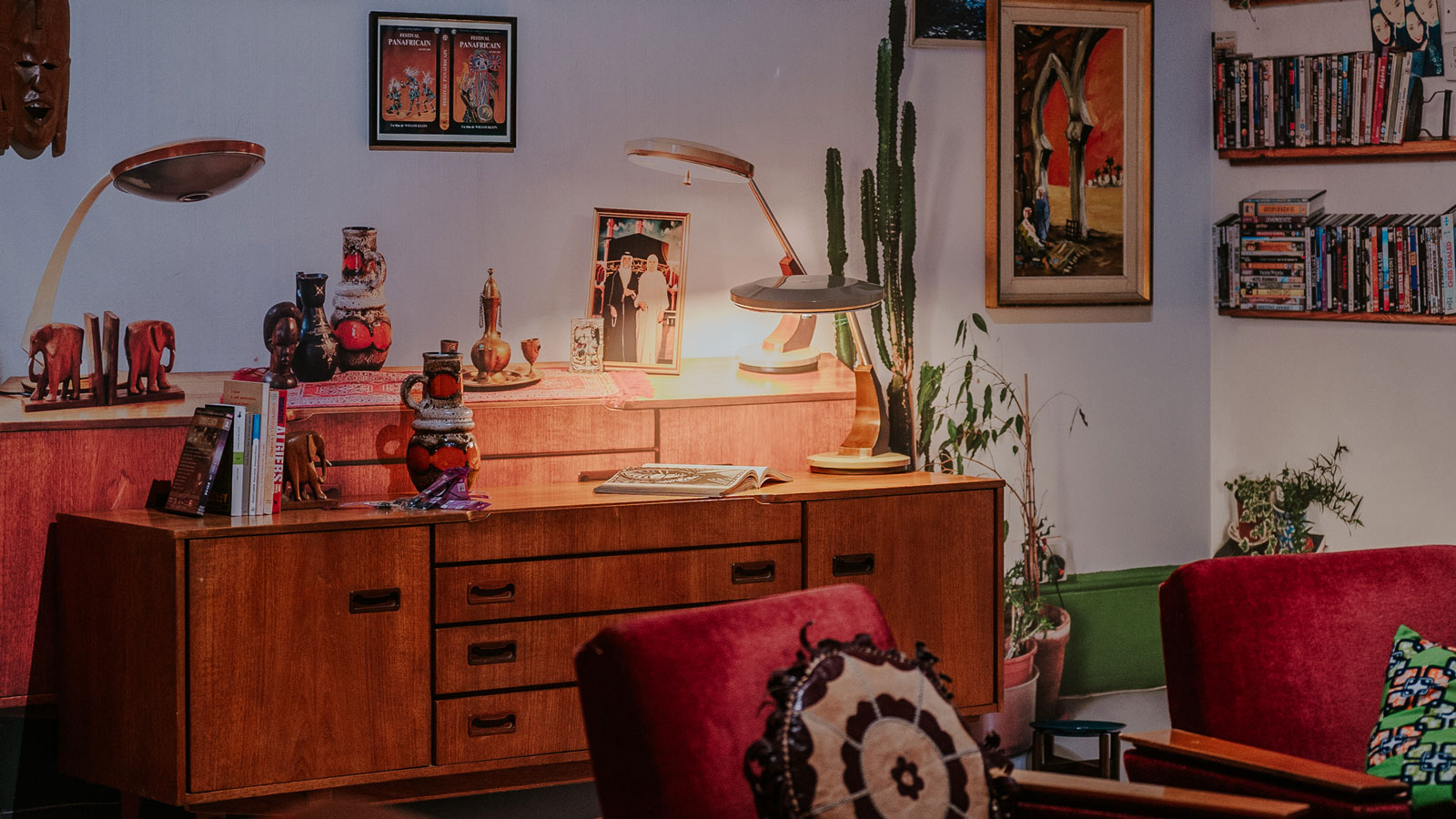
This interview took place in the context of the exhibition Standing Here Wondering Which Way To Go, on view at Gulbenkian’s CAM until 19 January 2026. As I returned to Lisbon on the same day Zineb Sedira returned to Algiers, this interview took place on Zoom, rather than on the comfortable couches from the artist’s living room, replicated as an installation in the exhibition.
Marta Espiridião (ME): Early in the exhibition, we see Mise-en-scène, a montage of archival footage. Some of it is very damaged and seems to come from personal collections. What role do you think these play in the construction of a collective memory of freedom and resistance? What can be born from the intersection between personal collections and official discourse?
Zineb Sedira (ZS): Non-official archives (personal letters, photographs, diaries, and oral histories…) capture perspectives and experiences that official archives often overlook or omit. They provide context, nuance, and alternative narratives that challenge, complement, or expand the “official” story. The official archives are often products of specific political, social, or institutional agendas. What is preserved, how it’s categorised, and when it starts—all reflect decisions made by those in power. By combining both, you get a more complex and nuanced picture, one that can be critically examined. It also allows historians, artists, researchers, and the public to question dominant narratives.
ME: Besides helping create this differentiated narrative, would you say they help interrogate the purpose and implications of so-called “official” narratives?
ZS: Exactly. In Algeria, the official narrative emphasises heroism, post-colonial triumph, and victory in the war, with the actions of those in power well documented. Personal archives, however, capture the experiences of others—people who fought or lived through the conflict on different scales; and their stories are just as vital. For example, the mujahidin (female freedom fighters) received little attention in official records. Thanks to personal archives preserved by individuals and communities, we now recognise the crucial role they played in the war. Where archives are concerned, Algerian official and private documents start with the War of Independence in 1954, when the GPRA (Provisional Government of the Algerian Republic) was created. It’s a very young archive, and it emerged from an official anti-colonial, heroic stance. I imagine that in France, Italy, or Spain the official archives are more varied in terms of what they collect. But Algeria’s sense of urgency at its birth was different: it needed to document the anticolonial war. Moreover, before independence, France controlled the country, so the archives we have from before 1954 were produced from a colonial point of view. There was a distinct vision and a single, driving narrative: anticolonialism, and by extension, Pan-Africanism and Pan-Arabism, shaped by the shared experience of colonialism across these regions. But that narrative also marginalised the Amazigh Indigenous people, who lived in Algeria long before the Arab arrival. I can be critical of the Algerian archival project, yet I also recognise that after 130 years of colonisation, there was an urgent need to reassess and reassert a national identity—both an African and an Arab one. In this process, the archive played a crucial role in making sense of that historical trajectory.
ME: I think we are also talking about the need to access some sort of communal memory of resistance and freedom, to remind us that we can continue to act against structures of oppression in the present. Would you say this is an important aspect of the archives you are building?
ZS: The challenge today is that many of the people who preserved and shared their own stories are passing away. In the past, colonisation was the struggle; now, the struggle is about preventing the loss of our collective memory. Without personal archives—papers, documents, films, and other records—their stories risk disappearing entirely. This is why I’m committed to interviewing older generations who still remember events that were never formally documented. Algeria should have a dedicated oral history archive, but for various reasons the historical record remains almost entirely in print—and even those printed materials are now deteriorating.
Mise-en-scène responds directly to this erosion of memory. I found and purchased fragments of militant films whose emulsions were deteriorating—material that had been left without proper preservation. By assembling these remnants, I created a new narrative, a new film. In the 1960s and ‘70s, Algeria’s film industry played a crucial role in shaping and sustaining anti-colonial memory, yet much of that cinematic heritage is now at risk of disappearing. Today we face a significant problem: although many of these films were produced with government funding, the state—depending on who is in power—is often either unwilling or unable to restore them. The preservation of this heritage is frequently mentioned in political agendas but remains largely unfulfilled, which is, of course, deeply regrettable.
And because Algeria is a coastal country, humidity and salt accelerate the decay of analogue film emulsions. The same is happening to photographic archives: negatives are slowly disintegrating. There is ultimately nothing that can stop this process. You can’t fight time, and you can’t fight erosion, and both inevitably shape the stories and memories we are able to preserve.
ME: In the late 1970s, the Algerian film industry was strong, and there were plenty of women filmmakers working at a more collaborative and collective level, tackling political and social issues that oppressed them. Do you believe that film—and video, more recently—can play a role in the making (or unmaking) of revolutionary and liberatory struggles, especially for people whose voices have been continuously silenced?
ZS: I believe all forms of culture are tools of resistance. Whether dance, music, film, theatre, or visual art, they can all play a powerful role. During the Algerian war, photography and filmmaking were especially significant, serving as militant media, although more difficult to produce than today. Now, with digital film and social media, information is much more accessible. Back then, if you made a film, you would need six or seven canisters, each weighing 36 kg. The cost of filming, developing, processing, copying, transporting, and screening a film was enormous—almost madness. And yet many revolutionary/militant groups did it, because there was no other way. The act of making a film was itself a political act.
In Algeria, photography and film were the only means of disseminating information about the war in the 1950s and 60s. This explains the significant expansion of militant cinema in post-independence countries that had formerly been colonised. Film and photography provided a direct way to communicate both locally and internationally what people had endured and how to envision the future—particularly in contexts with high local illiteracy rates.
ME: That brings me back to a still of Klein's film in the newspaper that accompanies the exhibition, with a sentence that read: “The culture [is] at the service of liberation and unity.” But I'm concerned to see how culture gets more and more absorbed by, and somehow contained within, capitalist structures of control and generation of wealth—already in his 1969’s speech, Boumediene spoke of “culture having turned into a pernicious instrument of domination.” (quoted in the same newspaper). Fifty years later, do you think culture can still be at the service of union and liberation? Do you think there's any hope of reclaiming culture, like Boumediene called for, as transcendence?
ZS: The political context may have changed today, but culture has not. If an artist chooses to address politics, that work should carry as much weight now as it did in the 1960s. Art is inherently political, especially in a democracy, though the extent of freedom depends on the country. In Germany, for example, artists are restricted from addressing the genocide of Gaza, while the situation in the US is a completely different and increasingly challenging story. What this demonstrates is that politicians fear culture, and for good reason. They know that artists have the power to speak up and speak out. At the same time, capitalism has transformed the art world by creating wealthy collectors who view art as an investment. Many of these collectors today also favour works that are “pleasing” and can be easily displayed on their walls. Nevertheless, cultural institutions should resist this pressure and continue to collect all forms of art, including politically charged works, as these will become part of an archive of art history that is intrinsically connected to politics.
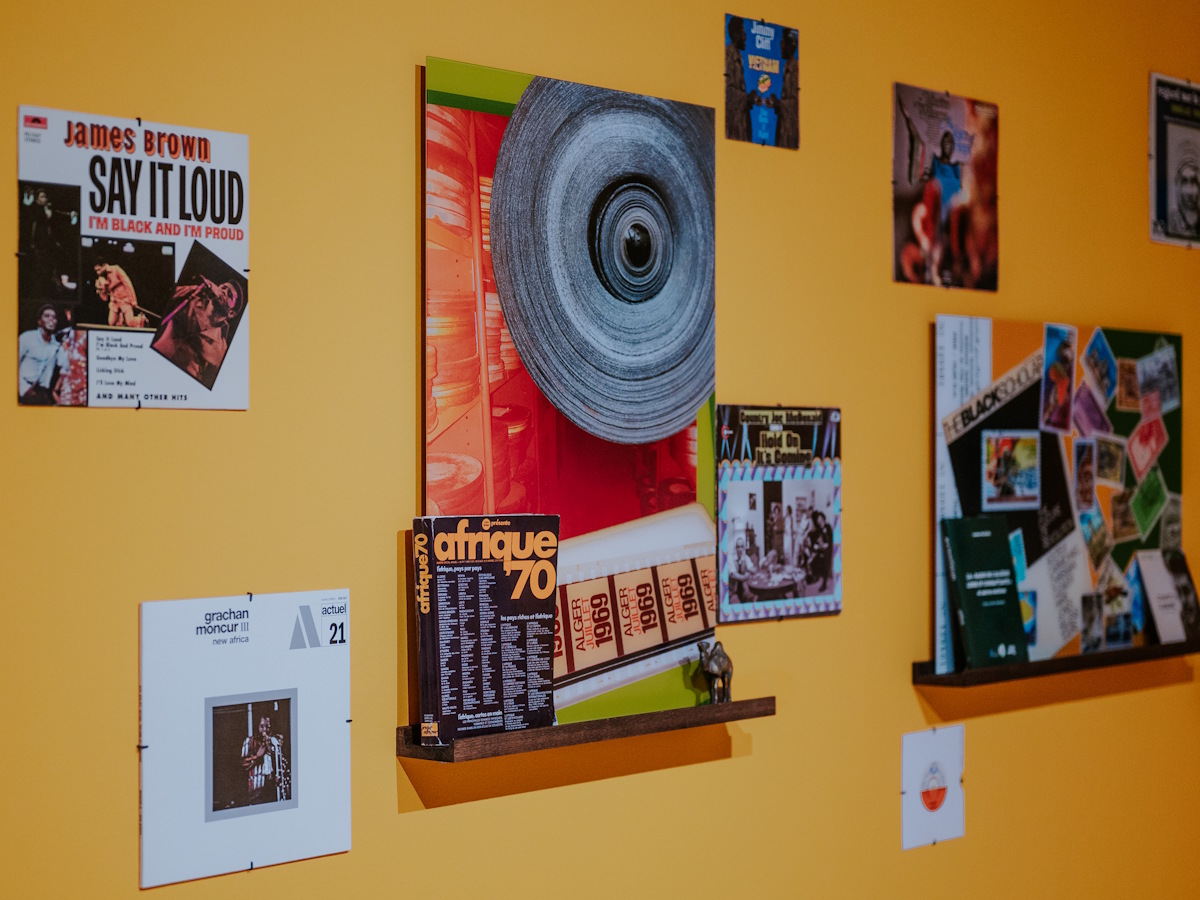
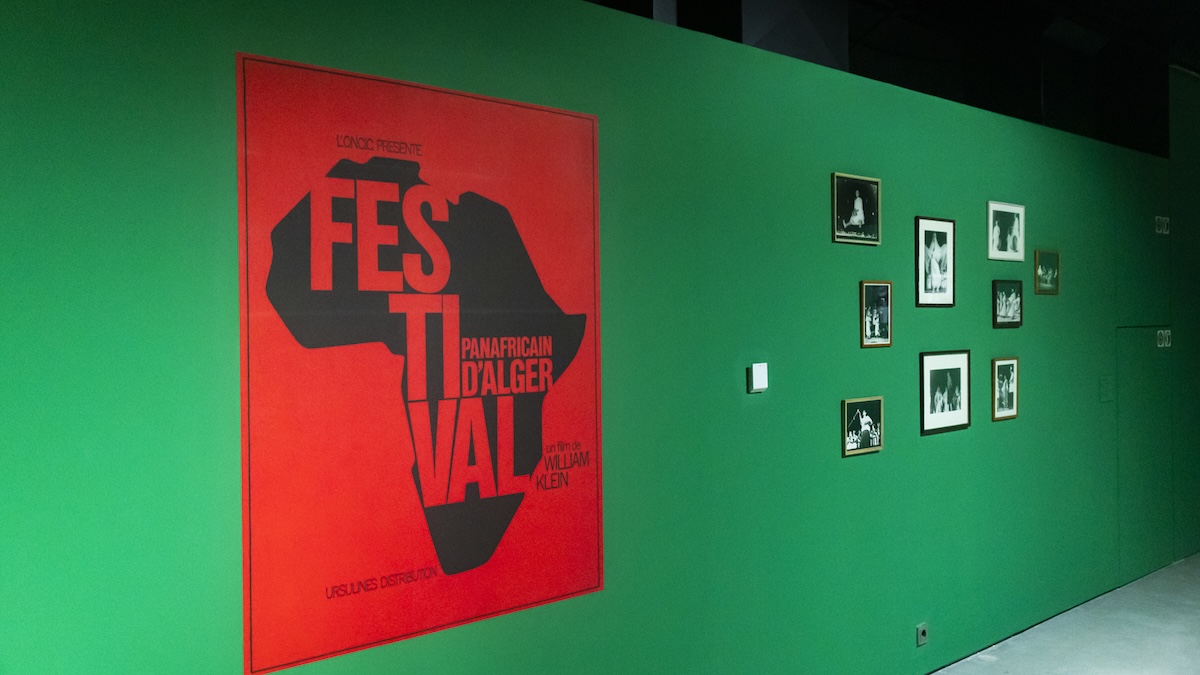
ME: I am reminded of a sentence from the first photo of the exhibition, which read: “The Algerian crowd was waiting for the festival of the century. It was more or less satisfied.” I find an echo of it when Nadira speaks about the idea of a “joyful revolution” in the video presented in the living room. What is the importance of celebration for independence and freedom movements?
ZS: Under colonialism, it was very difficult for indigenous Algerians to travel outside their own town. After independence, the Pan-African Festival in Algiers took place in 1969, bringing together people from across Africa. But it wasn’t just Africans who visited: Vietnamese, Palestinians, the Irish, Chileans, Cubans, Black Panthers… anyone who had experienced racism, colonialism, or fascism. For the first time, Algerians could meet, share, and discuss their experiences under colonialism and fascism. It was a profoundly important celebration, which is why Nadira remarks in the video: “It was then that we [the Algerians] discovered our Algerianity and Africanness.”
For all the visitors, the festival offered a chance to celebrate and explore each other’s cultures. It was a political act that sought to unite Africans and the “Third World,” rather than divide them, as had been done under colonisation. Equally important, Algerians themselves discovered the country’s deep diversity in languages and traditions, meeting fellow citizens from across the entire nation.
For me, whether these types of gatherings succeeded in the long term or not is beside the point. What matters is that people came together, shared, and joyfully discovered one another—and that, in itself, is beautiful, especially after such a long period of extreme and violent colonisation.
ME: At another point in the video, a still reads: “The past is very present and serves as a symbol.” What can the past be a symbol of? And do you think we run the risk of losing the ability to interpret the symbol, along with some of its referents? In fact, could we be at that point already?
ZS: The past is always with us. Today will become the past, tomorrow will become the past—we cannot change that. But we can learn from it and move forward in a better way. The world seems to have forgotten what happened during colonisation and imperialism. We see the consequences now in Gaza. We are living through another form of apartheid because the lessons of the past have been ignored, and money has become the ultimate arbiter of justice—or injustice. That’s why listening, recording, and transcribing are so crucial. The purpose of the archive is to preserve and transmit stories and memories. Yet, despite this, we rarely seem to truly learn—and states and politicians almost never do.
ME: This is the fifth or sixth time you present the project, always at different places: the US, Germany, Portugal, France… As we are never who we were yesterday, or who we will be tomorrow, how do you look at a Standing Here Wondering Which Way To Go after all this time? What has changed in the world, in the installation, and within yourself?
ZS: I chose the title Standing Here Wondering Which Way To Go because it was about the political turmoil of the 1960s. When I created my work in 2019, it still felt relevant—and unfortunately, it continues to be so today. Europe is increasingly turning to the far right, with rising racism toward Muslims and immigrants especially coming from the Global South. The same harmful discourse is entering the political arena. Just ten years ago, politicians might have been more cautious when speaking about Muslim communities or immigration issues. Today, the debate is less nuanced and more overtly racist, and obviously deeply problematic, even shocking, echoing the vocabulary used during the colonial wars of the 20th century.
As someone born in Paris who has lived in the UK, works in Algeria, and now splits her time between the UK and Paris, I often wonder which way to go—or even where to go. Where could I experience less racism? Nowhere, really. It’s very depressing. I am grateful to have art as an outlet to express all this frustration and these questions.
This is why I’m happy to have three solo exhibitions planned across 2025 and 2026 in Europe where these themes will be explored. It’s a process of consolidation, and in a way, it feels particularly relevant to what’s happening now—both in light of the ongoing colonisation in Gaza and Europe’s response, or perhaps more accurately, its lack of response.
ME: I feel most of your projects have this pulsion to bring together family, friends, acquaintances and collaborators. Even if it sounds contradictory, how important is this combination of the intimate and the collective dimensions? How do they impact these practices of memory-keeping?
ZS: We have been saying since the 1970s: “The personal is political.” And for me, the collective is personal as well. To speak about politics is to draw on the personal, and therefore to use myself—and by extension, the story of my parents and my family. When I do so, it is entirely because I am the legacy of that colonial history in Algeria.
I am part of the first generation born in France in the post-independence context. My parents grew up in “French Algeria” before immigrating to France. I was born in 1963, one year after Algeria’s liberation. I grew up in a country that had just lost the war, where racism toward Algerians was severe. We lived with this tension between France and Algeria. We were French—or supposed to be French—but we were not treated as such. We were Arabs, we were Algerian (even with a French passport), and we were called many awful names.
Many years have passed, and many people have adapted to “us,” the binational French-Algerians. We must acknowledge that France has become more diverse and culturally enriched thanks to its diasporic communities. I suppose my 2002 video Mother Tongue speaks about that.
In my immediate family, three languages are spoken: Arabic, French, and English. This situation reflects mobility and is deeply connected to the political context. I am increasingly returning to autobiographical work because I believe political art is more accessible when it comes from the personal. For me, speaking about politics must be guided by the heart, rooted in the life I have lived and the stories I carry.
But to explain the importance of the intimate and the collective in relation to memory-keeping: many artists and researchers often tell me they cannot travel to Algeria due to visa restrictions. Because I am fortunate enough to access at least some of the archives there, I take many photographs of the documents I find. I am always happy to share these findings through my artworks. It is truly about sharing knowledge—circulating stories and histories beyond Algeria.
When some of these discoveries are revealed through exhibitions or other forms of artistic display, and audiences encounter stories or documents they didn’t even know existed, it feels magical. This is part of why I wanted a Portuguese audience to engage with the story of Pan-Africanism in Algeria. Many liberation movements from African countries colonised by Portugal were active in Algeria in 1969. Colonial history doesn’t belong only to France, Portugal, Italy, or any other colonising countries; it belongs to everyone who experienced it, whatever their background.
Each time the installation travels to a new country, I try to include an element from that country, like a book translated into the local language. When I exhibited the piece in Sweden, for instance, I discovered the country had a strong anti-colonial movement connected to Algeria and Africa, and found many documents connected to Algerian history. For the Swedish audience to suddenly recognise their country’s involvement with Algeria and its anti-colonial stance at the time was incredibly powerful. Of course, we often think first of more obvious examples like Vietnam, Palestine, Cuba, or former Yugoslavia, but I find documents in the most unexpected places.
Another example: in the United States, I expanded the section on the Black Panthers in Algiers and the civil rights movement, since they were active in Algeria and played a central role in the Pan-African Festival. Wherever the piece travels, there is always a local connection to colonisation—either through anti-colonial struggles or through the country’s own history as a coloniser. When showing the work in Portugal, for instance, audiences are often surprised to learn that the Portuguese anti-fascist movement was active in Algiers and present in the Pan-African Festival. Many assume there is no link with Algeria, yet in reality there was a strong sense of solidarity with anti-fascist groups in Portugal (and Spain) at the time.
ME: Yes, I was surprised to discover that Manuel Alegre was there, and that the Portuguese resistance radio was broadcasting from the same place.
ZS: Exactly. Countries under fascism and colonisation were connected internationally. The whole world was talking about Vietnam, and movements against war were global. There was a strong sense of international solidarity and a heightened political consciousness. Many were anti-fascist, anti-capitalist, anti-imperialist, anti-colonial, and anti-nuclear. In the 1960s this energy flowed into music—especially among African American musicians—as well as into theatre, literature, and cinema produced by international filmmakers.
We saw a form of that international solidarity during the Black Lives Matter movement, at the height of COVID. People were shocked to witness the brutal, racially motivated attack on a young African American man that had been beaten horribly by the police. And perhaps because the pandemic had put the world on pause—because we were all glued to our screens—we had the mental space to engage with these events more deeply than usual.
Now we’re seeing something similar with Palestine, even though the pandemic is over. We watch the news, and the genocide is unfolding before our eyes through an abundance of shared images. Once again, images become a powerful tool to resist lies and misinformation. Millions marched across the world to challenge their governments’ political stance and refusal to acknowledge the Palestinian situation.
Recent politics truly take me back to the ethos of the Pan-African Festival. It is, of course, a different context, but we are witnessing a resurgence of global political consciousness—something we haven’t seen in a long time. People have had enough.
In 1969, the Algerian state, through the Pan-African Festival, was celebrating the end of colonisation in many countries; and for those still under colonial rule, the liberation movements were openly recognised. They celebrated the ideas and the anti-colonial movements themselves. People from all over the world were speaking to one another, mingling, and exchanging ideas and experience of discrimination. It was an incredibly powerful moment.
I can see something similar happening today. The difference is that there’s no longer a festival, an event capable of bringing people from different countries together in one place to celebrate and affirm that collective spirit.
ME: I do hope that we can eventually have some sort of communality, be it in celebration or mourning; but also that we can actively bring this into a communal space. Because, one way or another, it already is in a communal space, and it’s something we need to process and deal with together.
ZS: It is important, I agree. For instance, several countries are attempting to limit public discussion about the situation in Israel and Gaza—Germany, in particular, has strongly imposed restrictions on certain actions and forms of speech related to the topic. Despite this, thank god, a broader political awareness continues to emerge internationally. The conflict has prompted renewed reflection in many places, including parts of the Arab world, where governments are reassessing their positions after years of agreements and cooperation with Israel. Something is shifting, and we will see how it unfolds.
ME: With everything happening today—in Palestine, in Sudan, in Congo, and in other places across the world—most of us are feeling lost and helpless. Coming back to the title, Standing Here Wondering Which Way To Go… After six years working with this piece, do you have any ideas, or possible directions?
ZS: I am as lost and confused as you are. I’m naturally an optimist, so part of me wants to believe there is still some humanity within us. Yet we are all grappling with the responses of the Global North—and other parts of the world—to the situation in Palestine, as well as to other places still under colonisation or conflict, such as Tibet or Sudan. I’m not so naïve as to think my work will change the situation in these countries. But if it can raise awareness and share knowledge—offering a political reflection on wars and recurring moments in history—then that, in itself, is already meaningful.
The problem I see today is money. In the 1960s, the anti-colonial movement was inherently anti-capitalist, because colonisation—like slavery— was always tied to profit. Today, anti-capitalism and anti-colonialism seem increasingly disconnected. We are even less able to imagine life beyond capitalism. I have three children, and I try to raise their awareness about these issues. Hopefully, that’s also what my work does for others: helping them discover stories they can connect to the present, inspiring them to act, to take to the streets, to protest, to create political art, and to show that we will not accept injustice, no matter the subject.
Some might wonder why I always speak about the past: because the past is never truly finished; it keeps coming back. As long as racism or any form of fascism exists in the world, I will keep doing my work.
So, going back to the title: politically, I may be uncertain about the direction we are heading, but within my work, I know exactly which way to go!
CAM — Fundação calouste Gulbenkian
Marta Espiridião is a curator, critic, translator, and doctoral candidate in art studies with a project on video, feminist movements, and queer identities. Combining curating with both research and programming, she tries to bring other forms of creation and knowledge to art spaces. In addition to these topics, she is deeply interested in things like witchcraft, literature, architecture and public space, contemporary social conditions, science fiction, and gardening.
PT Version
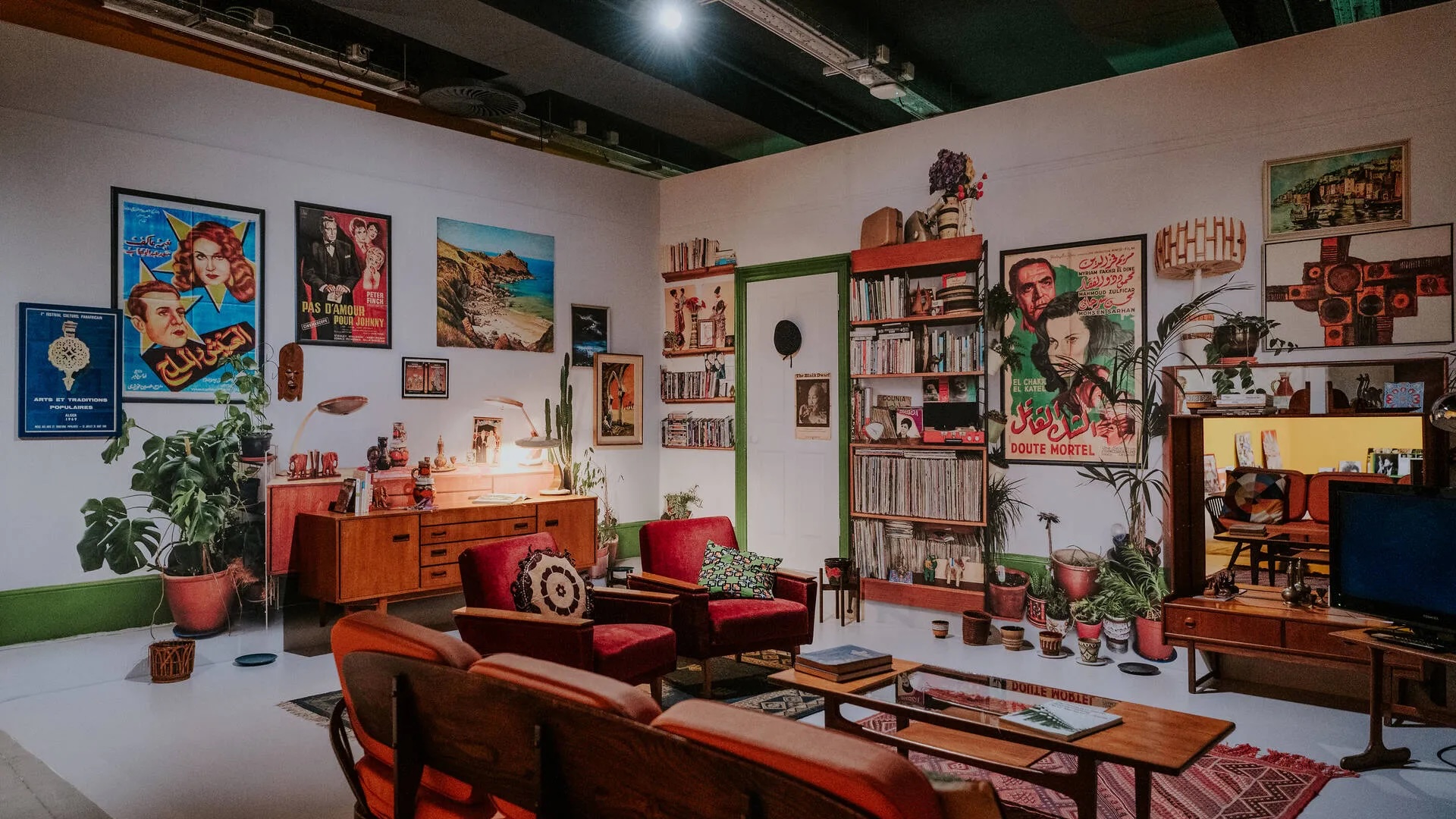
Zineb Sedira: Standing Here Wondering Which Way To Go. Exhibition views at CAM: Fundação Calouste Gulbenkian, Lisbon, 2025-2026. Photos: Pedro Pina. Courtesy of the artist and CAM.